[ Vulnerability Management ]
Vulnerability management solutions: 13 top tools for 2026

Summarize with AI


Summarize with AI

TL;DR: Vulnerability management solutions find, prioritize, and remediate security weaknesses across your environment. Best for an AI-native approach to finding and investigating code and cloud vulnerabilities: Maze. Best for on-premises and hybrid scanning: Tenable and Qualys VMDR. Best for cloud attack path graphs: Wiz.
Vulnerability management solutions (VMS) continuously scan, identify, and mitigate security weaknesses across IT environments. They reduce the risk of cyberattacks by prioritizing vulnerabilities using risk-based data, such as CVSS and EPSS scores, and by simplifying remediation through workflows and automated patching. The newest solutions go a step further and use AI to investigate whether each vulnerability can actually be exploited in your environment.
How they work: Modern platforms rely on a continuous five-step cycle to keep digital assets secure.
The table below summarizes the key differences between the solutions covered in this article. We explore each one in more detail in the sections that follow.
| Category | Solution | Best for | Key strengths | Things to consider |
|---|---|---|---|---|
| AI-driven vulnerability management | 1. Maze | Teams that want an AI-native approach to finding and investigating code and cloud vulnerabilities | AI that investigates every vulnerability and shows the evidence behind each verdict, with fixes delivered where developers work | It’s SaaS only, and you can’t bring your own LLM key |
| Vulnerability and exposure management | 2. Tenable Vulnerability Management | Broad, Nessus-based scanning across on-premises and hybrid environments | VPR prioritization and continuous discovery | Asset-based licensing takes planning, and some teams export data for reporting |
| Vulnerability and exposure management | 3. Qualys VMDR | Built-in patching alongside scanning across IT, OT, and cloud assets | TruRisk scoring plus integrated patching | Patch management is licensed separately, and some reviewers find reports slow to generate |
| Vulnerability and exposure management | 4. Rapid7 InsightVM | Vulnerability management tied to wider exposure context | The InsightVM scanner inside Rapid7’s Exposure Command | The console takes expertise to administer |
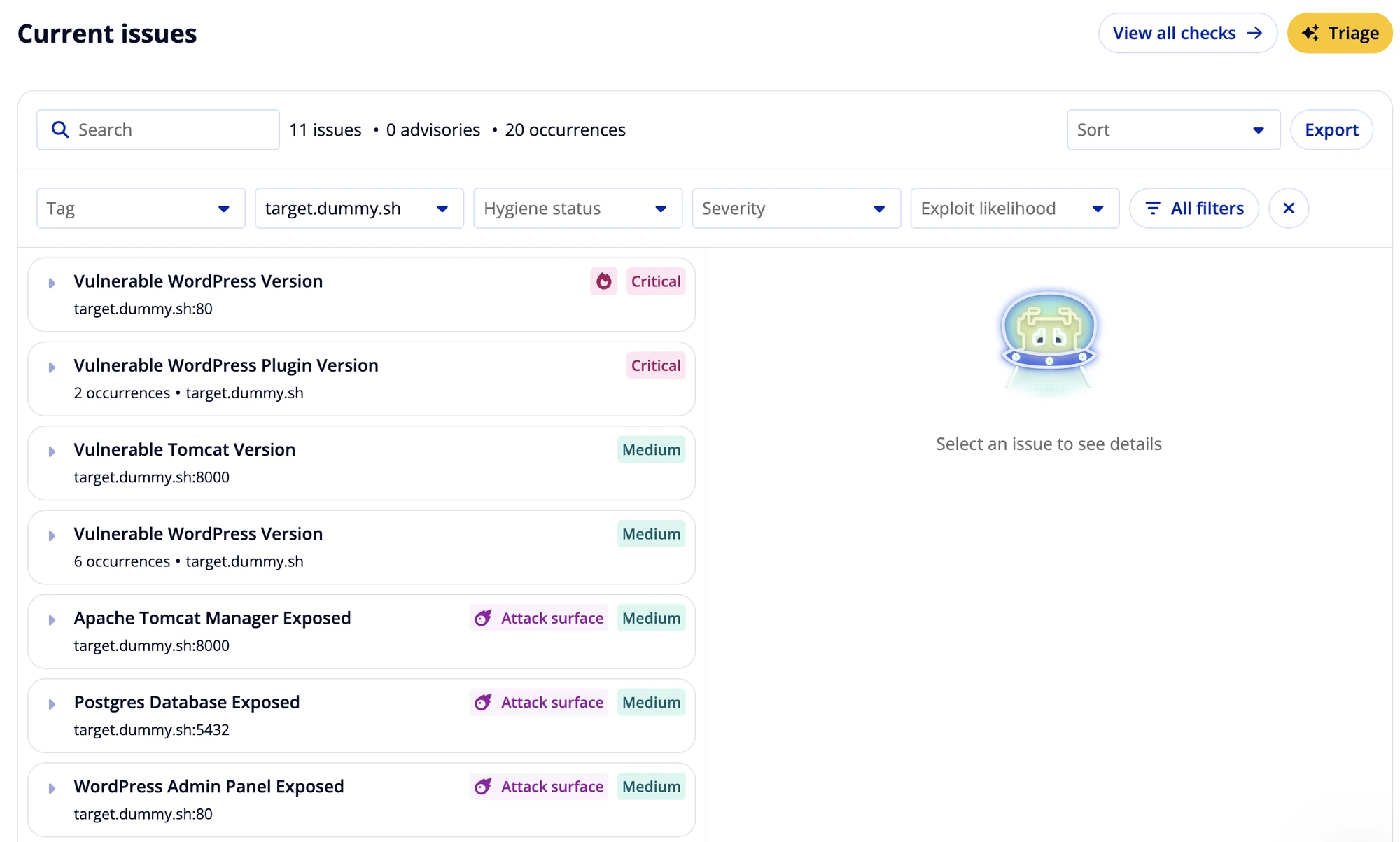
| Vulnerability and exposure management | 5. Intruder | Lean teams that want continuous external scanning | Attack surface monitoring, emerging threat scans, and the GregAI analyst | Reviewers would like clearer licensing and more flexible scan scheduling |
| Cloud-native vulnerability management | 6. Wiz | Attack path graphs that connect vulnerabilities to identities, exposure, and data | Agentless scanning with graph-based context and third-party aggregation | It takes time to learn, and reviewers would like more flexible reporting |
| Cloud-native vulnerability management | 7. Orca Security | Agentless vulnerability coverage across multiple clouds | SideScanning technology with attack path analysis | Reports are technical, and some teams build their own executive views |
| Cloud-native vulnerability management | 8. Cortex Cloud (formerly Prisma Cloud) | Teams that want cloud vulnerability findings in the same platform as their SOC | Agent and agentless scanning with Cortex Vulnerability Risk Score prioritization | Reviewers note a learning curve and costs that grow with scale |
| Cloud-native vulnerability management | 9. Aikido Security | Small development teams that want code, cloud, and VM scanning in one tool | Snapshot-based VM scanning, cloud attack paths, and AI AutoFix | Reviewers would like deeper reporting, and some find the step up from the free tier large |
| Endpoint and exposure management | 10. Microsoft Defender Vulnerability Management | Organizations already standardized on Microsoft Defender and Intune | Continuous, agent-based assessment built into the Defender portal | Some capabilities require the premium add-on |
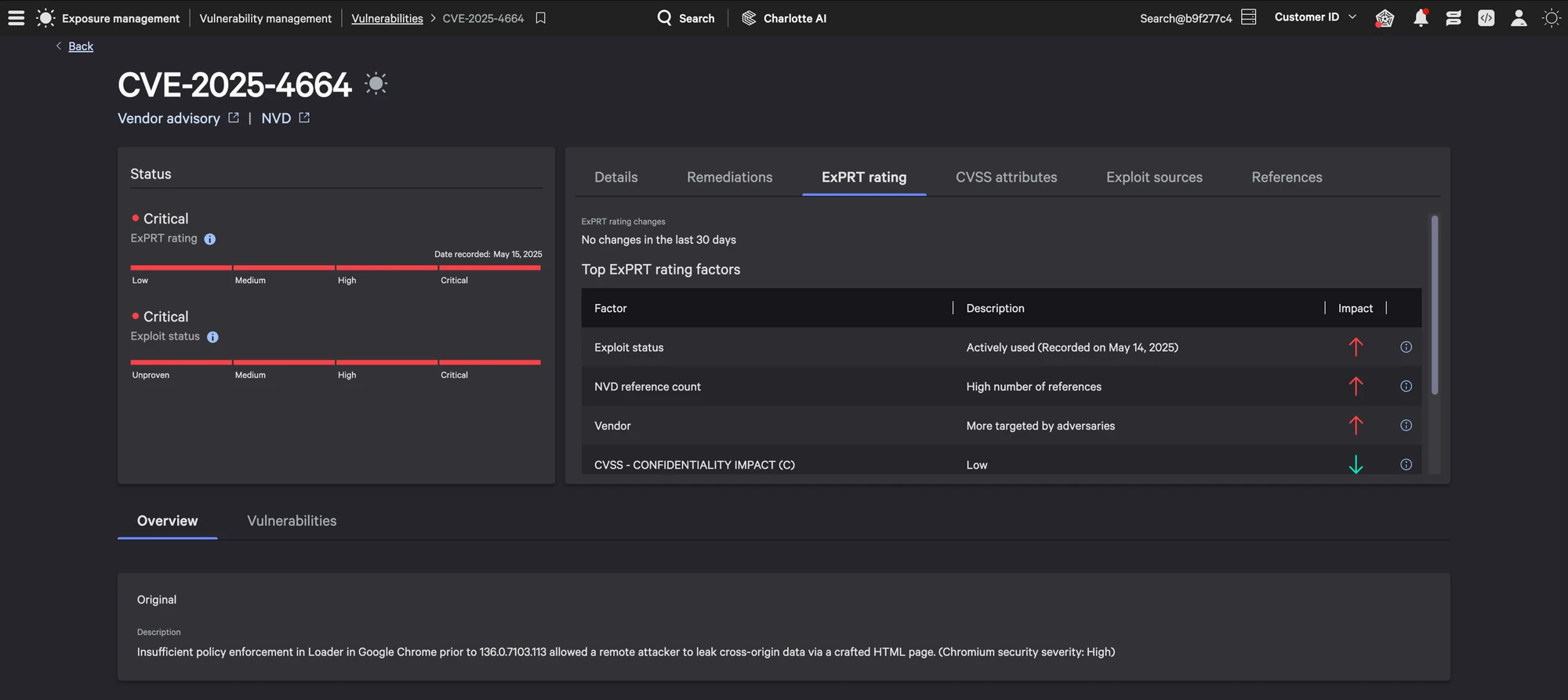
| Endpoint and exposure management | 11. CrowdStrike Falcon Exposure Management | Falcon customers adding exposure management across endpoints, OT, and IoT | Sensor-based assessment with ExPRT.AI scoring and adversary intelligence | Setup and policy tuning take product expertise |
| Endpoint and exposure management | 12. Vicarius vRx | Consolidating vulnerability detection and patching in one tool | Patching for more than 20,000 apps, AI-generated scripts, and patchless protection | Reviewers would like more reporting flexibility |
| Endpoint and exposure management | 13. NinjaOne Vulnerability Management | IT teams unifying detection and patch remediation | Scan-free CVE-to-patch mapping that covers offline devices | It’s endpoint-focused, and reviewers would like clearer patch status |
As organizations manage more devices, cloud services, and applications, the number of potential security weaknesses continues to grow. Vulnerability management solutions help security teams identify the most critical issues, prioritize remediation, and reduce the risk of successful attacks:
Identification is the first step in the vulnerability management lifecycle and involves detecting all assets and potential vulnerabilities within an organization’s infrastructure. This includes:
Vulnerability management solutions use automated scanners and agents to map the network, inventory assets, and uncover weaknesses such as outdated software, misconfigurations, or missing patches. Accurate asset discovery ensures that no critical system is left unmonitored.
Complete identification matters because security teams can’t protect what they don’t know exists. Modern solutions often integrate with asset management databases and cloud platforms to maintain up-to-date inventories. By continuously monitoring for new devices and changes in the environment, these solutions help organizations respond quickly to emerging risks and keep visibility across hybrid infrastructure where cloud workloads appear and disappear within minutes.
After vulnerabilities are identified, the assessment phase evaluates the severity and potential impact of each weakness. Vulnerability management solutions correlate discovered vulnerabilities with threat intelligence feeds, CVE databases, and exploit availability information to determine the risk each one poses. This assessment includes factors such as:
The result is a risk score or ranking that helps prioritize remediation efforts. A score is only as good as the inputs behind it, though, and a vulnerability can look severe on paper while the configuration it needs is missing from your environment. Newer solutions use AI to check whether the conditions for exploitation, such as an enabled feature, a loaded module, or a reachable network path, are actually present before assigning a severity. Assessment is an ongoing process as new vulnerabilities are discovered and threats evolve, and solutions often provide dashboards and reports that show risk levels across the organization.
Prioritization is the process of determining which vulnerabilities should be addressed first, based on their risk to the organization. Vulnerability management solutions use risk scoring algorithms that consider factors such as:
By focusing on vulnerabilities that are both exploitable and pose a significant threat to critical assets, organizations can direct their remediation effort where it reduces the most risk. Effective prioritization ensures that security teams are not overwhelmed by the sheer volume of vulnerabilities, which can number in the thousands in large environments. Risk-based scores such as Tenable VPR and Qualys TruRisk moved the industry beyond CVSS by adding threat intelligence and exploit prediction, and AI-native solutions go further by closing the findings that can’t be exploited in your environment, with the reasoning attached, before ranking what’s left.
Remediation involves taking action to fix or mitigate identified vulnerabilities. Vulnerability management solutions provide remediation guidance, such as:
Some solutions offer automation features that can deploy patches or configuration updates directly, reducing the time between identification and resolution. This minimizes the window of opportunity for attackers to exploit known weaknesses. Effective remediation requires coordination between security, IT operations, and development teams to ensure that fixes are applied without disrupting business processes. Solutions often include workflow management, ticketing integration, and reporting features to track remediation progress.
Confirmation, sometimes called verification or validation, is the final step in the vulnerability management process. This stage ensures that remediation actions have been successfully applied and that vulnerabilities are no longer present. Vulnerability management solutions perform follow-up scans or checks to confirm the effectiveness of:
Any failures or incomplete remediations are flagged for further action. This confirmation process keeps the organization’s view of its security posture accurate, and it gives stakeholders and auditors evidence that vulnerabilities have been properly addressed. Regular confirmation also helps organizations spot recurring issues or gaps in their remediation process, such as a base image that keeps reintroducing the same vulnerable package.
Continuous asset visibility is the foundation of effective vulnerability management. Solutions with this capability automatically discover and monitor all devices, applications, and cloud resources in real time. This includes both managed and unmanaged assets, ensuring that shadow IT and rogue devices are detected. Continuous visibility allows organizations to maintain an up-to-date inventory, which is essential for identifying and managing vulnerabilities across the entire attack surface.
Without continuous asset visibility, security teams risk missing critical systems or new assets that appear in the environment. Modern solutions often use network scanning, endpoint agents, and cloud APIs to maintain broad coverage. This ongoing discovery process ensures that vulnerability scans are always targeted at the right assets, minimizing blind spots and improving the overall effectiveness of the vulnerability management program.
Vulnerability management solutions increasingly provide context around code, dependencies, and cloud environments. This means that, in addition to traditional infrastructure scanning, they analyze application source code, third-party libraries, and the configurations of cloud services. By identifying vulnerabilities in code and dependencies, solutions help prevent supply chain attacks and reduce the risk introduced by open-source components.
Understanding cloud context matters more as organizations move workloads to public and hybrid clouds, and the context pays off most when code and cloud are connected. A vulnerable library in a repository may be stripped at build time, sit in a test image nobody deploys, or run in a production container behind a public load balancer, and each case calls for a different response. Earlier tools reported code and cloud findings separately, while the best solutions now follow a vulnerability from the code that introduced it to the place it runs, so teams see one finding with its full context.
Related content: Read our guide to cloud application security.
Remediation automation and routing simplify the process of addressing vulnerabilities by automatically assigning remediation tasks to the appropriate teams or individuals. These solutions can integrate with IT service management (ITSM) platforms, creating tickets and tracking progress as vulnerabilities move through the remediation lifecycle. Automated workflows reduce manual effort, accelerate response times, and help ensure that critical issues are not overlooked.
Automation extends to the actual remediation actions as well, such as patch deployment, configuration changes, or a pull request that upgrades a vulnerable dependency. By reducing reliance on manual intervention, organizations can decrease the mean time to remediate (MTTR) and minimize the window of exposure. Routing tasks based on asset ownership and business impact further improves efficiency and accountability, ensuring that vulnerabilities are resolved promptly by the right people.
Cloud-native vulnerability triage is designed to address the unique challenges of managing vulnerabilities in cloud environments. These solutions continuously monitor cloud workloads, containers, and serverless functions, providing near real-time visibility into vulnerabilities as they emerge. Cloud-native triage uses integrations with cloud service providers, calling their APIs to gather configuration, metadata, and vulnerability information directly from the cloud.
This approach enables rapid identification and assessment of vulnerabilities in dynamic, short-lived environments where traditional scanning may miss workloads entirely. It also changes how a finding is triaged, because the same CVE can sit on an internet-facing virtual machine with broad permissions or in a container that only talks to an internal queue. By bringing in exposure, identity, and the controls in front of each workload, cloud-native triage moves the finding on the exposed machine up the list and keeps the other one from taking up the team’s time.
A security engineer with unlimited time would investigate every vulnerability by researching what it needs in order to be exploited, checking whether those conditions exist in the environment, and recording the evidence. No team has that time for thousands of findings, so earlier solutions used machine learning to correlate findings with threat intelligence, exploit activity, and asset data, and to summarize or group related alerts. That made triage faster, but the investigation itself was still left to people.
AI-powered investigation was built to think the way that engineer would. The AI works out what context each finding needs, gathers it from code, cloud, and runtime, reasons about whether the vulnerability can be exploited, and shows the evidence behind its conclusion. Because the work no longer depends on someone’s free time, it can cover every finding rather than the share a team gets to, and because each verdict comes with its reasoning, security teams can check the work instead of trusting a score.
Exploitability-based prioritization ranks vulnerabilities by whether they can actually be used against you, rather than relying only on severity scores such as CVSS. Earlier approaches judged exploitability from signals about the outside world, such as known exploit availability, active threat campaigns, EPSS probabilities, and listings in the CISA Known Exploited Vulnerabilities catalog, combined with the exposure and business criticality of the affected asset. That was a real improvement, because it pointed teams at the vulnerabilities attackers are using.
Those signals still say nothing about your environment. Every vulnerability needs certain conditions to be exploited, such as a specific configuration, an enabled feature, a running process, or a reachable code path, and if those conditions are missing, it can’t be triggered no matter how often it’s exploited elsewhere. Solutions that check those conditions in your environment can close the vulnerabilities that can’t be exploited with evidence and rank the rest by real likelihood and business impact, which reduces remediation backlogs far more than a better severity score.
How we selected these tools: We shortlisted vulnerability management solutions based on asset discovery, risk-based and exploitability-driven prioritization, remediation and patching workflows, cloud and code coverage, and integration with existing security tooling.

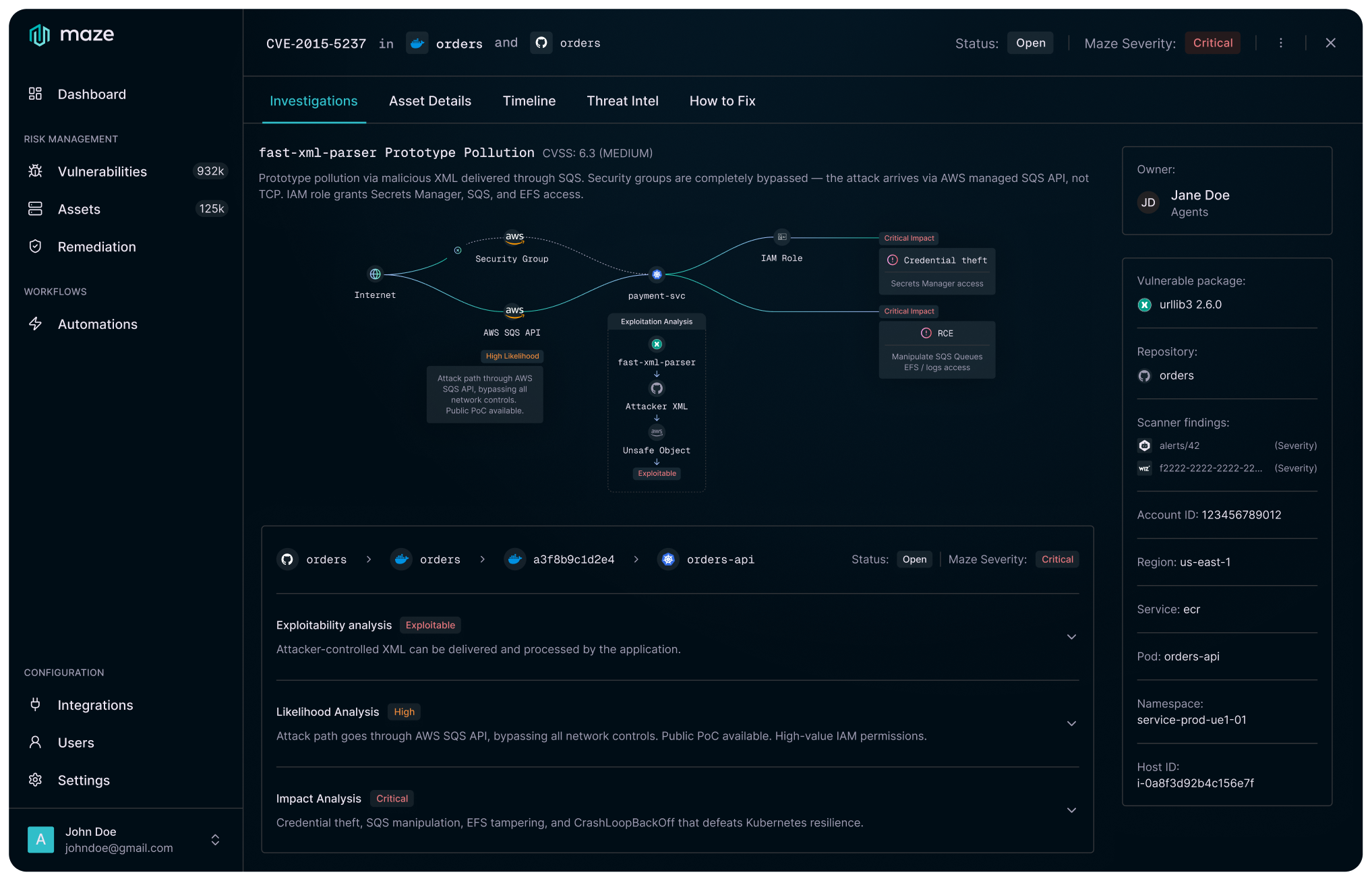
Best for: Teams that want an AI-native approach to finding and investigating code and cloud vulnerabilities
Strengths: AI that investigates every vulnerability and shows the evidence behind each verdict, with fixes delivered where your developers work
Things to consider: It’s SaaS only, and you can’t bring your own LLM key
Maze is an AI-native vulnerability management platform, built from the ground up so its AI can gather the context it needs, reason through each vulnerability, and make decisions the way your best security engineer would. It investigates every vulnerability across your code and cloud, determines whether each one can be exploited in your specific environment, and helps your team fix the ones that can. Maze Code uses AI to find the vulnerabilities in your code and open-source dependencies, and Maze Cloud investigates the vulnerabilities your existing scanners find in the workloads running in your cloud, so both go through the same investigation.
While working with security teams, Maze’s founders kept running into the same gap. The tools those teams relied on could find vulnerabilities but couldn’t gather the context needed to tell which ones mattered, so engineers were left sorting through risk scores that didn’t reflect their environment. Maze was built to give every vulnerability the investigation those teams never had time to run, with AI that works out what context each finding needs and gathers it from your code, your build, and your cloud instead of applying static rules.
Key features include:
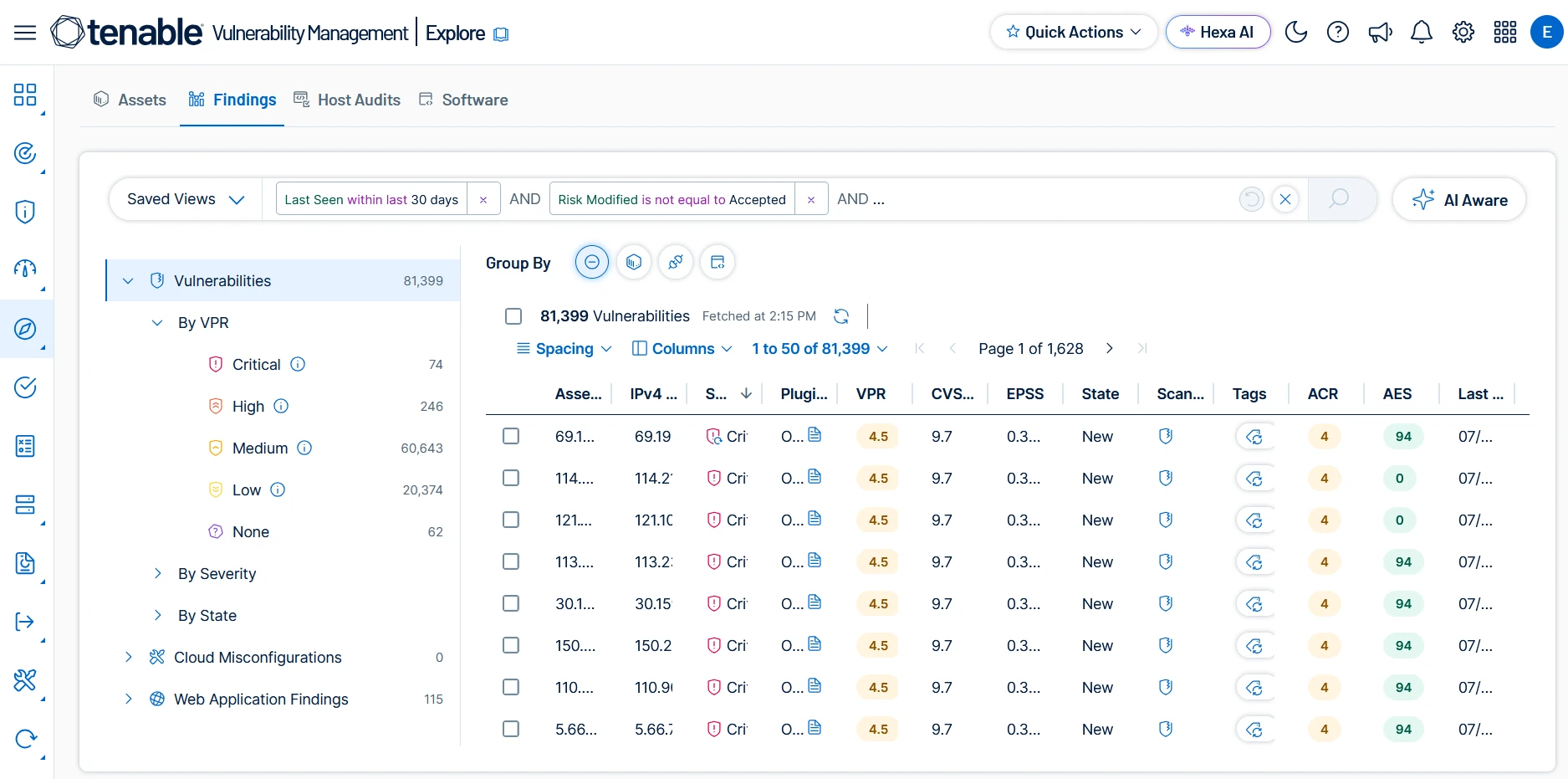
Best for: Organizations needing broad, Nessus-based scanning across on-premises and hybrid environments
Strengths: Continuous discovery with Vulnerability Priority Rating for prioritization
Things to consider: Asset-based licensing takes planning, and some teams export data for reporting
Tenable Vulnerability Management is a cloud-based platform built on Tenable’s Nessus technology and delivered as part of the Tenable One exposure management platform. It provides continuous, always-on asset discovery and assessment across known and unknown assets, including dynamic cloud and remote workforce assets. Prioritization is driven by the Vulnerability Priority Rating (VPR), which uses generative AI, threat intelligence, and context-aware scoring to indicate a vulnerability’s impact and likelihood of weaponization.
Key features include:

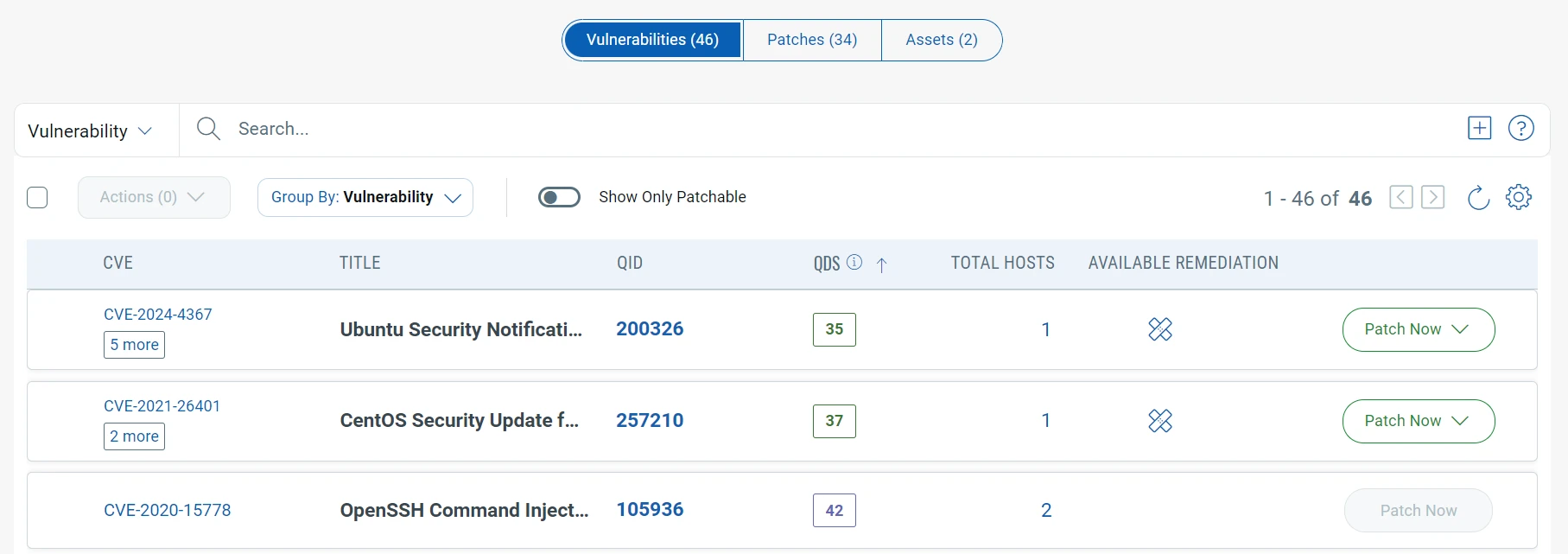
Best for: Built-in patching alongside scanning across IT, OT, and cloud assets
Strengths: TruRisk scoring, broad sensor coverage, and integrated patching
Things to consider: Patch management is licensed separately, and some reviewers find reports slow to generate
Qualys Vulnerability Management, Detection and Response (VMDR) is a cloud-based platform that runs a continuous, orchestrated workflow of asset discovery, vulnerability assessment, threat prioritization, and remediation. Built on the Enterprise TruRisk Platform, it uses lightweight cloud agents, virtual scanners, and passive network analysis to inventory hardware and software and to flag critical assets. For prioritization, VMDR applies the TruRisk score, which combines the Qualys Detection Score and Asset Criticality Score.
Key features include:

Best for: Teams wanting vulnerability management connected to wider exposure context
Strengths: The InsightVM scanner inside Rapid7’s Exposure Command, with more than 500 integrations
Things to consider: The console and scan engines take expertise to administer, especially in large organizations
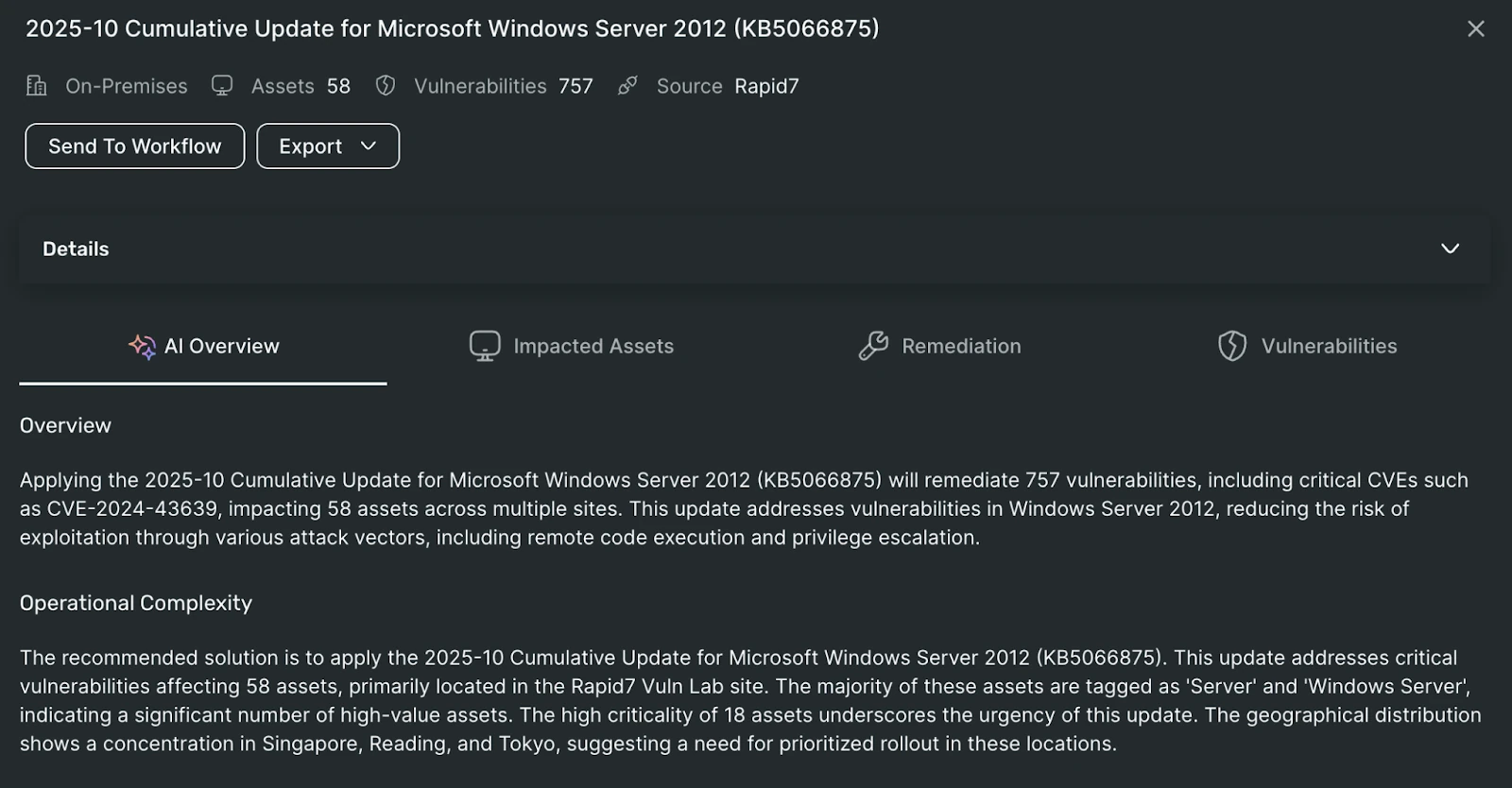
Rapid7 InsightVM is the vulnerability management technology now delivered as part of Rapid7’s Exposure Command. It keeps the same scanner customers know while connecting vulnerability findings with attack surface, cloud, and application risk in a single view, so teams can prioritize what is reachable across the environment. Within Exposure Command, InsightVM’s internal view of what is exposed is paired with an outside-in view of what attackers can see.
Key features include:

Best for: Lean security and IT teams that want continuous external scanning with little setup
Strengths: Attack surface monitoring, emerging threat scans, and the GregAI security analyst
Things to consider: Reviewers would like clearer licensing for organization-wide coverage and more flexible scan scheduling
Intruder is an exposure management platform that unifies attack surface management, cloud security, AI pentesting, and continuous vulnerability management in one interface. It scans infrastructure, web applications, and APIs across on-premises and cloud environments, providing automated, continuous coverage aimed at lean teams. When a new critical vulnerability appears, Intruder’s emerging threat scans check systems rather than waiting for the next scheduled scan.
Key features include:

Best for: Attack path graphs that connect vulnerabilities to identities, exposure, and data
Strengths: Agentless scanning with graph-based context and third-party aggregation
Things to consider: It takes time to learn how the data connects, and reviewers would like more flexible reporting
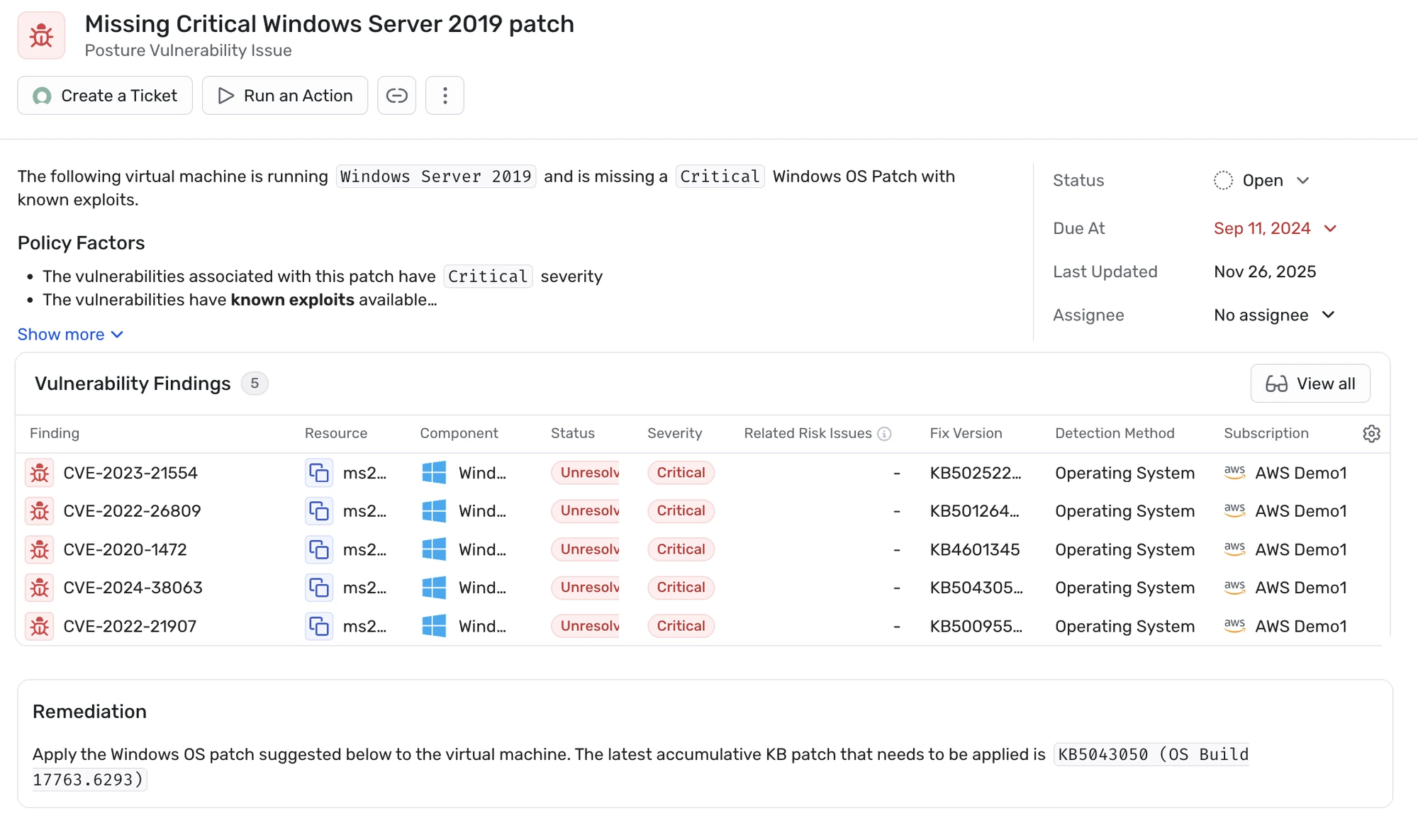
Wiz provides unified vulnerability management that assesses, centralizes, prioritizes, and remediates vulnerabilities across cloud, code, and on-premises environments. Its agentless-first scanning covers a catalog of more than 120,000 vulnerabilities across 40+ operating systems, and it can extend to on-premises assets through third-party aggregation and a sensor-based workload scanner. Prioritization is driven by the Wiz Security Graph, which correlates findings from Wiz scanners and connected third-party tools and enriches them with context. Wiz joined Google Cloud in March 2026 and continues to operate under its own brand.
Key features include:

Best for: Teams wanting agentless vulnerability coverage across multiple clouds
Strengths: SideScanning technology with attack path analysis and reachability
Things to consider: Reports are technical, and some teams export data to build executive views
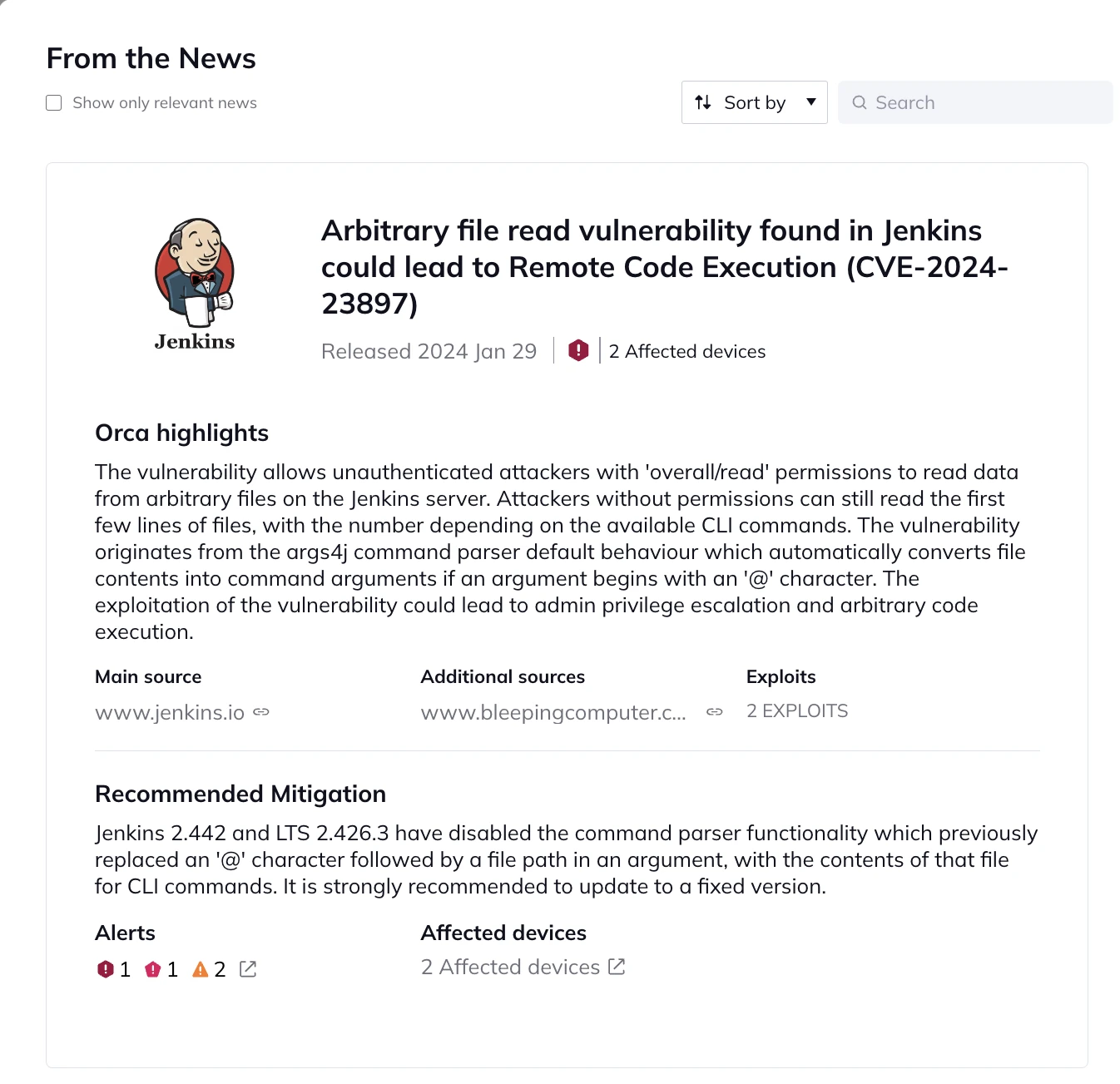
Orca Security delivers cloud vulnerability management through its patented SideScanning technology, which reads workloads’ runtime block storage out of band and collects data directly from cloud configuration. This agentless approach covers workloads and configurations across AWS, Azure, Google Cloud, and other providers within minutes, without deploying agents on each workload, and an optional Orca Sensor adds runtime detail.
Key features include:

Best for: Teams that want cloud vulnerability findings in the same platform as their SOC
Strengths: Agent and agentless scanning with Cortex Vulnerability Risk Score prioritization
Things to consider: Reviewers note a learning curve and costs that grow with environment size
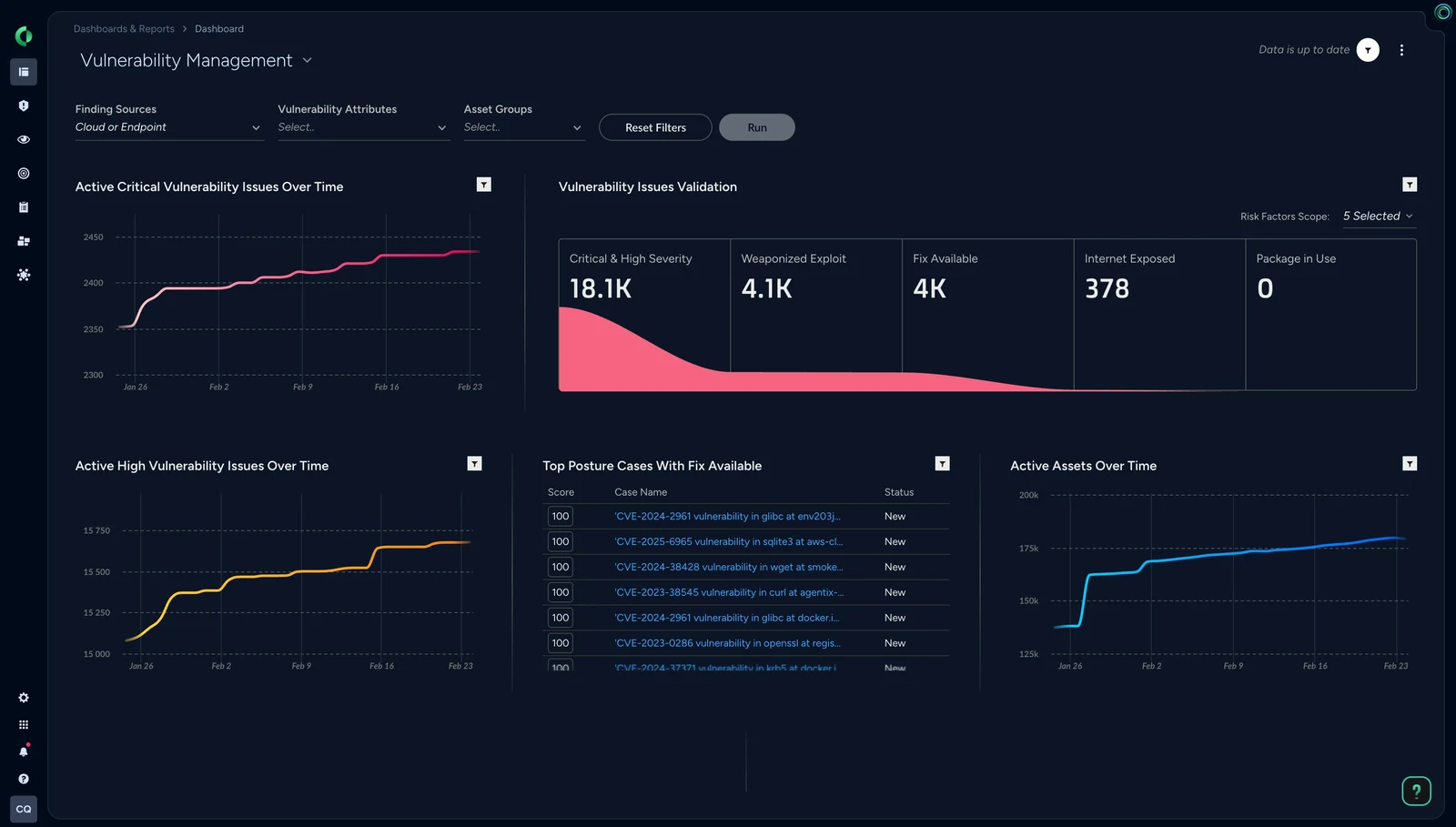
Cortex Cloud is Palo Alto Networks’ cloud-native application protection platform and the successor to Prisma Cloud, and it manages and prioritizes vulnerabilities from code to cloud. It provides continuous coverage across hosts, containers, and serverless functions in the public cloud and on-premises, using both agent-based and agentless scanning, and its findings sit on the same Cortex platform the security operations team uses for detection and response. Prioritization uses the Cortex Vulnerability Risk Score, which combines CVSS, exploit intelligence, internet exposure, whether the package is in use, and compensating controls.
Key features include:

Best for: Small development teams that want code, cloud, and VM scanning in one tool
Strengths: Snapshot-based VM scanning, cloud attack paths, and AI AutoFix
Things to consider: Reviewers would like deeper reporting, and some find the step up from the free tier large for early-stage companies
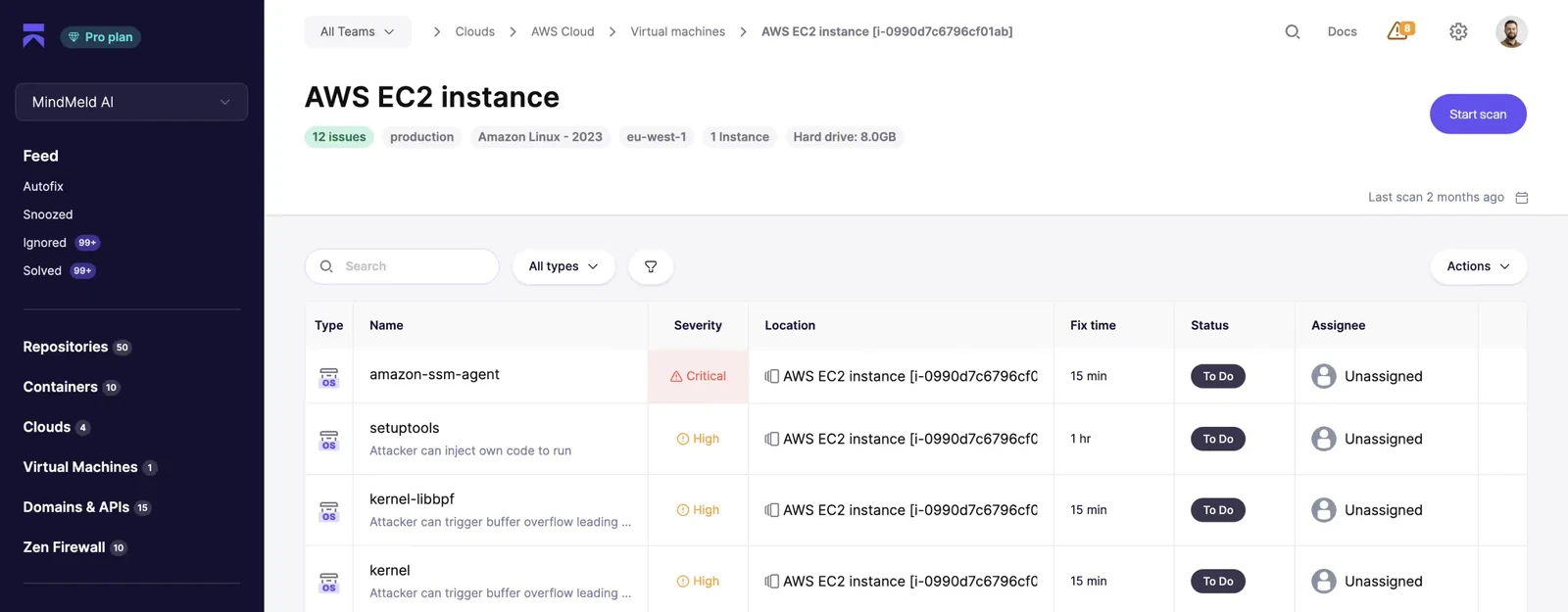
Aikido Security is a developer-focused platform that secures code, cloud, and runtime in one system. It brings together SAST, SCA, DAST, secrets detection, container and virtual machine scanning, and cloud posture management, so teams can find and fix vulnerabilities without stitching together separate point tools. Aikido filters out findings that aren’t reachable, groups related alerts, and evaluates findings in the context of the codebase and infrastructure, and its Aikido Agent can answer questions about findings, investigate attack paths, and adapt fixes.
Key features include:
Best for: Organizations already standardized on Microsoft Defender and Intune
Strengths: Continuous, agent-based assessment with breach-likelihood prioritization, built into the Defender portal
Things to consider: Some capabilities require the premium add-on, and reviewers would like broader third-party coverage
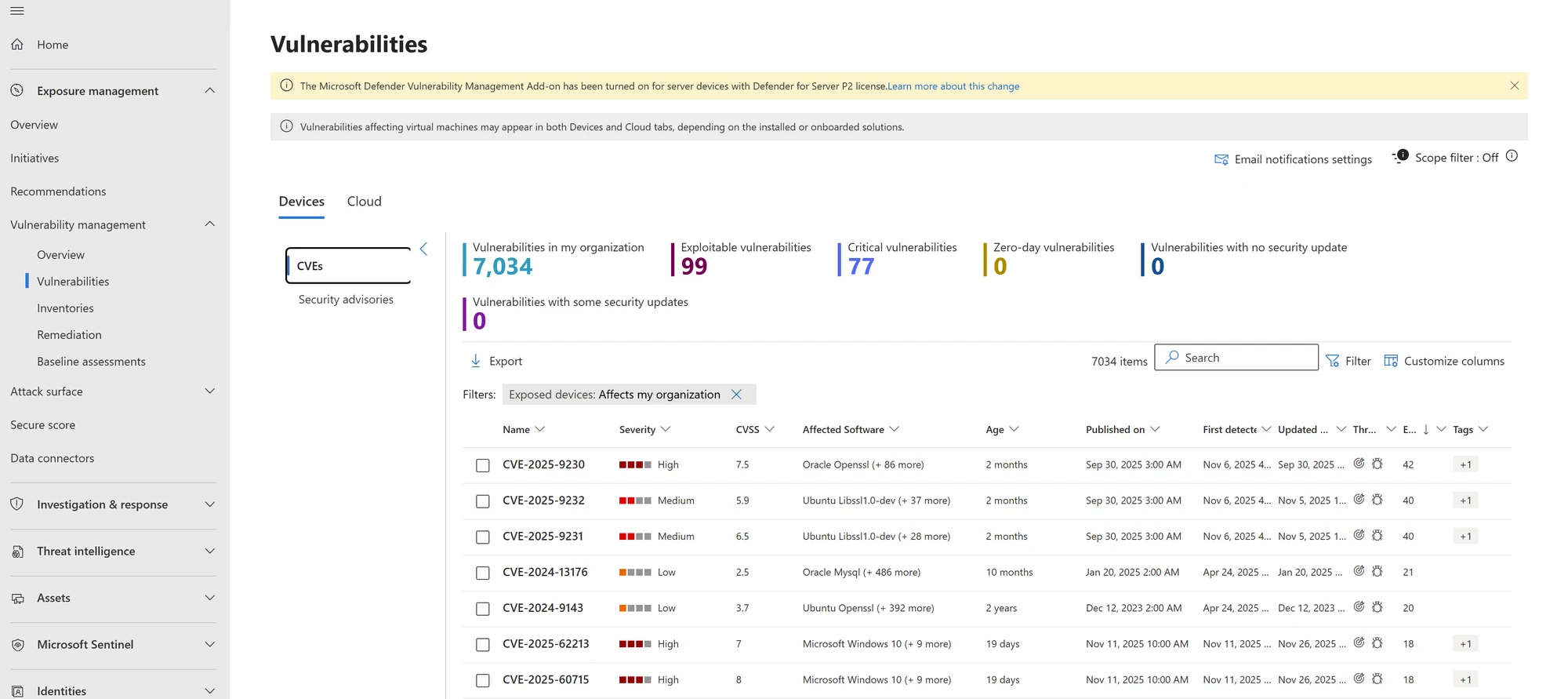
Microsoft Defender Vulnerability Management takes a risk-based approach to reducing threats, combining continuous asset discovery, prioritization, and built-in remediation. It continuously discovers and monitors devices, detecting risks when endpoints are not connected to the corporate network, and provides coverage across cloud workloads, servers, containers, network devices, and endpoints on Windows, Linux, macOS, iOS, and Android. Prioritization draws on Microsoft threat intelligence, breach-likelihood predictions, EPSS, and business context. Core capabilities come with Defender for Endpoint Plan 2, and premium capabilities come through the Defender Vulnerability Management add-on, the standalone offering, or Defender for Servers Plan 2.
Key features include:

Best for: CrowdStrike Falcon users adding exposure management across endpoints, OT, and IoT
Strengths: Sensor-based assessment with ExPRT.AI scoring and adversary intelligence
Things to consider: Setup and policy tuning take product expertise, and some reviewers describe the cost as a significant investment
CrowdStrike Falcon Exposure Management continuously finds exploitable vulnerabilities, misconfigurations, and attack paths across external assets, endpoints, cloud, network, OT/IoT, and shadow AI. Because it uses the existing Falcon sensor, teams can assess vulnerabilities without deploying additional agents, and it provides real-time visibility as conditions change. Prioritization is handled by an Exposure Prioritization Agent that identifies what attackers are most likely to exploit using exploitability analysis.
Key features include:
Best for: Teams consolidating vulnerability management and patching in one platform
Strengths: Native patching for more than 20,000 apps, AI-generated scripts, and patchless protection in one place
Things to consider: Reviewers would like more reporting flexibility and broader platform support, such as ARM64 agents
Vicarius vRx combines vulnerability discovery, prioritization, and remediation across Windows, macOS, and Linux in a single platform, which Vicarius now describes as remediation-first. It discovers and monitors endpoints, servers, IoT devices, printers, and network devices in one live view, using an agent or agentless detection depending on the device. For prioritization, vRx’s vScore combines CVSS, EPSS, and CISA KEV signals with exploit validation and the business value of each asset, and Vicarius uses agentic AI to check which exploit paths apply in the live environment.
Key features include:

Best for: IT teams unifying real-time detection with patch remediation
Strengths: Scan-free correlation of CVE intelligence to patches, including for offline devices
Things to consider: It’s endpoint-focused, and reviewers would like clearer patch status indicators
NinjaOne Vulnerability Management, launched in March 2026, provides real-time vulnerability detection designed to drive remediation rather than just reporting. It continuously correlates live and last-known endpoint software state with CVE and Known Exploited Vulnerability intelligence, so vulnerabilities surface as they are disclosed instead of on a scan schedule. The architecture is scan-free, and endpoint vulnerability detection happens server-side, avoiding scan windows and agent performance spikes.
Key features include:
Vulnerability management solutions help organizations move from reactive patching to a continuous, risk-based security process. By combining asset discovery, vulnerability assessment, exploitability-driven prioritization, remediation workflows, and ongoing verification, these platforms let security teams focus on the issues that matter most instead of treating every finding equally. As environments expand across endpoints, cloud infrastructure, applications, and third-party software, the best choice is a solution with broad visibility and accurate prioritization, and increasingly one that can tell which vulnerabilities can actually be exploited in your environment and get them fixed.
[ Vulnerability Management ]

[ Vulnerability Management ]

[ Vulnerability Management ]