[ Vulnerability Management ]
Best AI-powered vulnerability management platforms: top 8 in 2026

Summarize with AI


Summarize with AI
TL;DR: AI-powered vulnerability management platforms use AI to work out which vulnerabilities can actually be exploited in your environment and to get them fixed, instead of ranking everything by severity score. Best for one AI-driven process across code and cloud vulnerabilities: Maze. Best for attack path graphs across clouds: Wiz. Best for agentless cloud scanning: Orca. Best for on-premises and hybrid scanning: Tenable.
AI-powered vulnerability management platforms use AI to find, investigate, prioritize, and fix vulnerabilities across code, cloud, and infrastructure. Earlier platforms ranked findings with severity scores and exploit predictions, and the newest ones use AI to decide whether each vulnerability can be exploited in a specific environment, show the evidence behind that decision, and write the fix.
Key capabilities of AI-powered vulnerability management platforms:
The table below summarizes how the platforms in this guide differ, including who each one suits and where teams report friction, and the sections that follow cover each platform in more detail.
| Category | Solution | Best for | Key strengths | Things to consider |
|---|---|---|---|---|
| AI-native vulnerability management | Maze | Teams looking for a unified vulnerability process for code and cloud vulnerabilities | AI that investigates every vulnerability and shows the evidence behind each verdict, with fixes delivered where developers work | SaaS only, and you can’t bring your own LLM key |
| Cloud-native application protection platform | Wiz | Attack path graphs that connect vulnerabilities to identities, exposure, and data | Graph-based prioritization, broad agentless coverage, and AI agents for remediation | A broad platform that takes time to learn, and reviewers would like more flexible reporting |
| Cloud-native application protection platform | Orca Security | Agentless cloud vulnerability detection with attack path context | SideScanning, attack path analysis, and coverage across five clouds and Kubernetes | First scans of older environments can surface a lot of findings |
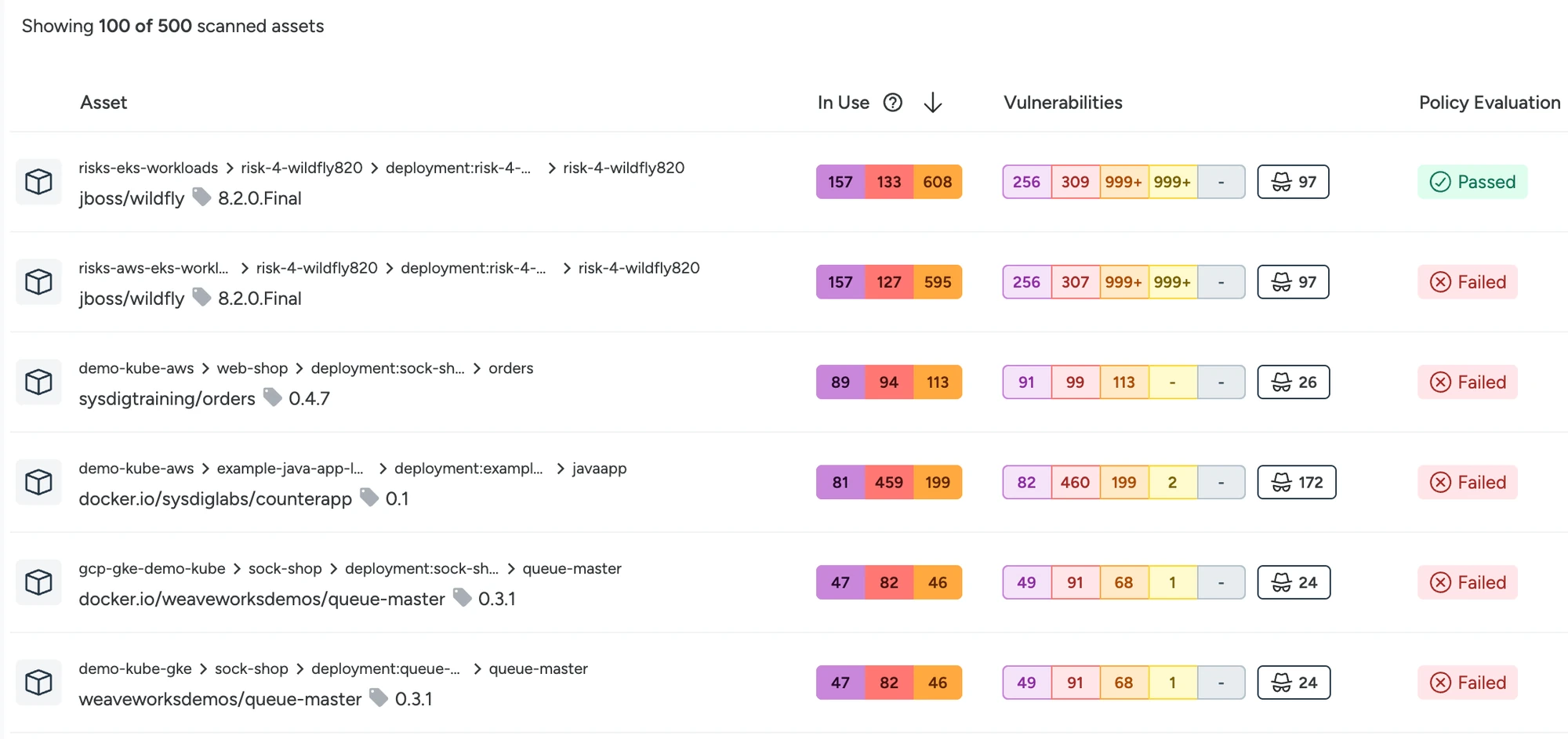
| Cloud-native application protection platform | Sysdig Secure | In-use package filtering for containers and Kubernetes | Filtering to packages in use, with AI remediation guidance | Setup takes planning, especially for teams new to Kubernetes |
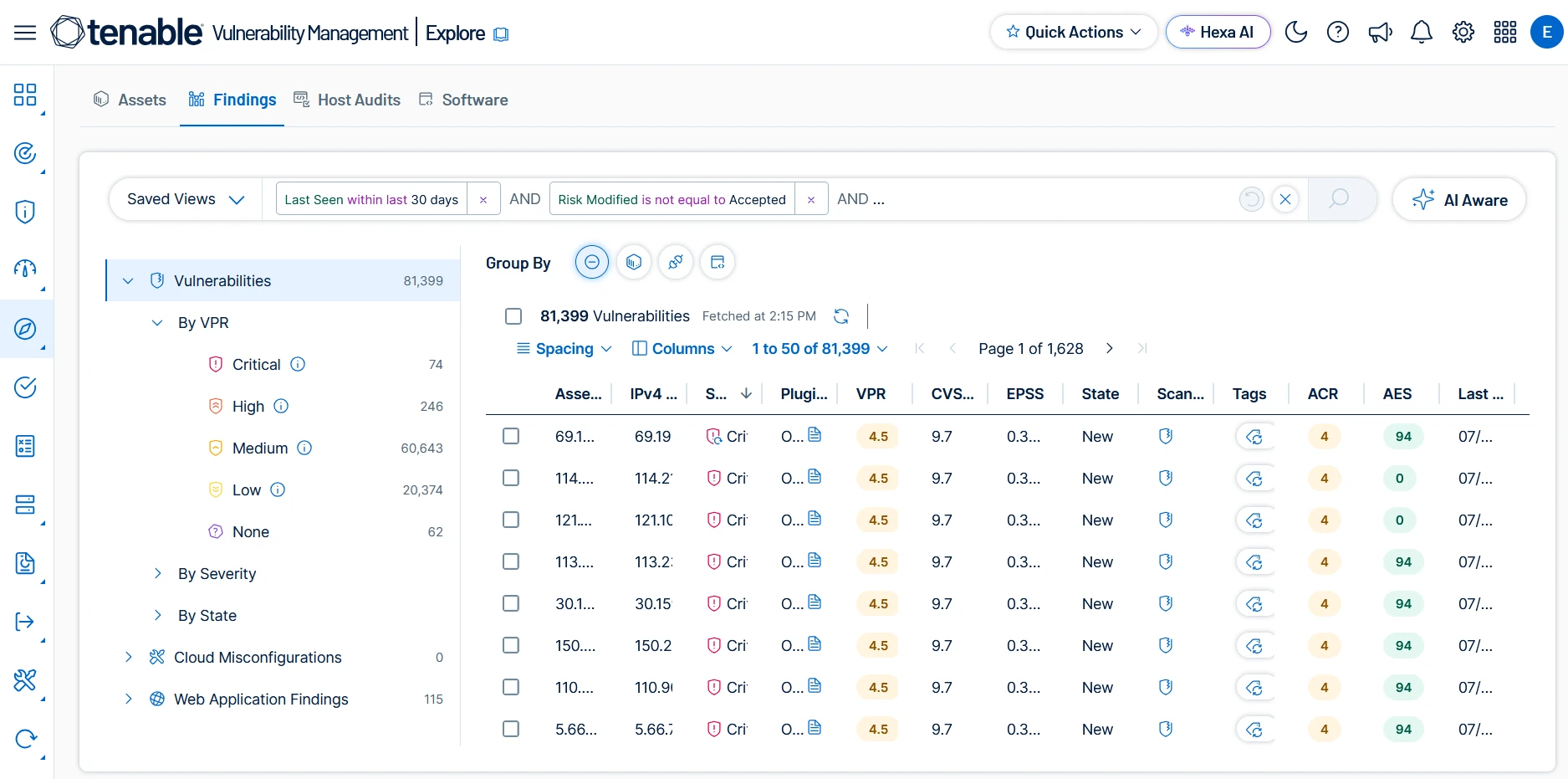
| Vulnerability and exposure management platform | Tenable One Vulnerability Management | On-premises and hybrid vulnerability scanning within an exposure management platform | VPR prioritization, continuous discovery, and patching with guardrails | Asset-based licensing takes planning, and some teams export data for reporting |
| Vulnerability and exposure management platform | Qualys VMDR | Built-in patching alongside scanning across IT, OT, and cloud assets | TruRisk scoring, broad sensor coverage, and native patch deployment | Some capabilities are licensed as separate modules |
| Vulnerability and exposure management platform | Rapid7 Exposure Command (InsightVM) | Hybrid exposure management built on vulnerability management | Adversary-aware prioritization, more than 500 integrations, and remediation projects | The console and scan engines take expertise to maintain |
| Vulnerability and exposure management platform | CrowdStrike Falcon Exposure Management | Exposure management across endpoints, OT, and IoT devices | ExPRT.AI scoring built on CrowdStrike’s endpoint and adversary telemetry | Setup and policy tuning take product expertise |
Tens of thousands of new CVEs are published every year, and every new service, container image, and open-source dependency adds more findings to the queue. Scanners report all of them, so security teams spend most of their time deciding which findings deserve attention rather than fixing the ones that do, and real risks wait behind a long list of issues that would never be exploited.
How these platforms help: Scanners produce a large number of false positives, and AI-powered platforms take on the triage work of separating them from real risks, which used to fall to people. Instead of handing the team a longer sorted list, the best platforms investigate each finding, close the false positives and the vulnerabilities that can’t be exploited with the reasoning attached, and leave a much shorter list of vulnerabilities that need a fix.
Most security teams are small relative to the environments they protect, and hiring experienced security engineers can be challenging. Reviewing every finding by hand, researching what each one needs to be exploited, and chasing the owner for a fix takes more hours than any team has.
How these platforms help: AI-powered platforms do the research a security engineer would do for each finding, such as checking whether the vulnerable code is running, whether it’s exposed, and which controls sit in front of it. Your team then spends its time reviewing verdicts and approving fixes rather than gathering context, which is how a small team keeps up with a large environment.
CVSS rates how severe a vulnerability is in the abstract, and it doesn’t know anything about your environment. A critical CVE in a package that never loads gets the same score as one in an internet-facing service, so teams that prioritize by CVSS alone spend time on findings that pose little risk and can miss lower-scored ones that attackers could actually use.
How these platforms help: Earlier platforms improved on CVSS by adding exploit prediction and asset context, through scores such as EPSS, Tenable VPR, and Qualys TruRisk. AI-powered platforms go a step further and check whether a vulnerability can be triggered in your environment, given its configuration, controls, and runtime state, which is the question CVSS and exploit prediction can’t answer. Read more about vulnerability prioritization factors and why to go beyond them.
Cloud workloads, containers, and serverless functions appear and disappear in minutes, and code ships to production many times a day. Tools built around scheduled network scans of fixed servers struggle to keep an accurate picture of what is running, what is exposed, and which code changes introduced which vulnerabilities.
How these platforms help: AI-powered platforms pull context from cloud APIs, code repositories, and runtime state, and they update their picture of the environment as it changes. The best ones connect a vulnerability in code to where that code runs in the cloud, so a team can see in one place whether a vulnerable library sits in a production container behind a public load balancer or in a test image nobody deploys.
Related content: Read our guide to cloud application security.
Predictive exploit analysis estimates how likely a vulnerability is to be exploited in the wild. Models such as EPSS and vendor scores such as Tenable VPR, Qualys TruRisk, and CrowdStrike ExPRT.AI draw on:
These models were a real step forward from CVSS because they let teams focus on vulnerabilities attackers are actually using, often before a public exploit appears. Their limit is that they predict behavior across the internet rather than in your environment. A vulnerability with a high exploit prediction score may still be impossible to trigger where it sits in your stack, so the best platforms pair prediction with an investigation of whether the vulnerability can be exploited in your environment.
Context-aware prioritization ranks vulnerabilities by the environment they sit in, including:
Earlier platforms got this context from asset tags and configuration management databases that someone had to keep up to date, and the ranking was only as good as those records. AI-powered platforms work out what context each finding needs and gather it directly from the cloud, the code, and the running workload, such as whether a package is loaded at runtime or whether a service is reachable from the internet. The ranking then reflects the environment as it is today rather than as it was last documented.
Attack path analysis maps the routes an attacker could take from an exposed entry point to a critical asset. By chaining vulnerabilities, misconfigurations, and permissions together, platforms can:
Graph-based cloud platforms made this practical by connecting vulnerabilities to identities, network exposure, and sensitive data in one model, which shows teams how a single finding fits into a larger risk. AI adds the ability to check whether each step on a path is possible in practice, such as whether the vulnerable function can actually be reached with attacker-controlled input, so teams fix the paths that are real rather than every path the graph can draw.
Noise reduction cuts the findings a team has to review by removing:
Earlier tools reduced noise with deduplication, suppression rules, and severity thresholds, which shortened the list but often hid real issues along with the noise and gave no reason for either. AI-powered platforms close a finding only after investigating it, and they record why, so a team can see that a vulnerability was closed because the affected package never loads, for example, rather than because it scored below a threshold.
Remediation guidance tells teams how to fix a vulnerability, drawing on:
Traditional guidance came from vendor advisories, usually as an instruction to upgrade to a fixed version, and left developers to work out what that upgrade would break. AI-generated guidance writes a fix that matches the code and configuration in your environment, finds the person who owns the affected code, and delivers the fix as a ticket or pull request. When no patch exists, the best platforms recommend a mitigation, such as a configuration change or a compensating control, so the risk doesn’t wait for a vendor release.
Natural-language querying lets people ask questions about their vulnerability data in plain language. AI assistants can:
Earlier platforms required a query language or a report builder, so answering a new question usually meant asking whoever knew the tool best. Natural-language interfaces let engineers, managers, and executives get answers directly, such as which internet-facing services have an open critical vulnerability, and generate executive summaries and technical breakdowns without building a report by hand.
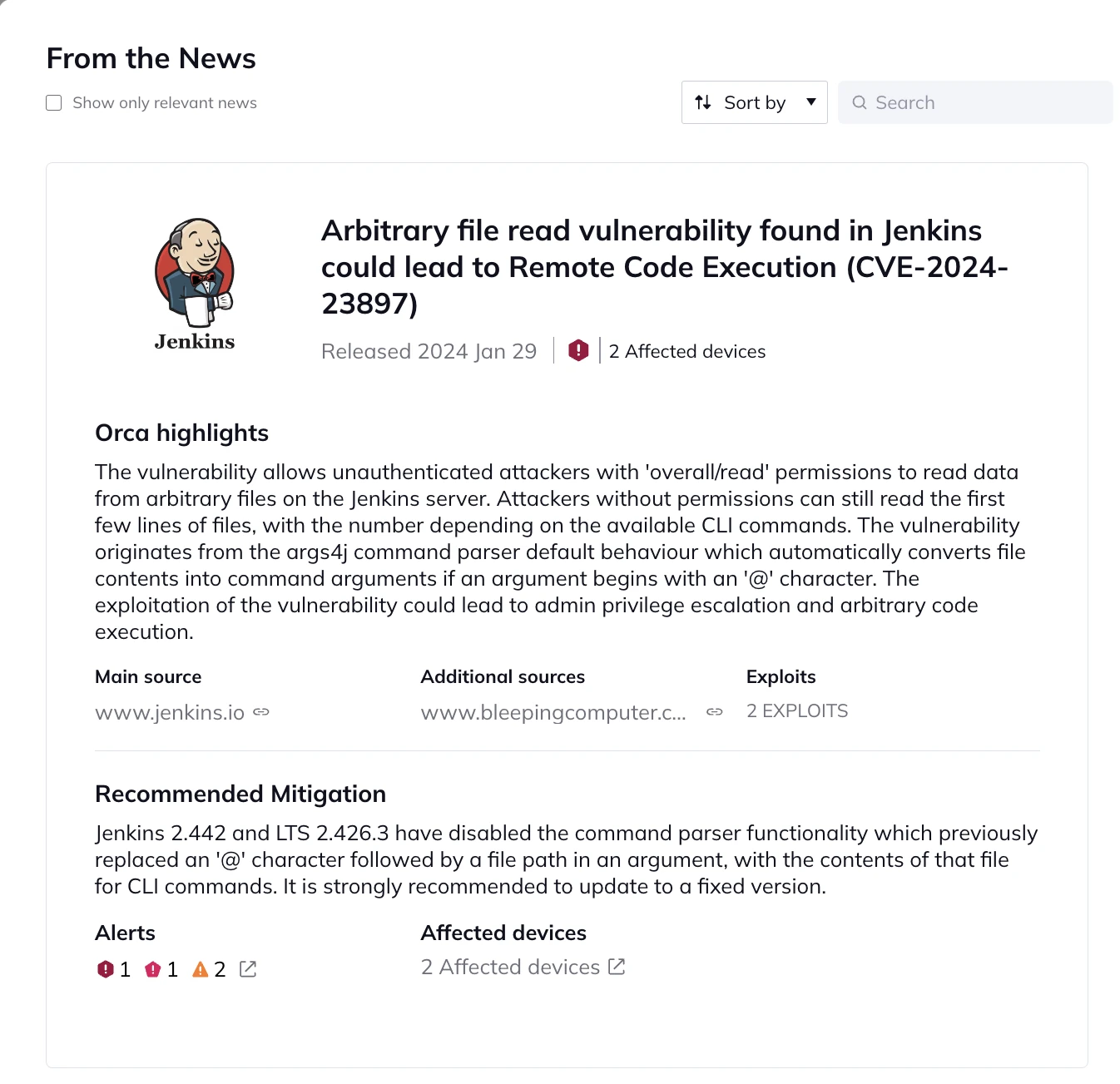
AI investigation goes beyond scoring by having AI gather evidence, correlate findings across tools, and determine whether a vulnerability can be exploited in a specific environment. Instead of relying on scanner output alone, the platform examines:
Exploitability here means whether the conditions a vulnerability needs are present in your environment, which is a different question from whether a public exploit exists. Auditability matters just as much, because a team can’t act on a verdict it can’t check. The best platforms record the evidence, data sources, and reasoning behind every verdict, including findings marked not exploitable, so security teams can verify the AI’s work, show auditors why a finding was closed, and trust automated decisions without treating them as a black box.
How we selected these platforms: We shortlisted AI-powered vulnerability management platforms based on predictive exploit analysis, context-aware risk prioritization, attack path analysis, automated noise reduction, AI-generated remediation guidance, natural-language querying and reporting, and AI investigation of exploitability.
AI-native platforms were built from the ground up so their AI can gather the context it needs and investigate each vulnerability the way a security engineer would. They look at every finding, decide whether it can be exploited in your specific environment, and work out what the fix should be, showing the evidence behind each decision.

Best for: Teams looking for a unified vulnerability process for code and cloud vulnerabilities
Strengths: AI that investigates every vulnerability and shows the evidence behind each verdict, with fixes delivered where your developers work
Things to consider: SaaS only, and you can’t bring your own LLM key
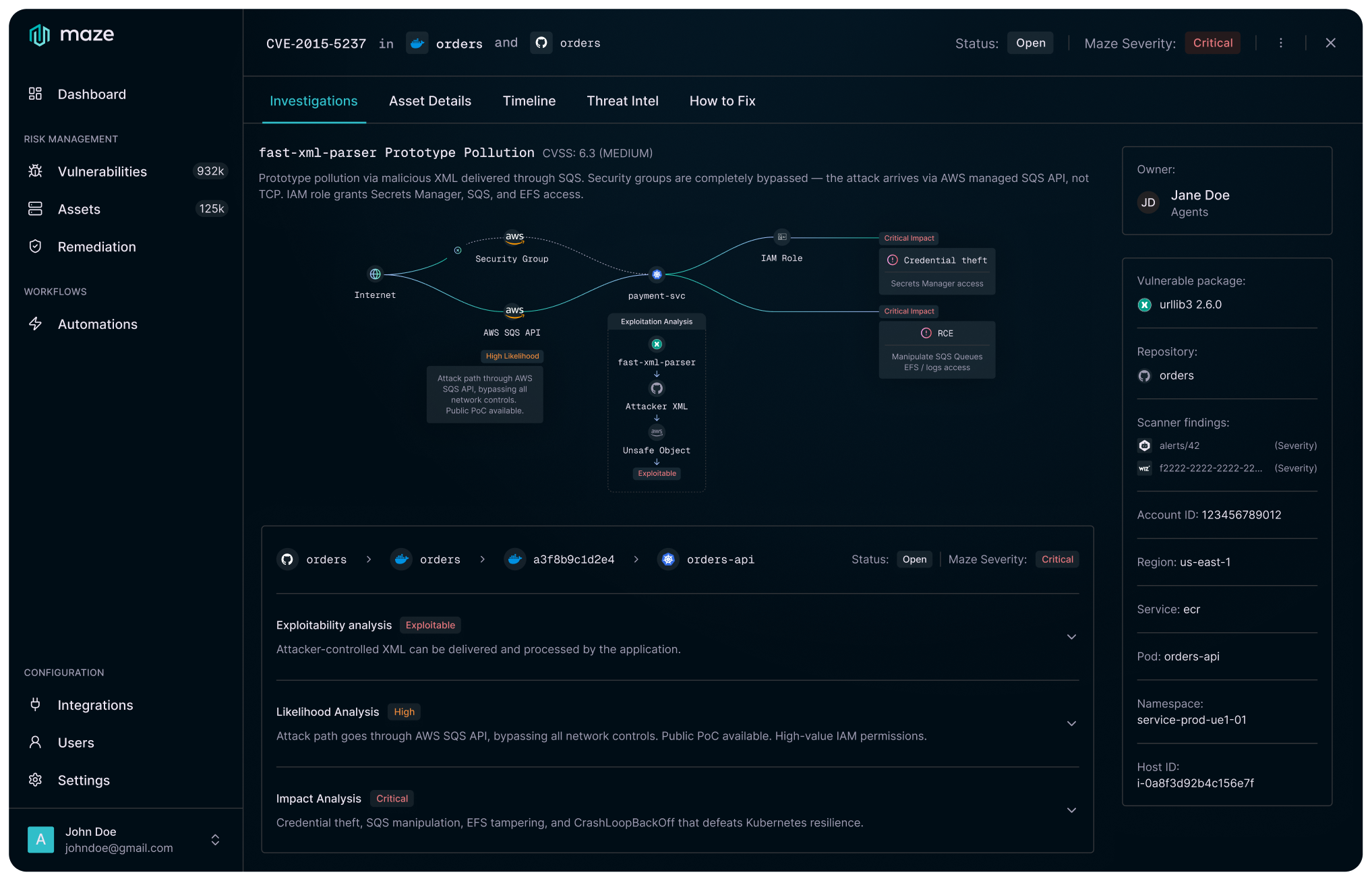
Maze is an AI-native vulnerability management platform, built from the ground up so its AI can gather the context it needs, reason through each vulnerability, and make decisions the way your best security engineer would. It investigates every vulnerability across your code and cloud, determines whether each one can be exploited in your specific environment, and helps your team fix the ones that can. Maze Code uses AI to find the vulnerabilities in your code and dependencies, with AI-SAST running on every pull request and across your entire codebase and AI-SCA covering your open-source dependencies. Maze Cloud investigates the vulnerabilities your existing scanners find in the workloads running in your cloud, so code and cloud findings go through the same investigation.
Maze’s founders worked closely with security teams, and the same gap kept coming up. A security engineer with unlimited time would look into every vulnerability, checking whether the vulnerable code runs, what it’s exposed to, and which controls sit in front of it, but no team has that time, and the tools they relied on couldn’t gather that context for them. Maze’s AI was built to think the way that engineer would, working out what context each vulnerability needs and gathering it from your code, your build, and your cloud instead of applying static rules. Every verdict comes with the reasoning and evidence behind it, so your team can check the work instead of trusting a score.
Key features include:
Cloud-native application protection platforms (CNAPPs) arrived with the move to the cloud. They read workloads through cloud APIs and storage instead of network scans, place vulnerabilities in a graph alongside identities, network exposure, and sensitive data, and have added AI assistants and agents for prioritization and remediation. They suit teams that want vulnerability management and cloud posture from a single vendor.

Best for: Attack path graphs that connect vulnerabilities to identities, exposure, and data
Strengths: Graph-based prioritization, broad agentless coverage, and AI agents for remediation
Things to consider: A broad platform that takes time to learn, and reviewers would like more flexible reporting
Wiz Unified Vulnerability Management assesses, centralizes, prioritizes, and remediates vulnerabilities across cloud, code, and on-premises environments in one platform. Agentless-first, cross-cloud scanning draws on a catalog of more than 120,000 vulnerabilities across more than 40 operating systems, and the Wiz Sensor workload scanner and third-party aggregation extend coverage to on-premises environments.
Findings from Wiz scanners and connected tools, including vulnerability scanners, penetration tests, DSPM, SAST, and DAST, are correlated on the Wiz Security Graph and validated for external exposure with Wiz ASM. Ownership is resolved through Wiz Projects and CMDB integration, and Wiz’s AI agents trace high-risk issues to their root cause and generate fixes. Wiz joined Google Cloud in March 2026 and continues to operate under its own brand.
Key features include:

Best for: Agentless cloud vulnerability detection with attack path context
Strengths: SideScanning, attack path analysis, and coverage across five clouds and Kubernetes
Things to consider: First scans of older environments can surface a lot of findings, and some teams build their own executive reports
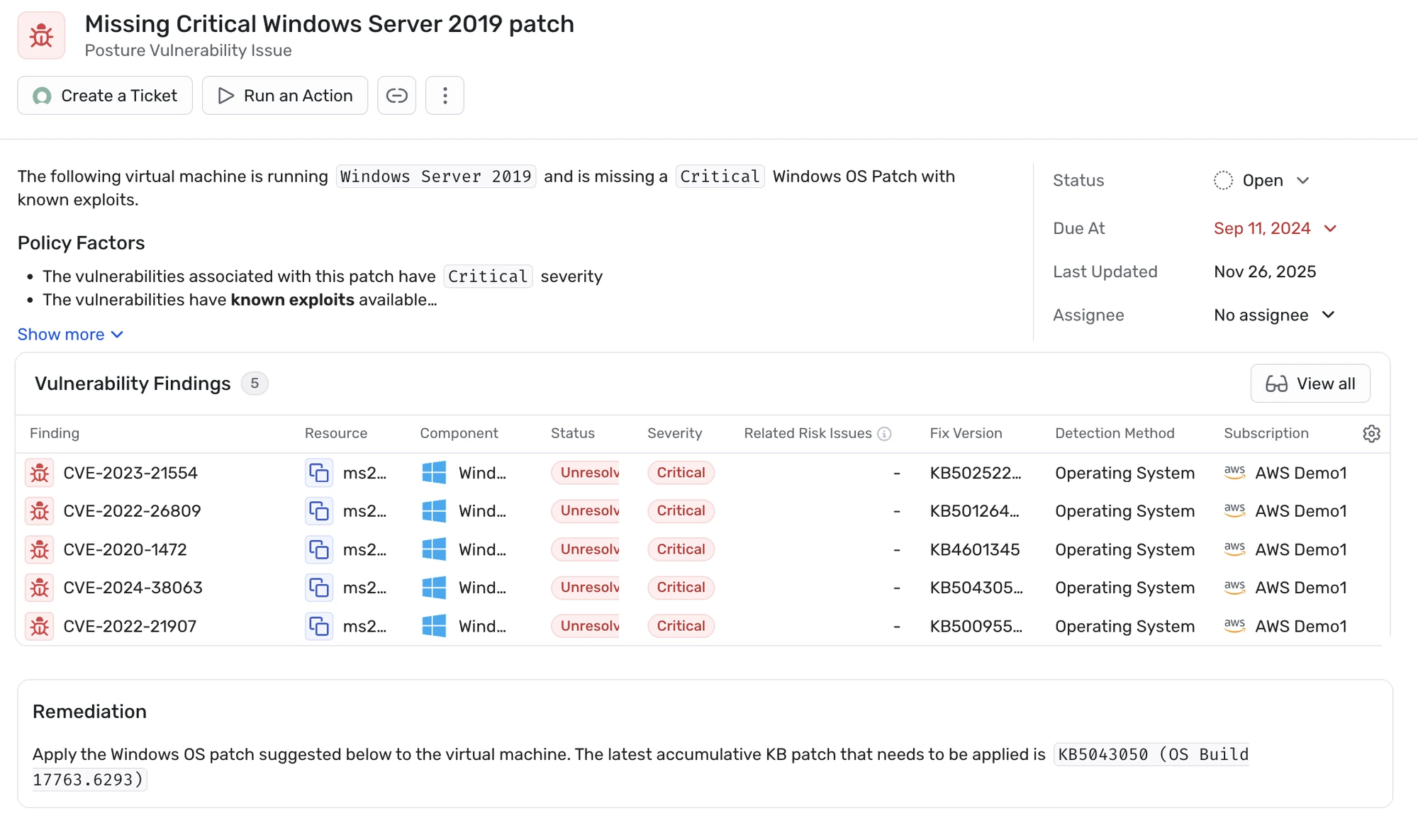
Orca runs vulnerability management as part of its agentless-first cloud security platform. Its patented SideScanning technology collects data from cloud configuration and from workload runtime block storage out of band, so there are no agents or network scanners to install on each workload, and an optional Orca Sensor adds runtime detail. Within minutes of connecting, Orca inventories the environment and surfaces vulnerabilities, malware, misconfigurations, lateral movement risk, exposed secrets, and sensitive data.
Vulnerability data from more than 20 sources is combined with cloud configuration metadata in Orca’s Unified Data Model, so prioritization reflects how assets connect rather than the CVSS score alone. Attack path analysis assigns a business impact score to each path, and reachability analysis narrows findings to the packages that can run, or actually do run, in production. Orca AI powers the platform’s assistants and agents, including AI-generated remediation steps and code-fix pull requests routed to code owners.
Key features include:

Best for: In-use package filtering for containers and Kubernetes
Strengths: Filtering to packages in use, with AI remediation guidance and base image fixes
Things to consider: Setup takes planning, especially for teams new to Kubernetes
Sysdig approaches vulnerability management from runtime, correlating vulnerability data with exploitability, reachability, and runtime activity and prioritizing the vulnerabilities tied to packages that are actually in use, so findings in packages that never load drop down the list. Scanning covers container registries, CI/CD pipelines, and runtime across containers, Kubernetes, and Linux and Windows hosts, both in the cloud and on-premises.
Sysdig’s GenAI Assistant, formerly Sysdig Sage, turns vulnerability data into prescriptive remediation guidance in natural language, including the commands to run. Sysdig also finds high-impact fixes at the source, such as a base image patch that resolves dozens of downstream vulnerabilities, and its agentic vulnerability management workflow drafts the patch and opens a ticket for a person to approve.
Key features include:
Tenable, Qualys, and Rapid7 built risk-based vulnerability management, moving the industry from CVSS toward threat intelligence and exploit prediction with scores like VPR and TruRisk. They cover the widest range of assets, from on-premises servers and network devices to cloud and OT, and are adding AI assistants and agents on top of those scoring models. CrowdStrike came to the category from endpoint protection and applies the same risk-based approach to the telemetry its Falcon agent already collects.
Best for: On-premises and hybrid vulnerability scanning within an exposure management platform
Strengths: VPR prioritization, continuous discovery, and patching with guardrails
Things to consider: Asset-based licensing takes planning, and some teams export data for reporting
Tenable One Vulnerability Management is a cloud-managed platform built on Nessus scanning technology and delivered within the Tenable One exposure management platform. Continuous, always-on discovery and assessment covers known and unknown assets, including dynamic cloud resources and remote workforce endpoints, and findings are contextualized with Tenable Research intelligence.
Prioritization runs on the Vulnerability Priority Rating, which uses generative AI, enriched threat intelligence, and context-aware scoring. Remediation runs through bidirectional ticketing and patch management under guardrails and SLAs, and Hexa AI serves as the agentic layer of Tenable One. Tenable Security Center and Tenable Enclave Security cover on-premises and air-gapped needs.
Key features include:
Best for: Built-in patching alongside scanning across IT, OT, and cloud assets
Strengths: TruRisk scoring, broad sensor coverage, and native patch deployment
Things to consider: Some capabilities are licensed as separate modules, and reporting can take several steps
Qualys VMDR combines asset discovery, vulnerability and configuration assessment, risk-based prioritization, and response on the Enterprise TruRisk Platform. It automatically detects known and unknown assets across on-premises, cloud, and internet-facing environments and scans them using unlimited virtual scanners, cloud agents, passive sensors, agent gateways, and container sensors.
Prioritization runs on TruRisk, which draws on more than 25 real-time threat intelligence sources and MITRE ATT&CK mapping to rank vulnerabilities beyond the CVSS score. Response covers patch deployment to devices anywhere, mitigations that block attack paths when no patch is available, and automatic ticket creation in ITSM tools with SLA assignment.
Key features include:

Best for: Hybrid exposure management built on vulnerability management
Strengths: Adversary-aware prioritization, more than 500 integrations, and remediation projects
Things to consider: The console and scan engines take expertise to maintain, and large scans use significant resources
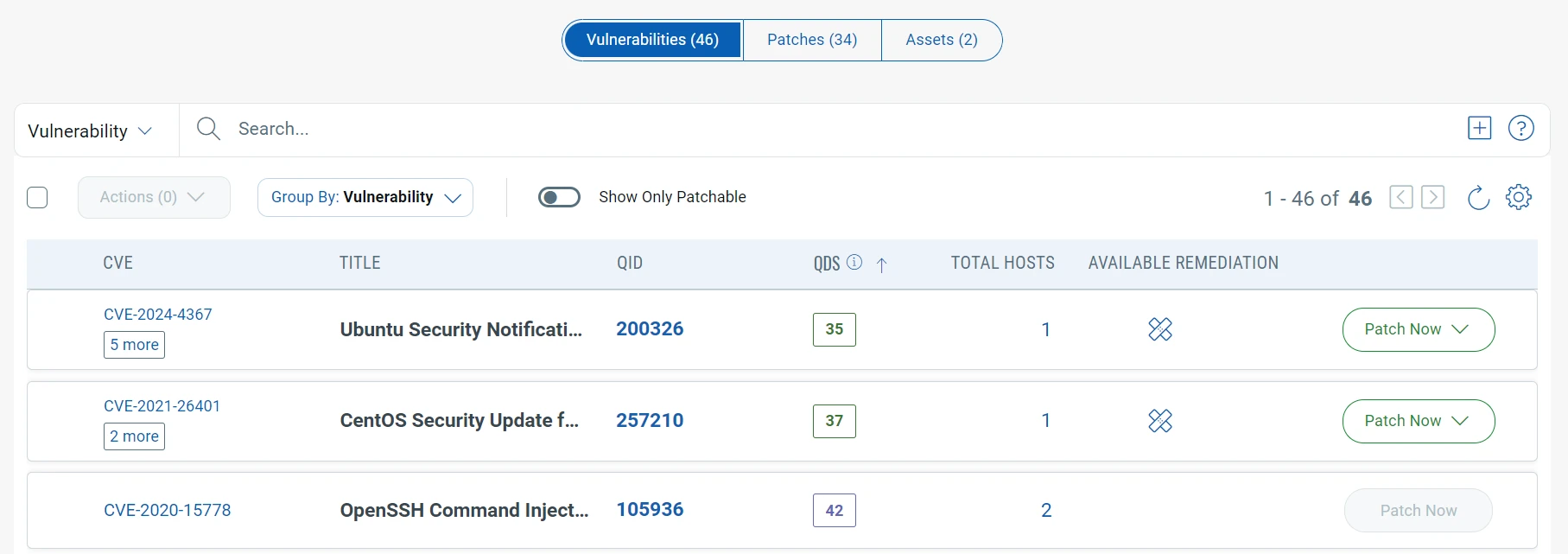
InsightVM is Rapid7’s vulnerability management technology and is now delivered as part of Exposure Command. Exposure Command Essentials pairs InsightVM with attack surface management, and Exposure Command Ultimate adds cloud and application security context, while a standalone InsightVM deployment remains available for teams that need it.
Prioritization uses exploit likelihood, reachability, severity, and business context, and combines Rapid7 telemetry with third-party data to surface toxic combinations across cloud, network, and applications. Surface Command adds the external attacker view to InsightVM’s internal scan data, and remediation runs through AI-powered guidance, no-code automation, ticketing, remediation projects, and SLAs.
Key features include:

Best for: Exposure management across endpoints, OT, and IoT devices
Strengths: ExPRT.AI scoring built on CrowdStrike’s endpoint and adversary telemetry
Things to consider: Setup and policy tuning take product expertise
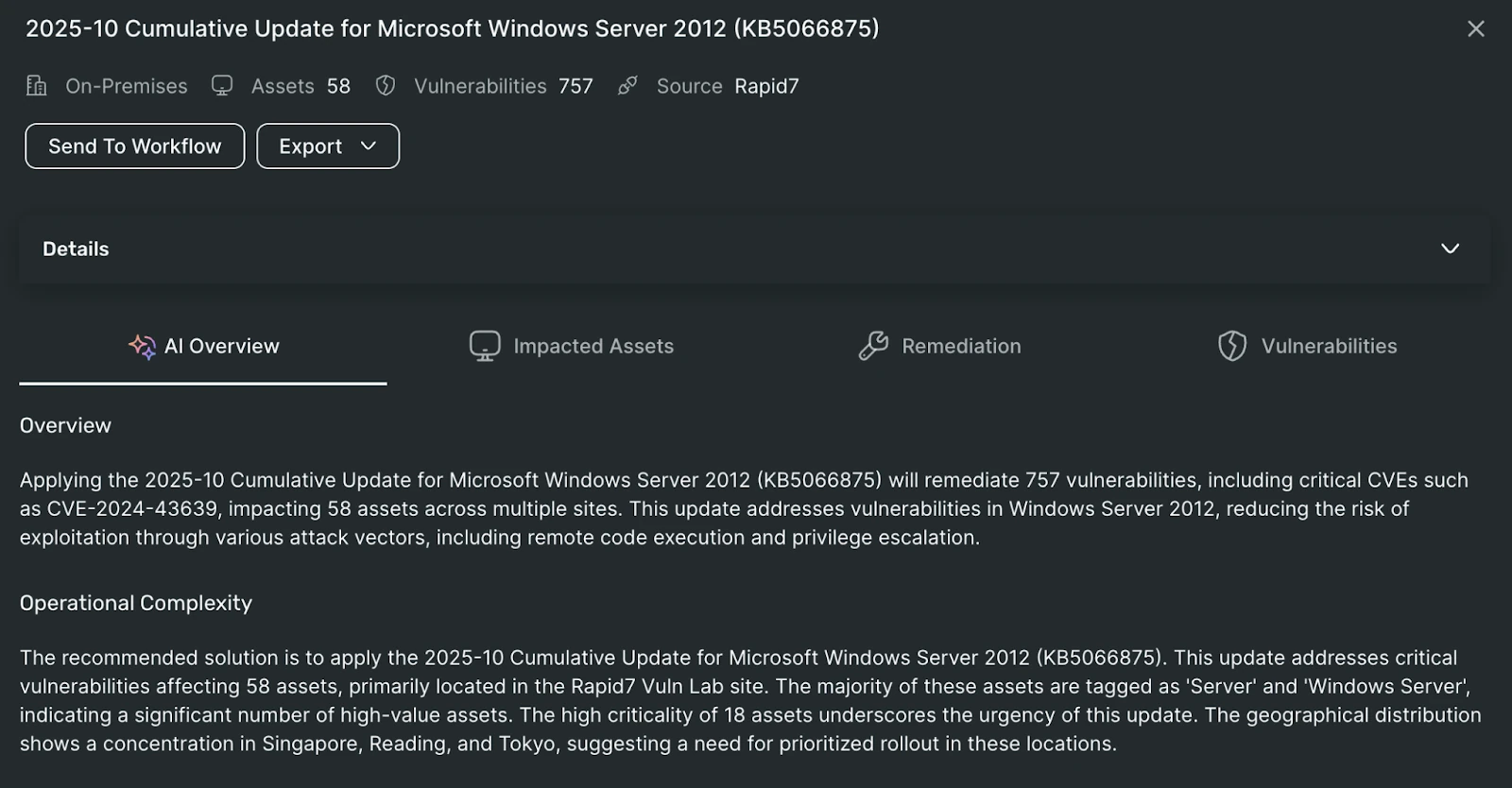
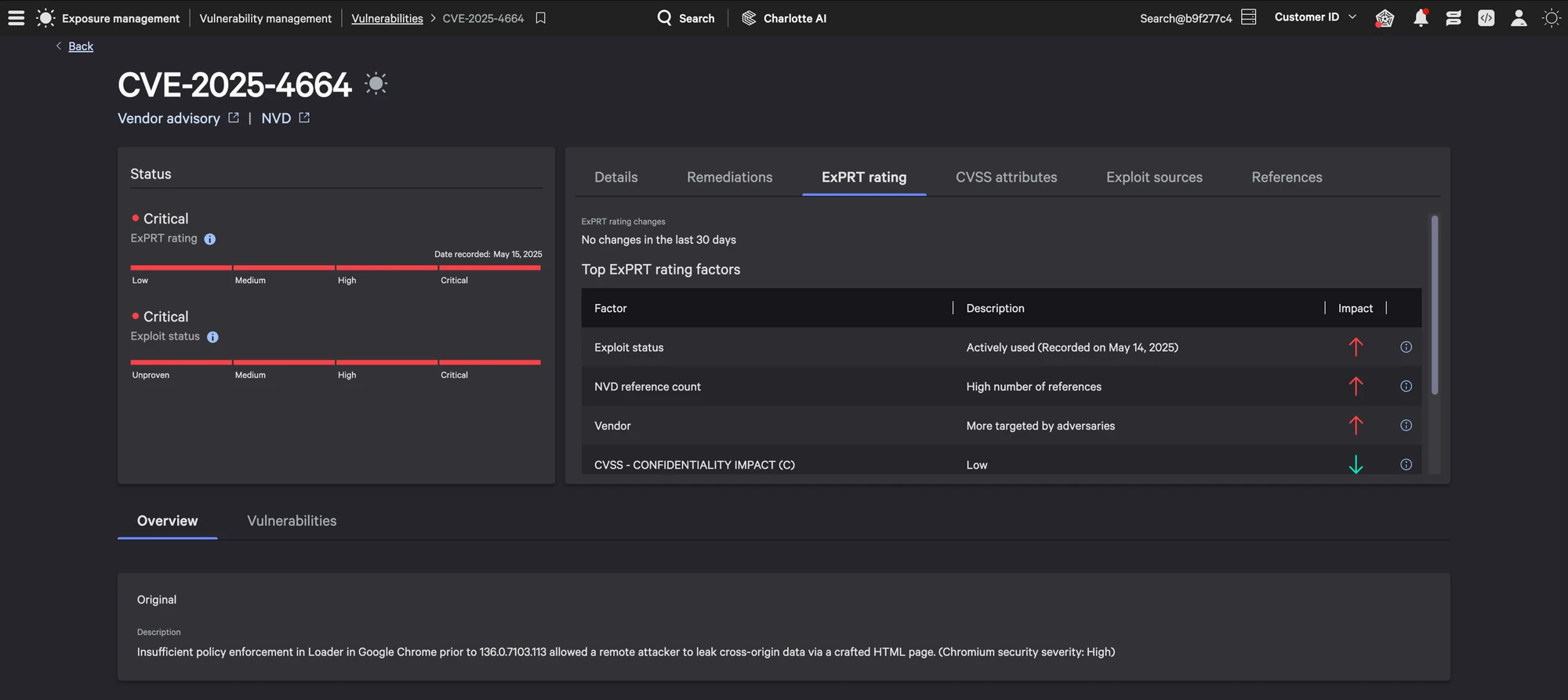
Falcon Exposure Management continuously finds exploitable vulnerabilities, misconfigurations, and attack paths across external assets, endpoints, cloud, network, OT and IoT, and shadow AI. It runs on the Falcon platform, so exposure findings sit alongside the telemetry CrowdStrike already collects, and teams can adopt it alongside their existing security tools.
Prioritization combines the ExPRT.AI rating, which adjusts risk scores using real-time threat intelligence and Falcon platform telemetry, with the Exposure Prioritization Agent, which confirms exploitability using endpoint, identity, cloud, and network context. Monitoring runs continuously rather than at scan intervals, and findings connect into remediation and response workflows.
Key features include:
AI-powered vulnerability management changes the job from sorting a long list of findings to fixing the short list that can actually be exploited. Vulnerability and exposure management platforms remain the broadest option for discovering and scoring assets across on-premises, cloud, and OT environments, and cloud-native platforms connect vulnerabilities to the rest of the cloud estate in one graph. AI-native platforms like Maze investigate every finding, show the evidence behind each verdict, and deliver the fix to the developer who owns it, across both code and cloud. Many teams use them together, with existing scanners finding vulnerabilities and an AI-native platform deciding which ones matter and getting them fixed.
[ Vulnerability Management ]

[ Vulnerability Management ]
[ Vulnerability Management ]