[ Company ]
Autonomous security for modern software

Summarize with AI


Summarize with AI
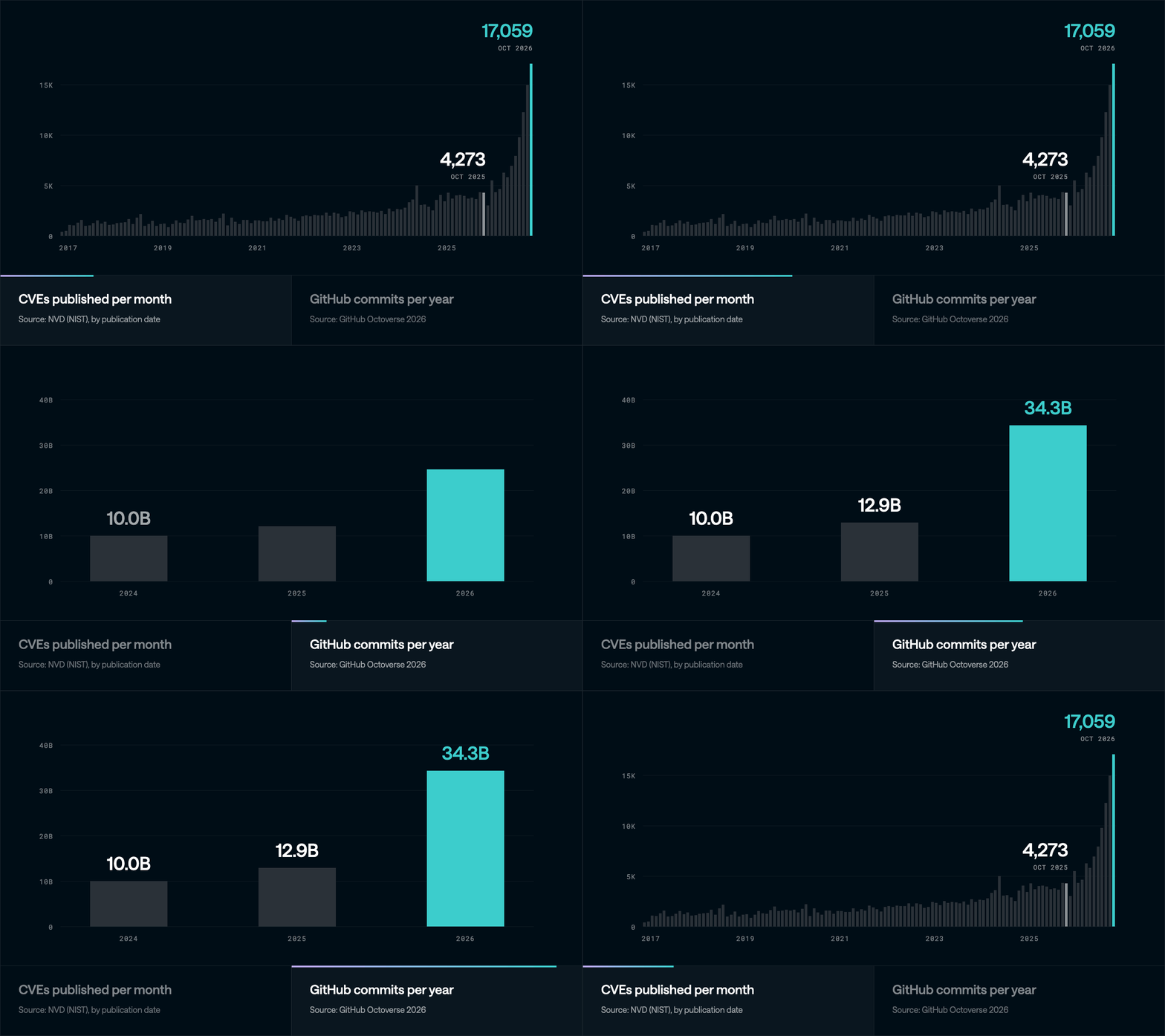
Vulnerabilities are everywhere at the moment. The ‘Vulnpocalypse’, ‘Black October’, and a wave of supply chain attacks are constantly being talked about, from board meetings to your family group chat.
Security teams are being asked whether they’re impacted and if they’re ready for the next one, because a pattern is clearly emerging.
Two things are happening at once. AI is finding and exploiting vulnerabilities at an unprecedented pace, and teams are shipping drastically more code, much of it written by coding agents. Traditional code scanners were already noisy and unloved, and it’s now evident we need to invest in new approaches to stay ahead of today’s attacks.
At Maze, we’re building autonomous security for modern software. It’s clear that our applications are going to face continuous waves of AI-based attacks, and new vulnerabilities will be found at an unprecedented rate. In response, we need an AI system that accurately and cost-efficiently finds weak spots in our applications and fixes them for us. This is what we’re building at Maze, guided by a few core beliefs:
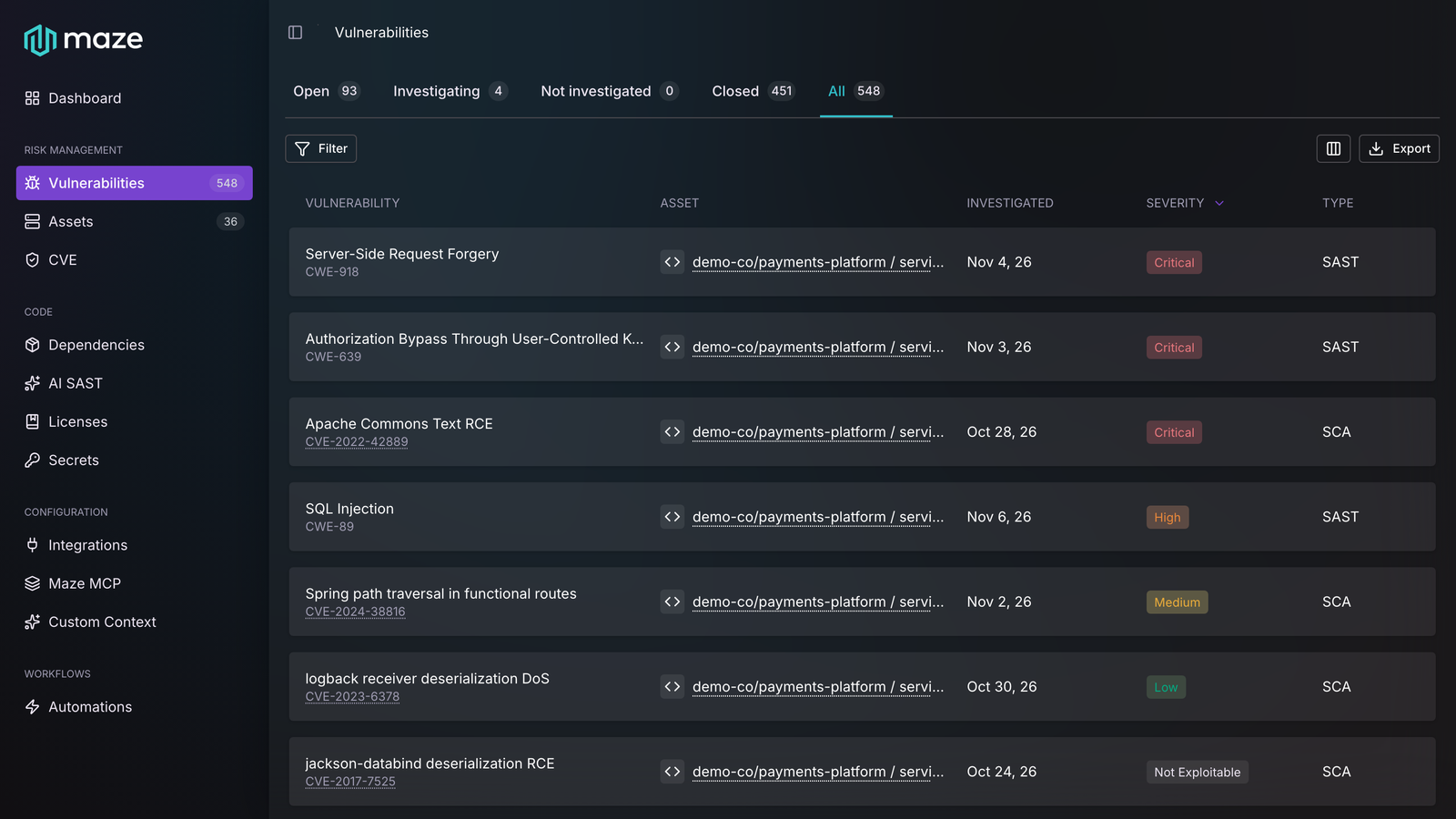
Today, we’re announcing the full launch of Maze Code, a complete application security platform, built to outpace AI-driven attacks. Maze Code can replace or augment existing scanners, covering dependencies (AI SCA), your code (AI SAST), secrets, licenses, SBOMs, and more, all in one place.
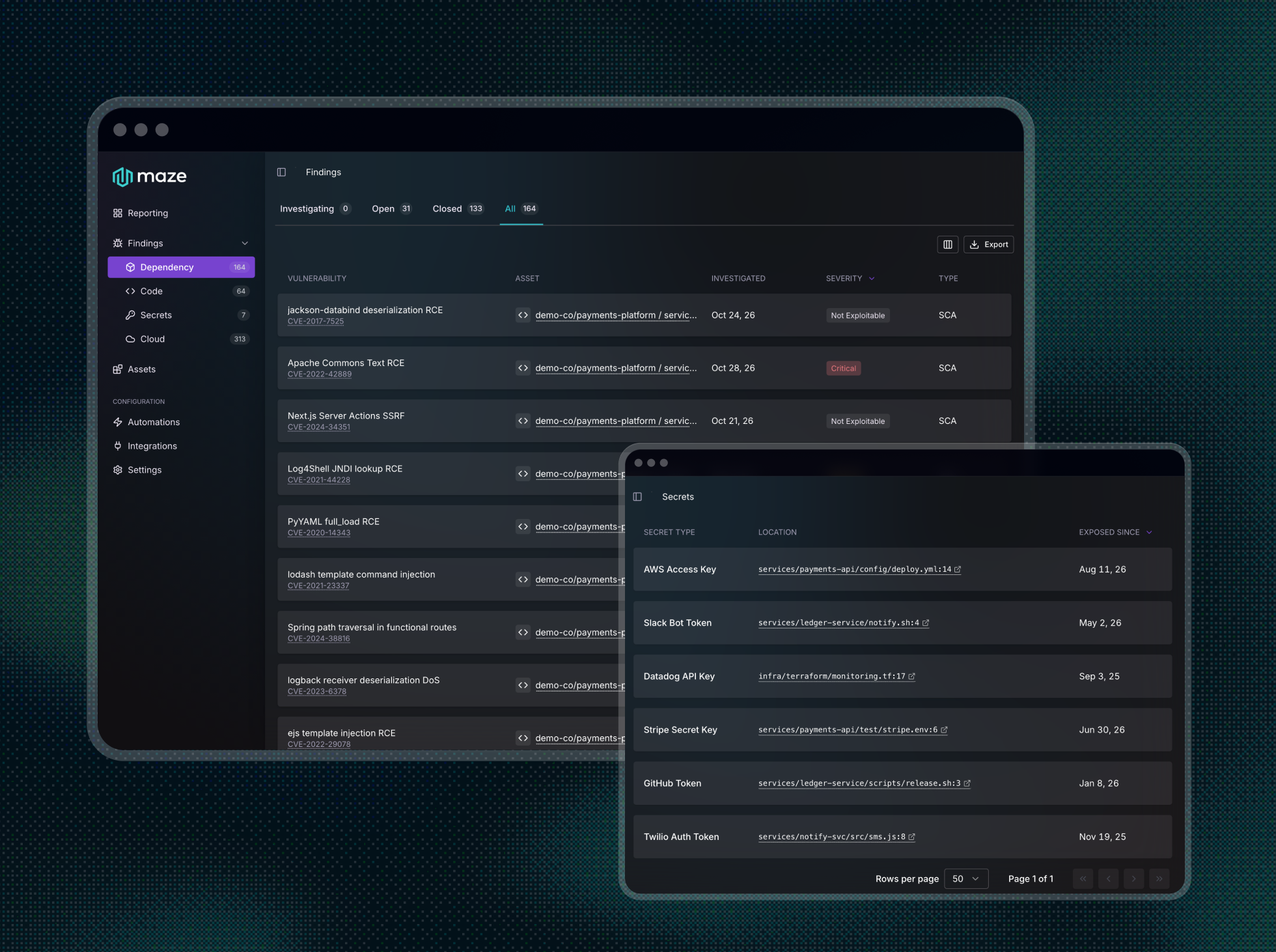
What makes it different is that agents do the work end to end. They find vulnerabilities, investigate each one with the full context of your code and cloud to decide what’s exploitable, identify the few that matter, then automate the response.
Our mantra at Maze is to never be beaten on accuracy. We knew that to achieve the best accuracy, we would need to deeply understand the full context of an application. That’s why we’ve been building agents that can deeply understand each layer of a modern environment, including virtual machines, runtime, images, containers, Kubernetes, compensating controls, and code. This context graph gives agents the right information about your environment at the right time. It’s one of the ways we’re able to outperform on both accuracy and cost-efficiency when compared to other AI-based approaches.
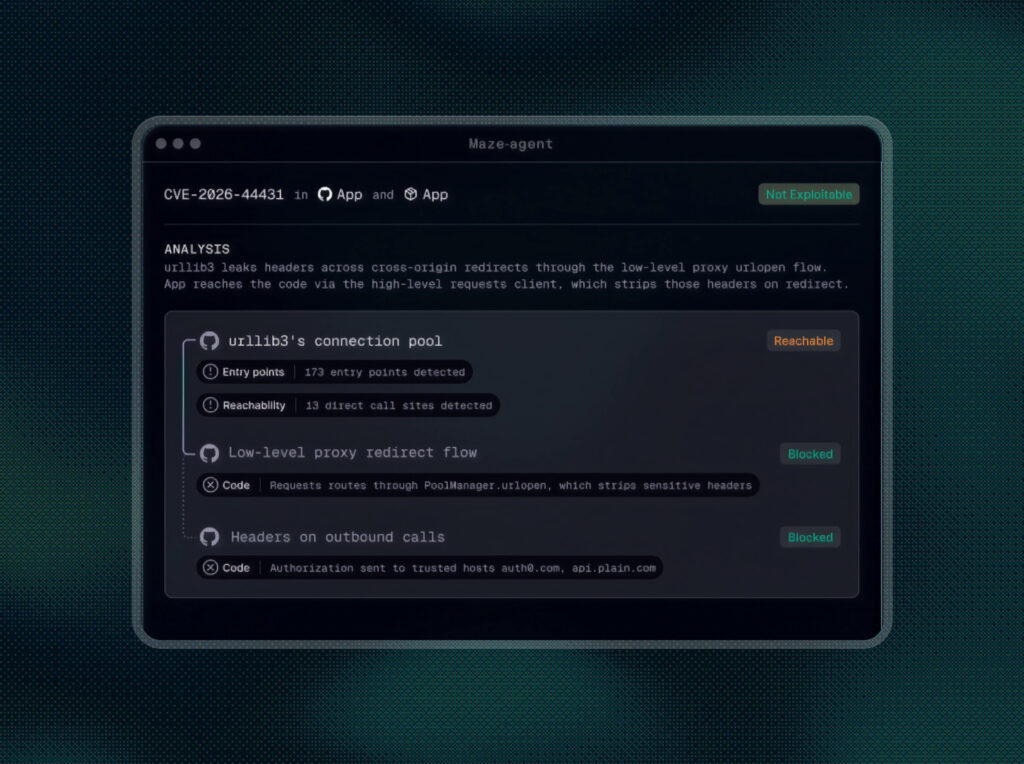
When investigating a finding, our agents start by understanding how the vulnerability works. They reverse-engineer known exploits, the vulnerability itself, and numerous other sources of context to understand every step an attacker would need to take. Then they check those steps with context from your code, build, and cloud to determine whether it’s exploitable in your environment. That research drives every verdict, so you get the evidence behind each decision and clear guidance to fix what’s real.
We built it this way because we believe rules are outdated and should rarely be the answer in modern software. When we compare our results to what legacy AppSec tools find, on average 90% of the alerts from those legacy solutions are proven not exploitable, and most of what’s left is low risk. Every aspect of Maze is designed to help agents find and triage risk, so you can fix what’s critical at speed.
We announced Maze Code in June, starting with dependencies (AI SCA) and code (AI SAST). Maze’s agents find and investigate every vulnerability, tracing each one across your code, cloud, and controls to see if it can be exploited in your environment. That clears most of your backlog, and for the few vulnerabilities that remain, Maze shows your developers how to fix them in the systems they already work in.
Then Maze finds the vulnerabilities nobody has been able to find before. It reviews your entire codebase to find the subtle flaws that pattern-based scanners miss, and checks every PR with the context of your environment, all before an AI-driven attack finds them first.
The same is true beyond vulnerabilities. As coding agents write more of your code, the seemingly “check the box” stuff matters more than ever. So today we’re also announcing agents for secrets, licenses, and SBOMs in Maze Code, at no additional cost, because you shouldn’t be stuck using legacy rules.
A tool that only pattern-matches can’t tell a real key from an obvious test string, and most license tools just repeat what a database says a package is licensed under, which isn’t always what it actually ships with. That’s why our agents understand the code and the licenses themselves. Here’s how that plays out across secrets, licenses, and SBOMs.
Secrets: Maze scans your code, your full git history, and every pull request for leaked credentials. Because our agents read the code around each one, they catch keys regex misses, find real credentials in test fixtures, and identify what kind of key it is and what it’s for.
Licenses: Maze finds the license behind every dependency and checks it against rules you set to allow, warn, or block, so it catches restricted licenses in the pull request instead of during due diligence. When metadata is missing, or sources disagree, Maze reads the license text itself to inform you more accurately.
SBOMs: Maze builds a fresh SBOM every time we scan a repo or image, so “are we running that version, and where?” always has a current answer, and of course, you can download an SBOM in CycloneDX or SPDX whenever a customer or auditor asks.
Learn more about secrets, SCA, licenses, and SBOMs in Maze Code.
You might be wondering if a model like Mythos or Astra could do this on its own. If you’ve tried them, you know they produce a lot of findings, but more often than not, running them continuously leads to unreliable results and eye-watering costs. Maze uses those same models in a system designed to deliver better accuracy at a fixed annual cost.
Maze is already deployed at leading financial institutions, public tech companies, and some of the fastest-growing scale-ups in the world. With Maze Code, teams now have everything they need to replace their existing application security tools, and we have a lot more to come soon as we build autonomous security for modern software.
So the next time a vulnerability takes over the news, you’ll already know whether you’re impacted, and your developers will have the fix ready to go. See how Maze Code can help by booking a demo.