Dependencies (AI SCA)
Find, triage, and remediate CVEs in third-party code, using your existing scanner or ours.
Trusted by the fastest growing security teams


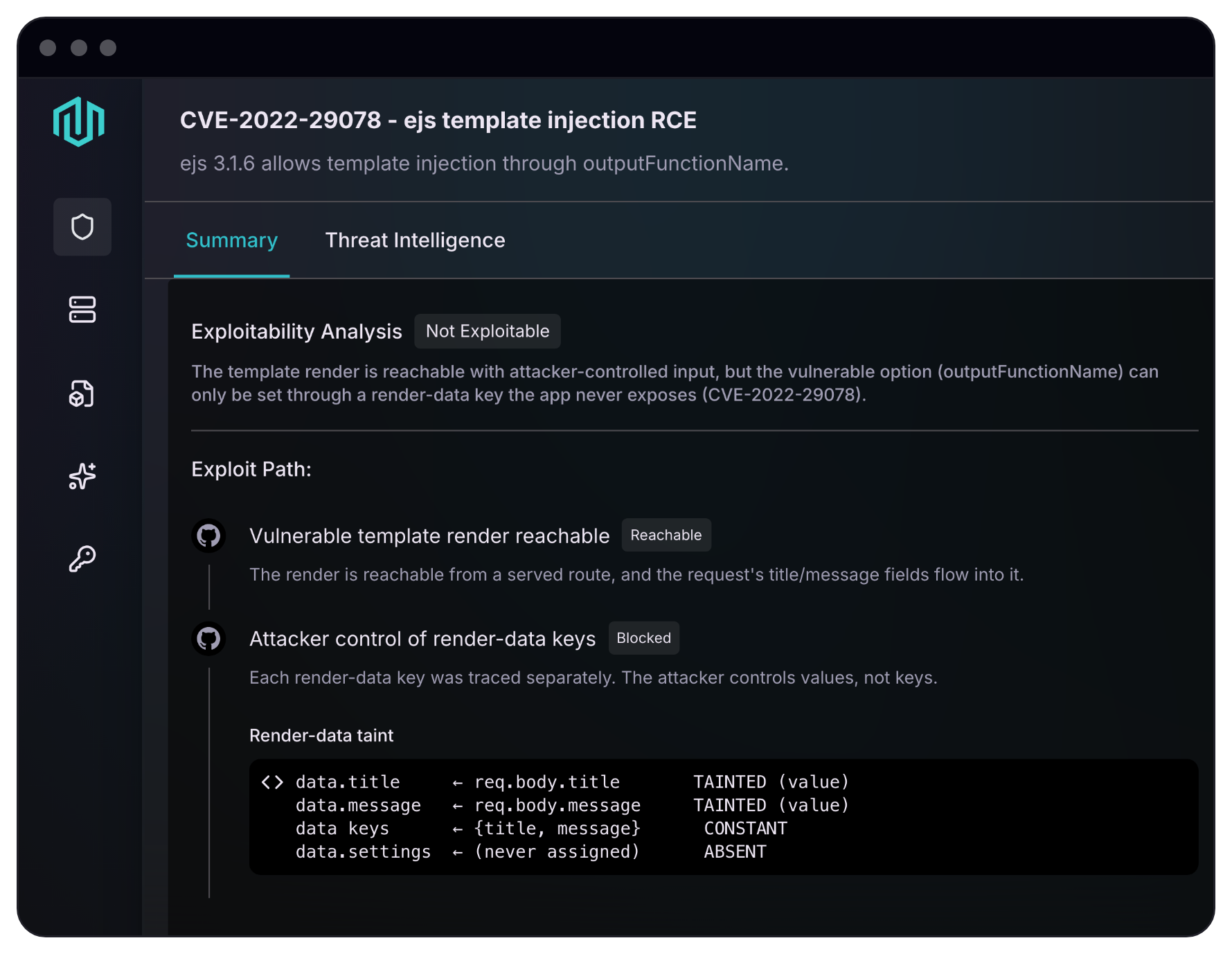
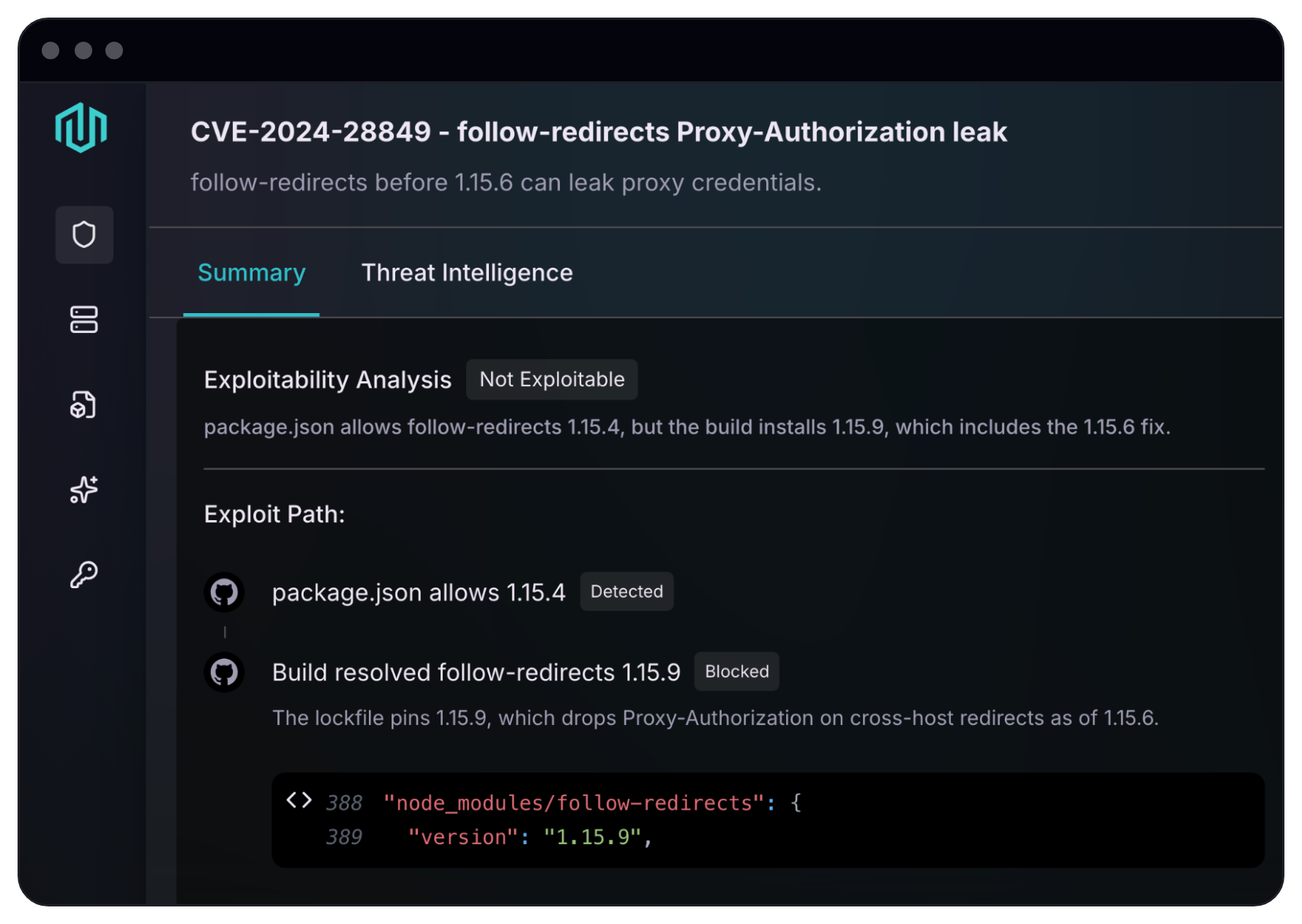
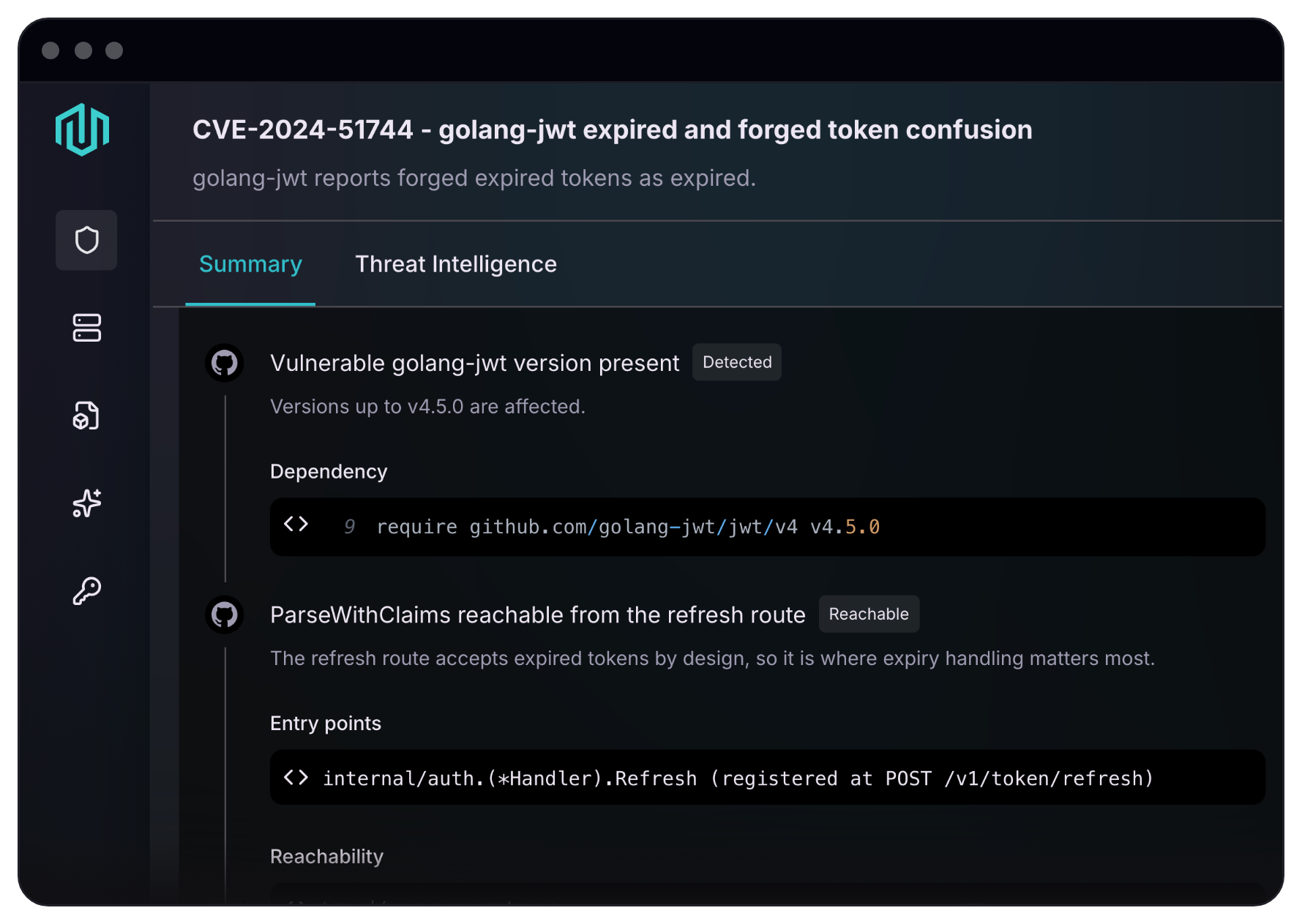
Maze agents go beyond reachability to prove what’s exploitable, checking whether an attacker controls what reaches the vulnerable code in your application.
Maze’s agents trace every path through your code and every open-source package in between, in any language you write. Traditional reachability results are often incomplete.
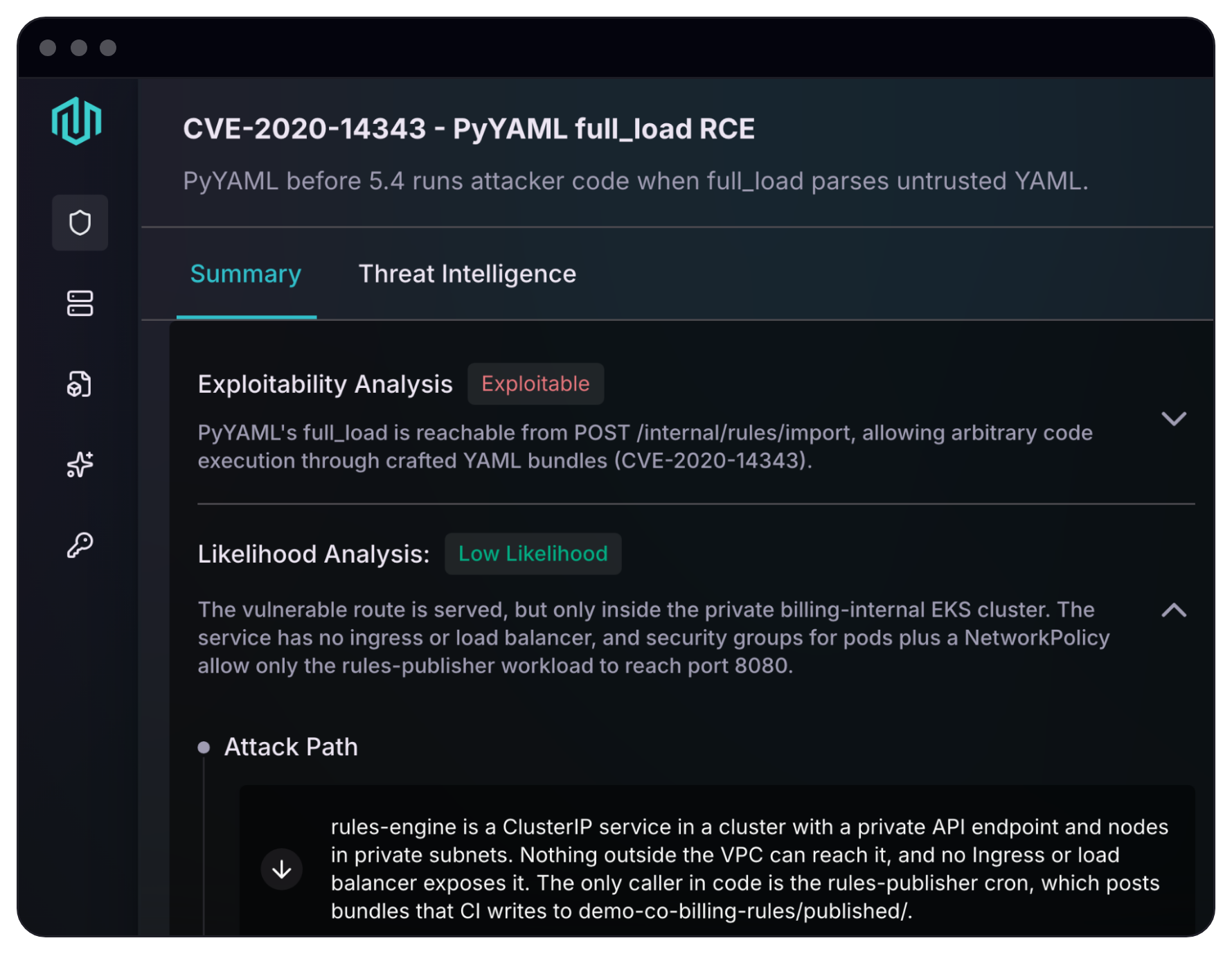
Once agents prove a finding is exploitable, they weigh its impact and how realistic the attack is, using the full context of your code, cloud, and runtime. A package running in production and one on a staging service shouldn’t be treated the same.
Maze’s agents continually investigate your dependencies, bringing frontier-level reasoning at a cost you can afford, without credit or token limits.
Talk to us about how Maze’s agents
investigate your dependencies.
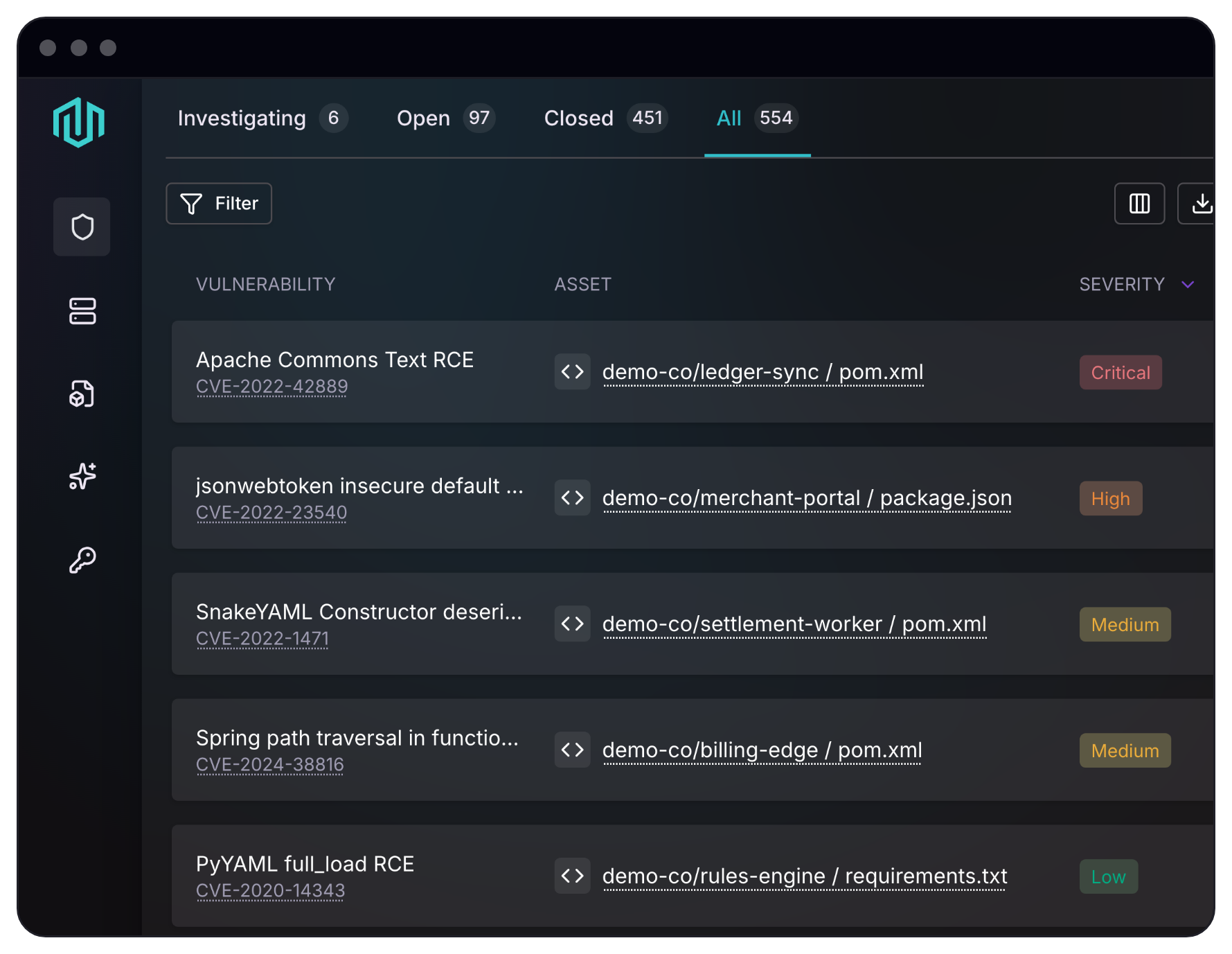
Maze AI SCA finds every vulnerability in your open-source dependencies, direct and transitive, and investigates each one the way your best security engineer would. Agents trace each package to the code that calls it and prove whether it’s exploitable in your environment, and the ones that are come with evidence and a fix.
Most SCA tools use rules to find vulnerabilities and then rank them by CVE score. Some add reachability on top. Maze goes a step further, with agents checking whether an attacker can control what reaches the vulnerable code in your application, so you only fix what’s exploitable.
Reachability tells you the vulnerable code can be called, not whether an attacker can trigger the flaw. In one investigation, a vulnerable library was reachable five different ways, but every request it made went to a fixed internal service, so an attacker had no way to send it a malicious payload. Instead of another urgent ticket, that finding came off the list with the evidence to show why.
Yes. Maze Code scans for vulnerable dependencies (SCA), flaws in your own code (SAST), secrets, licenses, and more, so you don’t need a separate scanner to get started.
Yes. Agents trace the full call path through your code and every open-source package in between.
Because Maze uses AI to find and investigate vulnerabilities instead of static rules, it isn’t limited to the languages a rule set was written for. That includes older languages like C++.
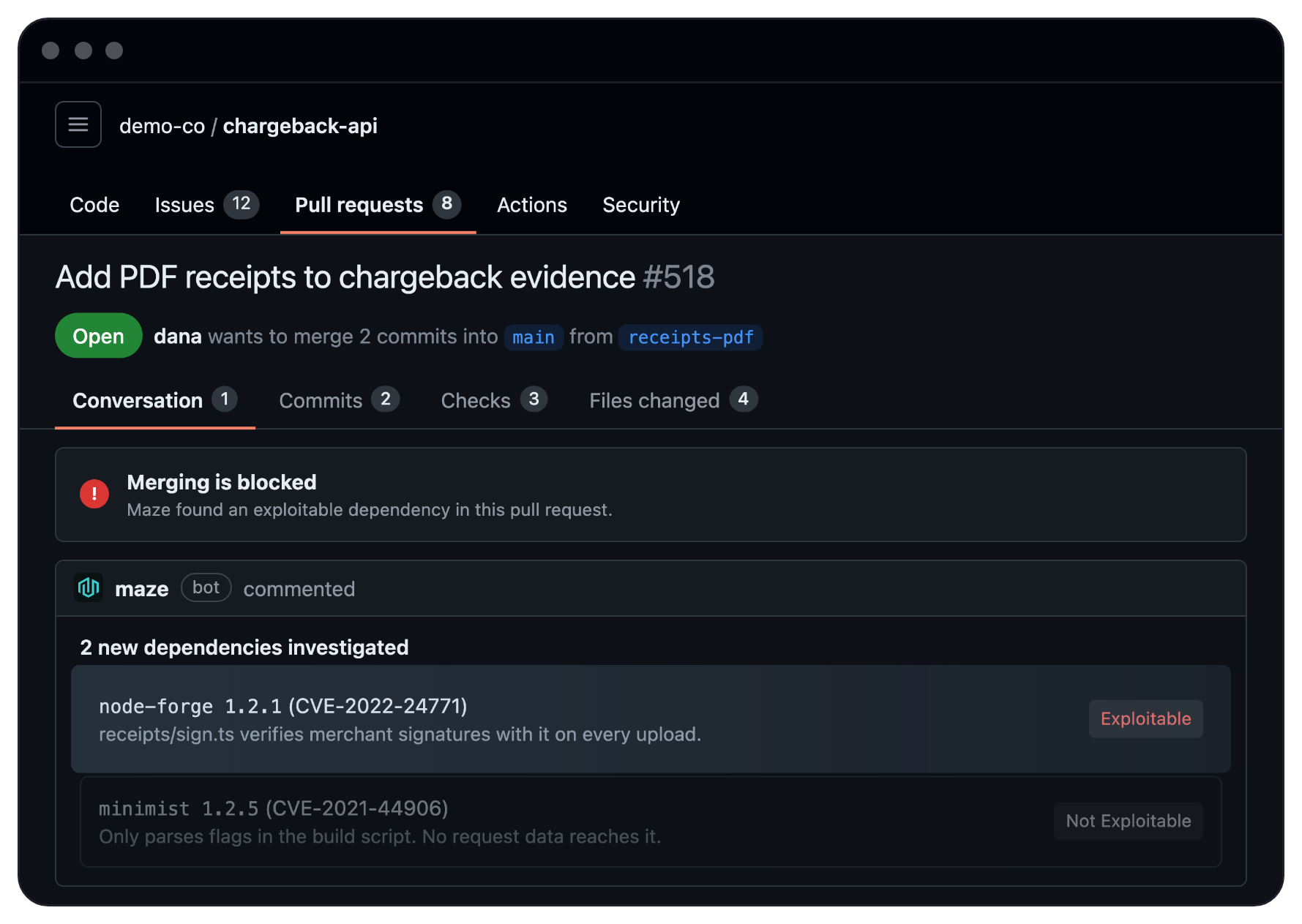
Yes. Maze investigates the packages every pull request adds and blocks merges on real risk. Unlike other solutions, pull requests get the same agents and the same investigation, without adding time. Fixes route to the developer who owns the code or to the coding agents your team already uses.
We aim to keep pricing simple and fair and offer an annual contract. Large language models aren’t cheap, but we’ve worked hard to optimize cost and performance to make sure our pricing is reasonable.
Yes, Maze is cloud-hosted in AWS. Customers can choose between multi-tenant and single-tenant hosting.
Maze has been built for enterprise from day one. We’re ISO 27001 and SOC 2 Type II certified.
Find, triage, and remediate CVEs in third-party code, using your existing scanner or ours.
Find and fix business-logic vulnerabilities that SAST misses, or triage results from your existing scanner.
Triage and remediate CVEs in containers and VMs, and catch zero-days before scanners see them.
Everyone uses AI now. What makes Maze different, and how is the platform built for AI agents?
Why we’re building Maze to be a security company that thinks differently.
Security research, blogs, video, and more from security leaders and the Maze team.