[ Container Security ]
Kubernetes security tools: 15 solutions across 5 categories

Summarize with AI


Summarize with AI
TL;DR: Kubernetes security tools scan images, configurations, network traffic, and running workloads for risks specific to clusters. Maze is best for AI-native vulnerability management across code, cloud, and containers, Wiz for agentless cross-cloud visibility, Trivy for fast open source image scanning, and Kyverno for Kubernetes-native policy enforcement.
Kubernetes security tools address the security risks unique to Kubernetes environments, with capabilities such as vulnerability scanning, configuration assessment, network security, runtime protection, and continuous monitoring.
Unlike traditional security tools, they are built to understand the dynamic and containerized nature of Kubernetes, including its APIs, pods, nodes, and networking. This allows them to identify risks and enforce security controls throughout the Kubernetes application lifecycle.
Types of Kubernetes-specific security tools include:
This is part of a series of articles about container security.
The table below summarizes the key differences between the tools covered in this guide. We explore each of them in more detail in the sections that follow.
| Category | Solution | Best for | Key strengths | Things to consider |
|---|---|---|---|---|
| AI-native vulnerability management | Maze | Teams looking for a unified vulnerability process for code and cloud vulnerabilities | Sees inside your clusters, proves which container vulnerabilities are exploitable, and routes fixes to the owner | SaaS-hosted only; cloud findings come from your existing scanners |
| AI-native vulnerability management | Oligo Security | Teams that want runtime proof of which container libraries execute | Prioritizes vulnerabilities by whether vulnerable libraries and functions actually load and run | Uses a runtime sensor and focuses on running workloads |
| Cloud-native application protection platforms | Wiz | Agentless container and Kubernetes visibility | Security Graph attack paths, KSPM, and admission control | Breadth takes time to learn; some container findings need triage |
| Cloud-native application protection platforms | Sysdig | Runtime-driven container detection and response | Falco detection, in-use package filtering, and IaC remediation | Self-hosted version takes upkeep; detection rules need tuning |
| Cloud-native application protection platforms | Upwind | Tracing running containers back to their image and build | eBPF plus agentless scanning, and function-level reachability | Deep visibility surfaces many findings; compliance reporting still growing |
| Container and image vulnerability scanners | Trivy | Fast open source scanning of images and IaC | Single binary, broad targets, and wide ecosystem support | Command-line first, with reporting through other tools |
| Container and image vulnerability scanners | Snyk Container | Developer-first image and workload scanning | Base image advice, PR scanning, and Kubernetes workload monitoring | Low-severity findings need filtering; pricing steps up by tier |
| Container and image vulnerability scanners | Anchore Enterprise | SBOM-based scanning for compliance programs | SBOM management, policy gates, and false positive controls | Scan time grows with image size |
| Kubernetes network security | Calico | Pod networking with policy-based segmentation | Multiple data planes, network policies, and flow visibility | Setup and troubleshooting take Kubernetes networking experience |
| Kubernetes network security | Cilium | eBPF networking and identity-based policy | L3 to L7 and DNS policies, kube-proxy replacement, and Hubble | Needs Linux kernel 5.10 or newer; eBPF is harder to debug |
| Kubernetes network security | Istio | Service-to-service mTLS and traffic control | Zero-trust identity, ambient mode, and deep telemetry | Running a mesh adds operational work; ambient mode cuts proxy overhead |
| Kubernetes configuration and posture management | Kubescape | Posture scanning across IDE, CI/CD, and clusters | Framework controls, network policy checks, and runtime detection | The node agent needs sizing and a supported kernel |
| Kubernetes configuration and posture management | Kyverno | Policy as code without a new language | YAML and CEL policies, mutation, and image verification | Needs sizing in large clusters to keep admission fast |
| Kubernetes configuration and posture management | Open Policy Agent | One policy engine across the whole stack | Rego decisions, Gatekeeper admission, and audit trails | Rego takes time to learn; Kubernetes needs Gatekeeper |
| Kubernetes configuration and posture management | Checkov | Scanning manifests and IaC before deployment | Multi-framework coverage, graph policies, and custom checks | IaC first; package and image scanning needs a Prisma Cloud API key |
Kubernetes environments introduce security challenges that traditional tools may not detect or understand. Specialized tools account for Kubernetes architecture, workloads, access controls, and constant infrastructure changes. They help security teams apply controls at the cluster, workload, network, and runtime levels:
Related content: Read our guide to cloud application security.
In the development phase, Kubernetes security tools help developers identify and remediate security issues early in the software lifecycle. These tools integrate with development environments and source code repositories to scan for vulnerabilities in:
They enforce security best practices, such as the principle of least privilege, and flag insecure coding patterns or the use of outdated libraries. By shifting security left, organizations reduce the risk of introducing vulnerabilities into production systems.
Automated security checks in development enable teams to fix issues when they are easiest and cheapest to address. Static code analysis, secret scanning, and infrastructure-as-code validation check that applications and Kubernetes manifests comply with organizational policies.
During the build and CI/CD phases, Kubernetes security tools scan container images for vulnerabilities and enforce secure build processes. These tools integrate with CI/CD pipelines to automatically detect issues in code and dependencies before containers are pushed to registries. They verify that images are built from trusted sources and do not contain known vulnerabilities or sensitive information. This helps prevent the propagation of security flaws from development to production.
Additionally, policy enforcement within CI/CD pipelines ensures that only compliant images are deployed to Kubernetes clusters. Tools may:
Automating these security checks reduces human error and ensures consistency across deployments, making it easier to maintain a secure, repeatable build process.
Kubernetes security tools help during deployment by validating configurations and enforcing security policies before workloads go live. Admission controllers and policy engines review deployment manifests, checking for security risks such as:
This gatekeeping function blocks risky deployments and ensures that only workloads meeting security requirements are allowed in the cluster. Automated deployment validation reduces the likelihood of misconfigurations, which are a common source of security incidents in Kubernetes environments. By integrating with deployment processes, security tools provide real-time feedback and remediation suggestions, enabling rapid correction of issues.
In the runtime phase, Kubernetes security tools monitor container activity, network traffic, and system behavior for signs of compromise. Runtime security solutions use behavioral analysis, anomaly detection, and policy enforcement to identify threats such as:
When suspicious activity is detected, these tools can alert administrators, block the offending process, or automatically isolate affected containers. Continuous runtime monitoring matters because containers are ephemeral and mutable, so security tools must operate in real time, adapting to changes in the cluster and providing granular visibility into every pod, node, and service.
Continuous monitoring keeps security findings aligned with the current state of a Kubernetes cluster. Because pods are ephemeral, a point-in-time inventory becomes stale almost immediately as workloads:
Kubernetes security tools therefore re-establish on a short cycle which workloads are actually running and reassess their configurations, vulnerabilities, and security posture. This repeated discovery also prevents teams from spending time on obsolete findings.
When a previously identified workload is no longer running in the cluster, its findings can be marked inactive rather than remaining in the active remediation queue. This keeps remediation priorities tied to the live cluster instead of a historical snapshot, while retained findings can still provide context for auditing and investigation.
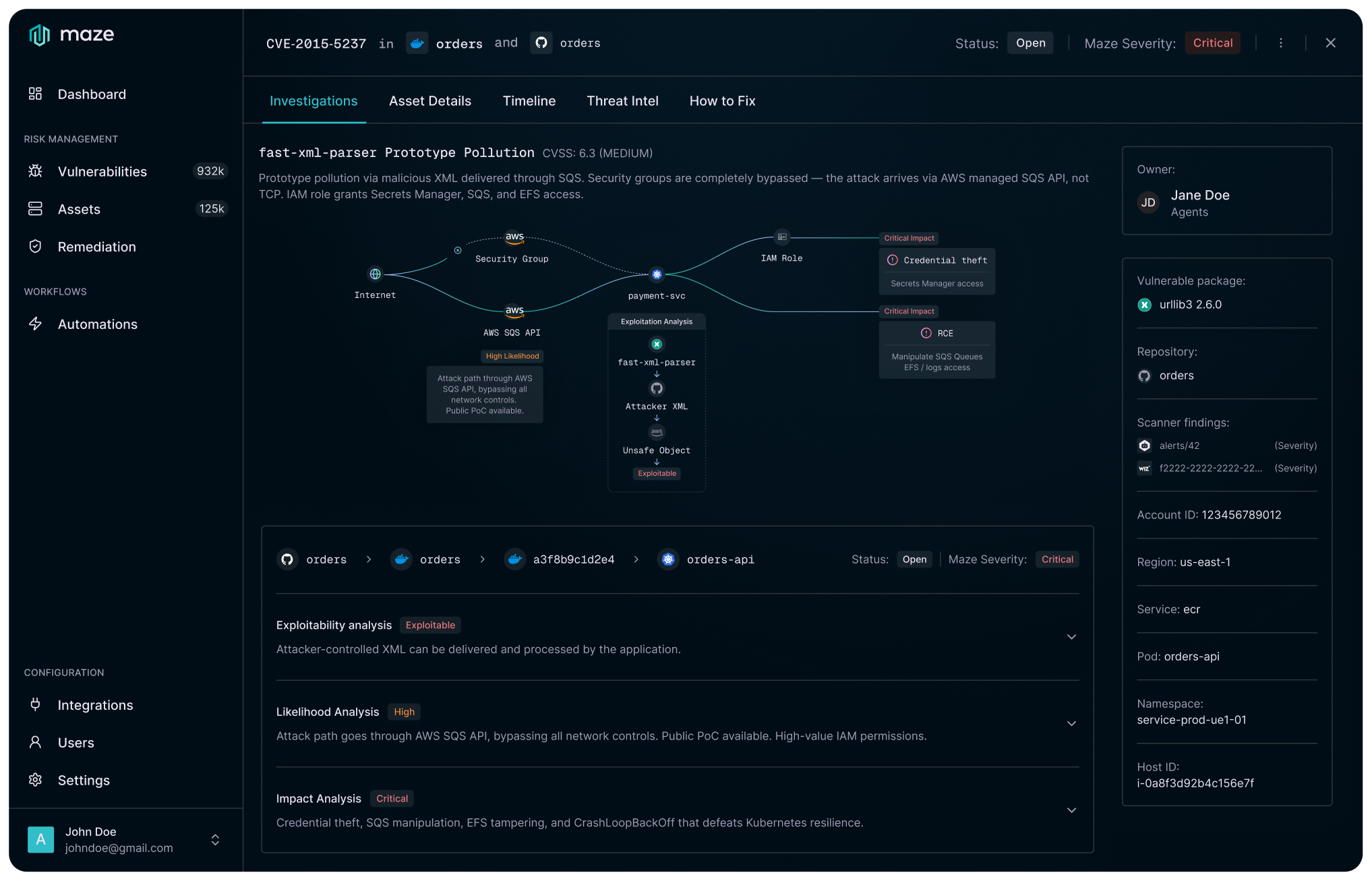
Kubernetes clusters generate more vulnerability findings than any team can work through. Every image carries dozens or hundreds of packages, every replica repeats the same CVEs, and scanners report each one by severity score without knowing whether the vulnerable code runs, how the pod is exposed, or what its service account can reach. Earlier vulnerability management tools made that list easier to handle by deduplicating findings and ranking them with CVSS, EPSS, and known-exploited catalogs, which tells you whether a vulnerability is being exploited somewhere in the world but not whether it can be triggered in your cluster.
AI-native platforms were built so their AI can gather the context a security engineer would go looking for and investigate each finding the way that engineer would. For a container vulnerability, that means checking whether the vulnerable package is loaded, whether the feature it depends on is turned on, how the pod is exposed, which namespace it runs in, and what its service account and cloud role can access. Scanner false positives and vulnerabilities that can’t be exploited in your environment are closed with the evidence attached, and the ones that can be exploited arrive with a fix.
Related content: Read our article about vulnerability management tools and their key features.
Cloud-native application protection platforms (CNAPPs) secure Kubernetes as one part of a wider cloud security platform. They combine image and workload scanning, Kubernetes security posture management (KSPM), admission control, attack path analysis, and runtime threat detection, and they correlate cluster risk with cloud identities, network exposure, and cloud configuration.
CNAPPs suit teams that want cluster security and cloud posture from a single vendor. Kubernetes findings sit in the same graph as the rest of the cloud estate, which helps teams see how a vulnerable pod connects to sensitive data or a privileged cloud role.
Container and image vulnerability scanners analyze container images for known security flaws before they are deployed to Kubernetes clusters. By integrating with image registries and CI/CD pipelines, scanners keep vulnerable and non-compliant images from reaching production environments. These tools inspect images for:
Regular scanning of container images matters because new CVEs are published against packages that were clean when an image was built. Vulnerability scanners provide detailed reports and remediation guidance, making it easier for development and operations teams to fix issues quickly, and they help enforce security policies that keep vulnerable packages out of the software supply chain.
Kubernetes network security tools enforce traffic controls and segment workloads within clusters to prevent unauthorized access and lateral movement. These tools implement network policies, monitor east-west and north-south traffic, and detect anomalies in communication patterns. By providing granular control over pod-to-pod and external communications, network security tools help contain breaches and limit the blast radius of attacks.
Advanced network security solutions may include capabilities such as:
They provide visibility into network flows and support compliance with zero-trust security models. By integrating with Kubernetes APIs and orchestrating dynamic policy updates, these tools adapt to changes in the environment, ensuring that network defenses remain effective as clusters evolve.
Kubernetes configuration and posture management tools evaluate cluster settings, resource configurations, and access controls against security best practices and compliance frameworks. They identify misconfigurations such as overly permissive roles, exposed secrets, and insecure defaults that could lead to security incidents. These tools maintain secure cluster configurations by providing:
Regular posture assessments help organizations detect drift from desired security states and prevent configuration-related vulnerabilities. By integrating with infrastructure-as-code workflows and Kubernetes APIs, posture management tools support continuous compliance and auditability. They enable teams to enforce guardrails, reduce manual configuration errors, and maintain consistent security standards across multiple clusters and environments.
How we selected these tools: We shortlisted Kubernetes security tools based on vulnerability detection and prioritization, container image scanning, network policy enforcement, cluster configuration and posture management, and integration across the build, deploy, and runtime stages of the application lifecycle.
AI-native platforms were built from the ground up so their AI can collect the context each vulnerability needs and work through it the way a security engineer would, deciding whether it can be exploited in your clusters and what the fix should be, with the evidence shown for every decision.

Best for: Teams looking for a unified vulnerability process for code and cloud vulnerabilities
Strengths: Sees inside your clusters, investigates each container vulnerability in context, and delivers fixes validated for your environment
Things to consider: SaaS-hosted only, and cloud findings come from the scanners you already run
While working with security teams, Maze’s founders kept running into the same problem. Scanners flagged thousands of container vulnerabilities, and the tools around them couldn’t gather the context needed to tell which ones mattered, so teams worked through severity scores that said nothing about their own clusters. They built Maze so that every vulnerability gets the investigation those teams never had time to run.
Given unlimited time, a security engineer looking at a container vulnerability would check whether the vulnerable package is ever loaded, whether the feature it depends on is turned on, how the pod is exposed, which namespace it runs in, and what its service account and cloud role can reach. Maze’s AI was built to think the same way, working out what context each finding needs and gathering it from your code, build, and cloud before deciding whether it can be exploited and how severe it really is. A high-severity CVE in an internal monitoring pod that Kubernetes restarts within seconds can drop to low, while a medium one in a container running as root in kube-system with internet access becomes critical.
Maze Cloud sees inside your clusters with a read-only role in your cloud account and nothing to install in them. It maps which containers are live on EKS, ECS, and AKS, which images they run, and how each one is exposed, then investigates the vulnerabilities your existing scanners find in those containers and in the images in your registries. Maze Code brings the same investigation to your code, using AI to find the vulnerabilities in your code and dependencies. For the vulnerabilities that are exploitable, Maze traces the root cause, writes a fix that matches your code, and gets it to the developer who owns it with the evidence behind the verdict attached.
Key features include:

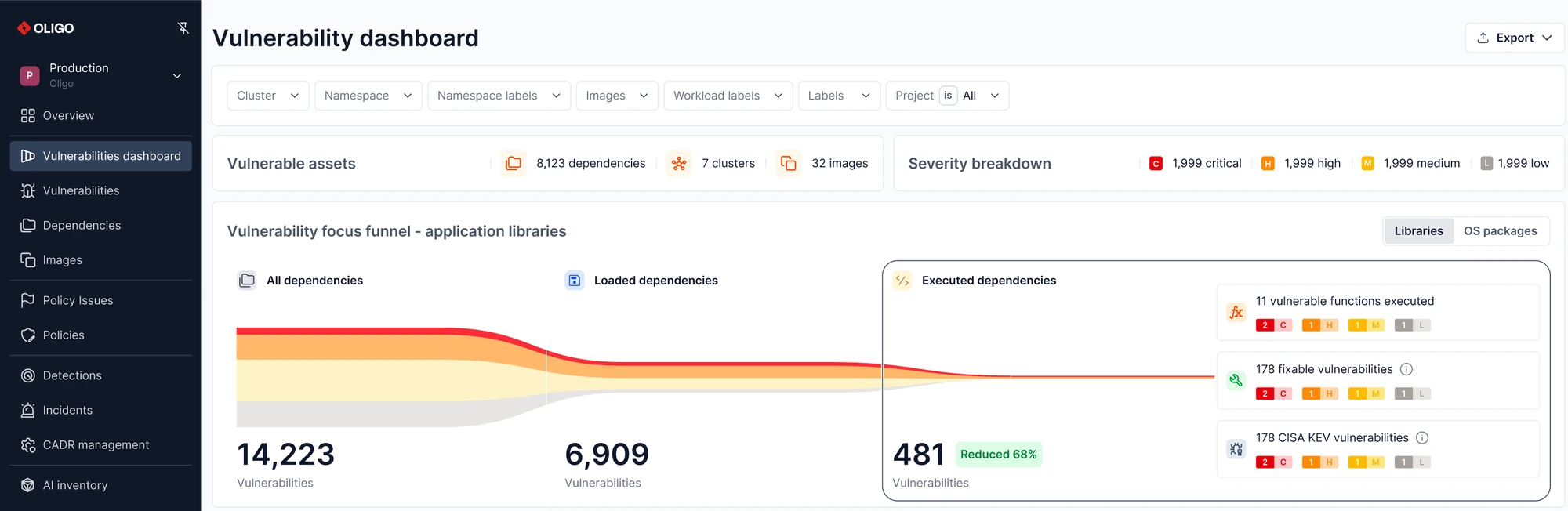
Best for: Teams that want runtime proof of which container libraries execute
Strengths: Prioritizes vulnerabilities by whether vulnerable libraries and functions are actually loaded and executed
Things to consider: Uses a runtime sensor and focuses on running workloads
Oligo Security is a runtime security company that markets itself around AI runtime security. Its vulnerability management product separates packages that are only installed from code that is actually loaded and executed, and it positions itself as a runtime validation gate that filters what other tools escalate.
For Kubernetes and cloud workloads, Oligo argues that runtime state drifts from scanned images, so prioritization should come from what actually runs. The same platform covers application detection and response, real-time software bills of materials, runtime exploit blocking, and security for AI workloads and agents.
Key features include:

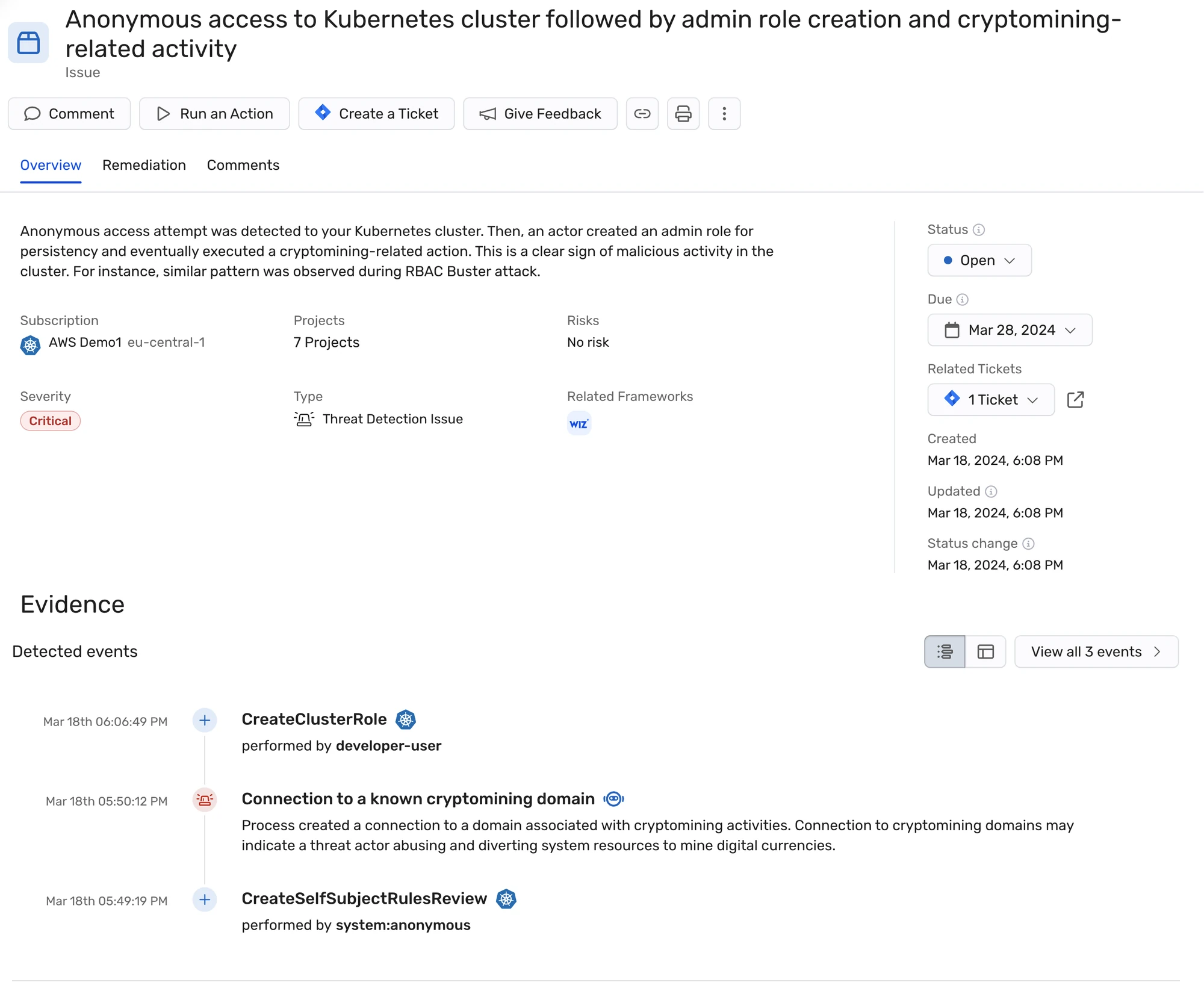
Best for: Agentless container and Kubernetes risk visibility
Strengths: Graph-based attack paths, KSPM, and admission control
Things to consider: Breadth takes time to learn, and pricing sits at the premium end
Wiz secures containers, Kubernetes, and the surrounding cloud environment from build time through runtime. It scans containers, hosts, and clusters across managed Kubernetes setups, serverless containers, and standalone containers on virtual machines, without requiring agents on every workload.
Findings are correlated in the Wiz Security Graph, which combines data from containers, hosts, cloud provider APIs, and the Kubernetes API to surface vulnerabilities, misconfigurations, internet-exposed containers, excessive permissions, and leaked secrets, and to identify the attack paths that connect them. Wiz, now part of Google Cloud, also offers AI agents for remediation, threat investigation, and offensive testing, which it calls the Green, Blue, and Red Agents.
Key features include:

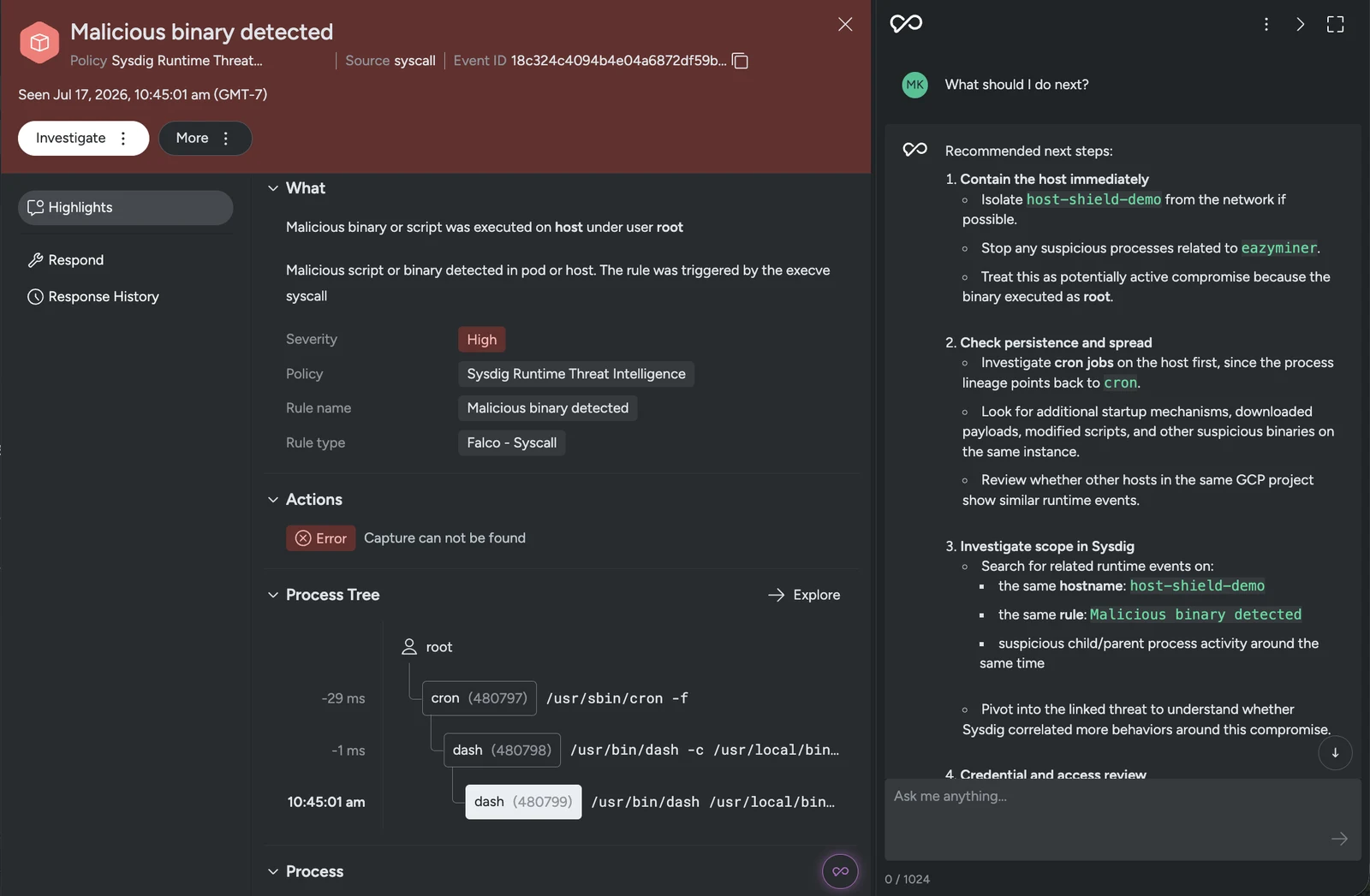
Best for: Runtime-first security for containers and Kubernetes
Strengths: Falco detection, in-use package filtering, and IaC remediation
Things to consider: Detection rules need tuning, and the on-premises version takes upkeep
Sysdig Secure secures containers and Kubernetes across the application lifecycle, with an emphasis on what is happening at runtime. It continuously analyzes system calls and Kubernetes audit logs through Falco, the open source detection engine Sysdig created and now a CNCF graduated project, to identify suspicious activity as it occurs.
Detections are correlated with other runtime risk context so teams can see which issues need attention first. Sysdig prioritizes vulnerabilities in packages that are actually in use, containers that are exposed, and threats affecting critical assets, and ties Kubernetes violations back to the manifests that created them.
Key features include:

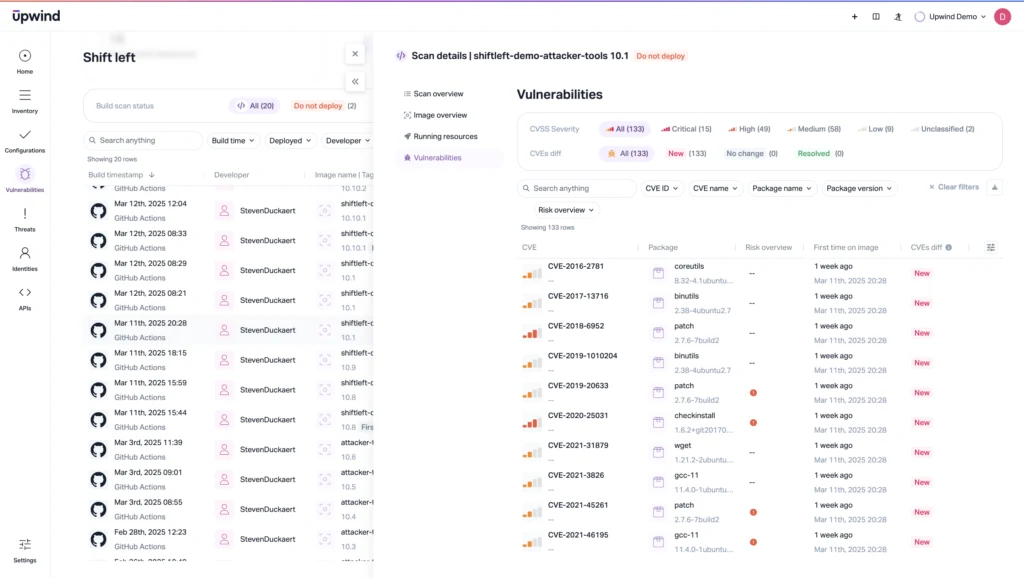
Best for: Tracing running containers back to the image and build that produced them
Strengths: eBPF and agentless coverage, reachability, and ownership routing
Things to consider: Deep visibility surfaces many findings, and compliance reporting is still growing
Upwind discovers vulnerabilities across cloud workloads and containers from build through runtime, combining agentless scanning with eBPF-based runtime coverage. It surfaces which components, base images, and dependencies drive risk, aiming for continuous scanning without gaps between environments.
Upwind says its prioritization filters out vulnerabilities that attackers cannot reach and highlights issues tied to exposed services and sensitive data. Its function-level reachability checks whether a vulnerability sits on a live code execution path, using runtime call-graph mapping and real workload behavior rather than CVE severity alone.
Key features include:

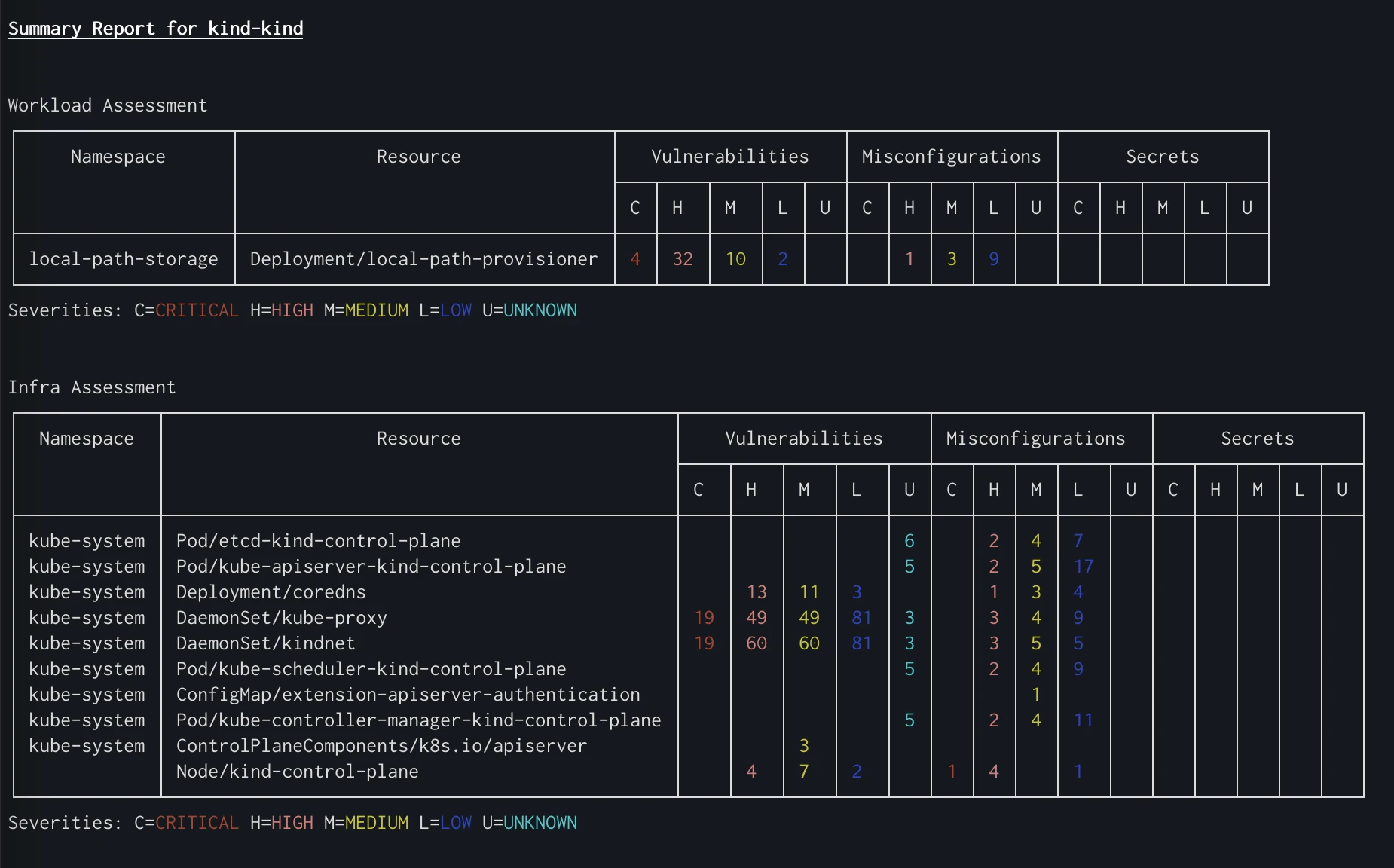
Best for: Open source scanning of images, IaC, and clusters
Strengths: Simple binary install, broad targets, and wide integrations
Things to consider: Command-line first, with reporting handled by other tools
Trivy is an open source scanner maintained by Aqua Security that finds vulnerabilities and misconfigurations across code repositories, binary artifacts, container images, and Kubernetes clusters. Setup is a binary installation with no database dependencies or middleware, which makes pipeline integration straightforward.
Coverage spans operating system packages and programming language packages, with results for both fixed and unfixed vulnerabilities drawn from Trivy’s own vulnerability database. The database is compact and updates automatically, and critical CVEs can be filtered directly from the command line.
Key features include:

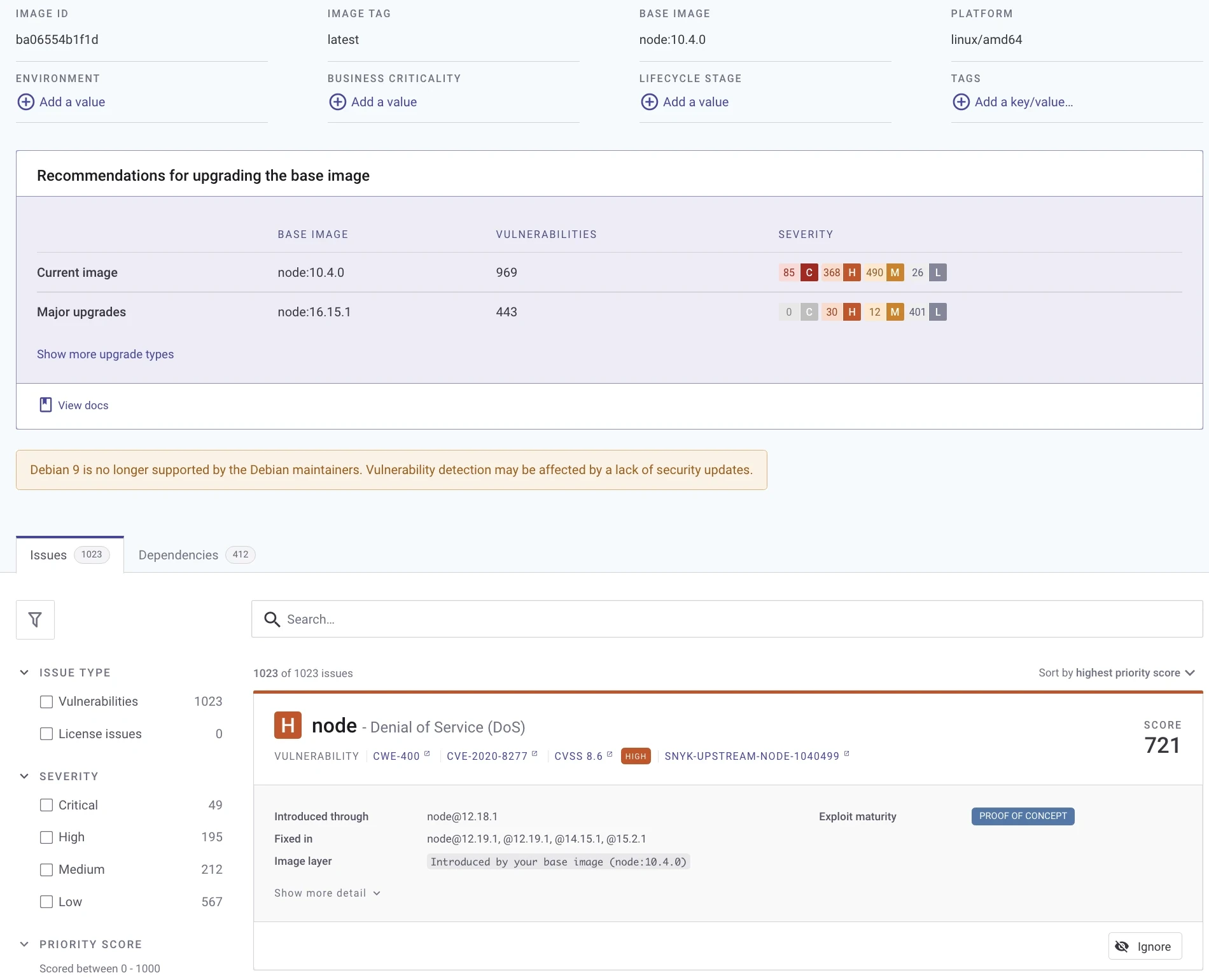
Best for: Developer-owned container and Kubernetes workload security
Strengths: Base image advice, PR scanning, and workload monitoring
Things to consider: Low-severity findings need filtering, and pricing steps up by tier
Snyk built developer-first security, and Snyk Container helps developers and DevOps teams find and fix vulnerabilities in container images and Kubernetes workloads before they reach production. It points developers to the vulnerable Dockerfile commands and dependencies directly, and offers one-click upgrades and alternative base image recommendations. Snyk now positions itself as an AI security platform, led by Evo, its agentic security product line.
Scanning covers both container images and the open source dependencies inside them from a single platform. Priority scoring narrows the list using risk signals such as exploit maturity and insecure workload configuration, and monitoring continues after deployment as new vulnerabilities are published.
Key features include:

Best for: SBOM-based container scanning in compliance programs
Strengths: SBOM management, policy gates, and false positive controls
Things to consider: Scan time grows with the size and file count of an image
Anchore Enterprise scans container images, generates a software bill of materials, and identifies vulnerabilities, malware, secrets, and other misconfigurations before images reach runtime. Scanning runs across CI/CD pipelines, image registries and repositories, and Kubernetes workloads, covering both base images and application containers.
Each scan produces an SBOM listing the components in an image, with changes tracked over time and notifications raised as new vulnerabilities affect those components. Policies then determine whether images pass or fail, and remediation recommendations and time-based allowlists set expectations for when issues must be resolved.
Key features include:
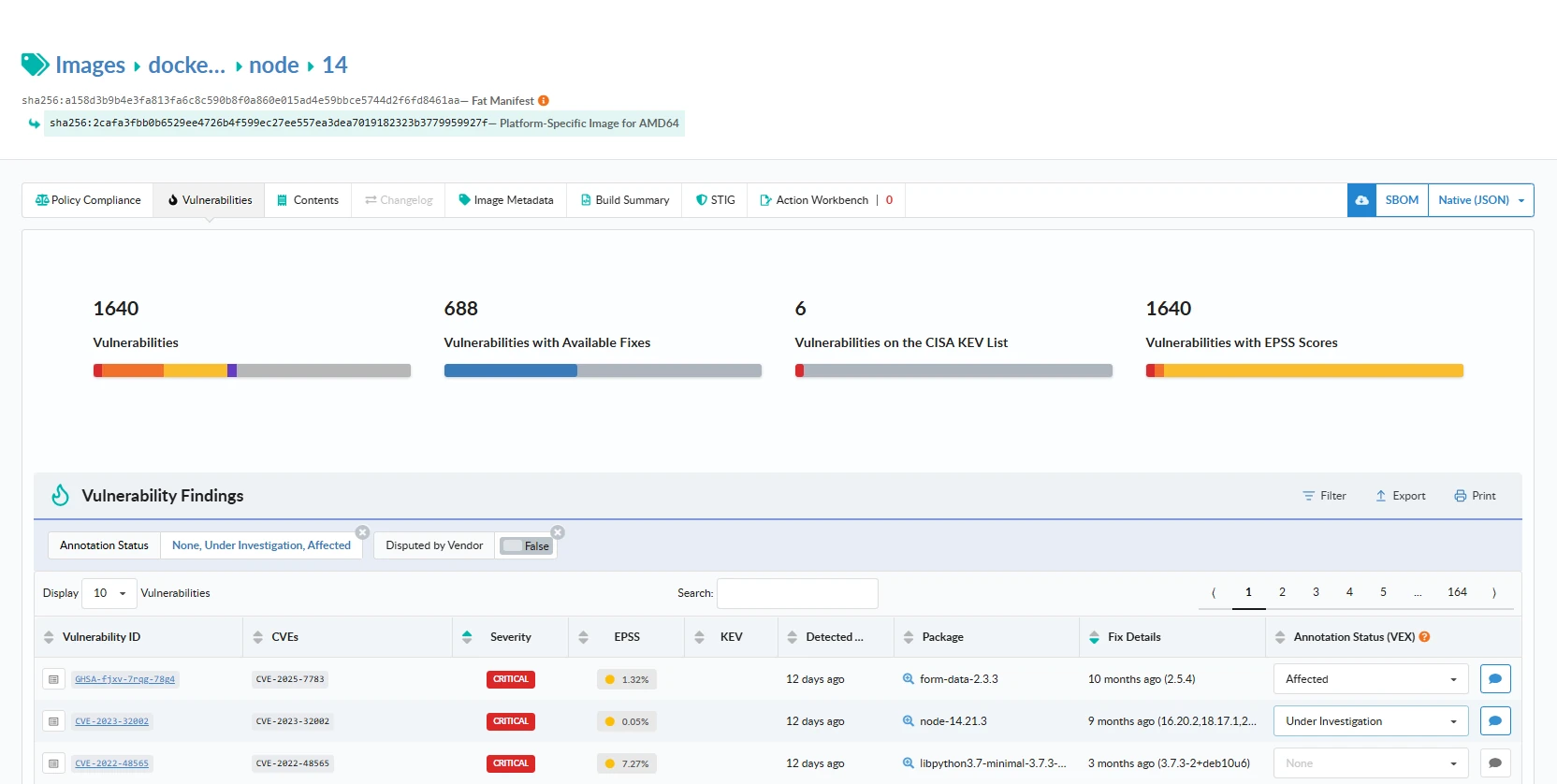

Best for: Kubernetes pod networking with policy segmentation
Strengths: Data plane choice, network policy, and traffic observability
Things to consider: Setup and troubleshooting take Kubernetes networking experience
Calico is an open source project for container networking and security that runs across Kubernetes distributions and, according to Tigera, powers more than 8 million nodes daily. It combines networking, network security, and observability in a single platform rather than requiring separate components for each function.
Workload coverage extends beyond containers to virtual machines and bare metal, and the data plane is pluggable across eBPF, iptables, nftables, Windows, and VPP. Network security is enforced through Calico network policies, and Whisker provides visibility into workload traffic for troubleshooting.
Key features include:
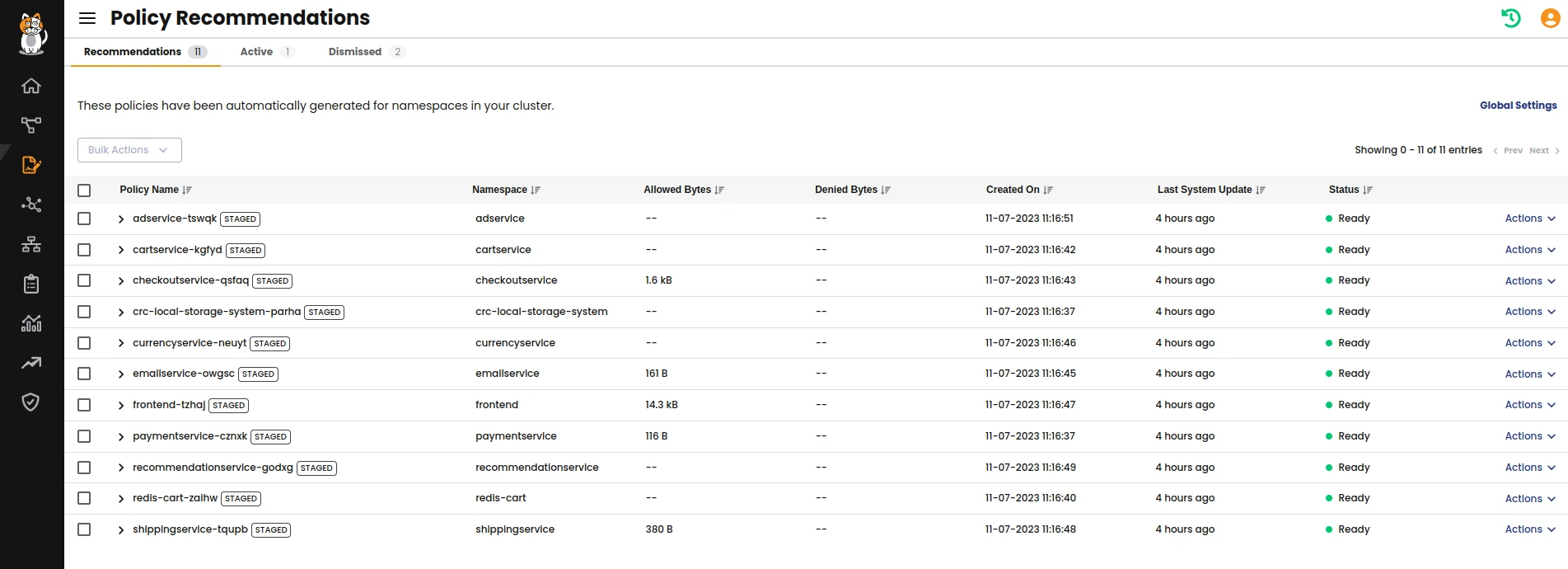

Best for: eBPF networking with identity-based policy at scale
Strengths: L3 to L7 and DNS policy, kube-proxy replacement, and Hubble
Things to consider: Needs Linux kernel 5.10 or newer, and eBPF is harder to debug
Cilium is a CNCF graduated networking, observability, and security solution built on an eBPF data plane. It provides a flat Layer 3 network that can span multiple clusters in native routing or overlay mode, and it is protocol aware, enforcing policies from Layer 3 through Layer 7.
Rather than filtering on source IP and destination port, Cilium assigns a security identity to groups of containers that share the same policies and validates that identity on the receiving node. This removes the need to update firewalls on every server whenever a container starts somewhere in the cluster.
Key features include:
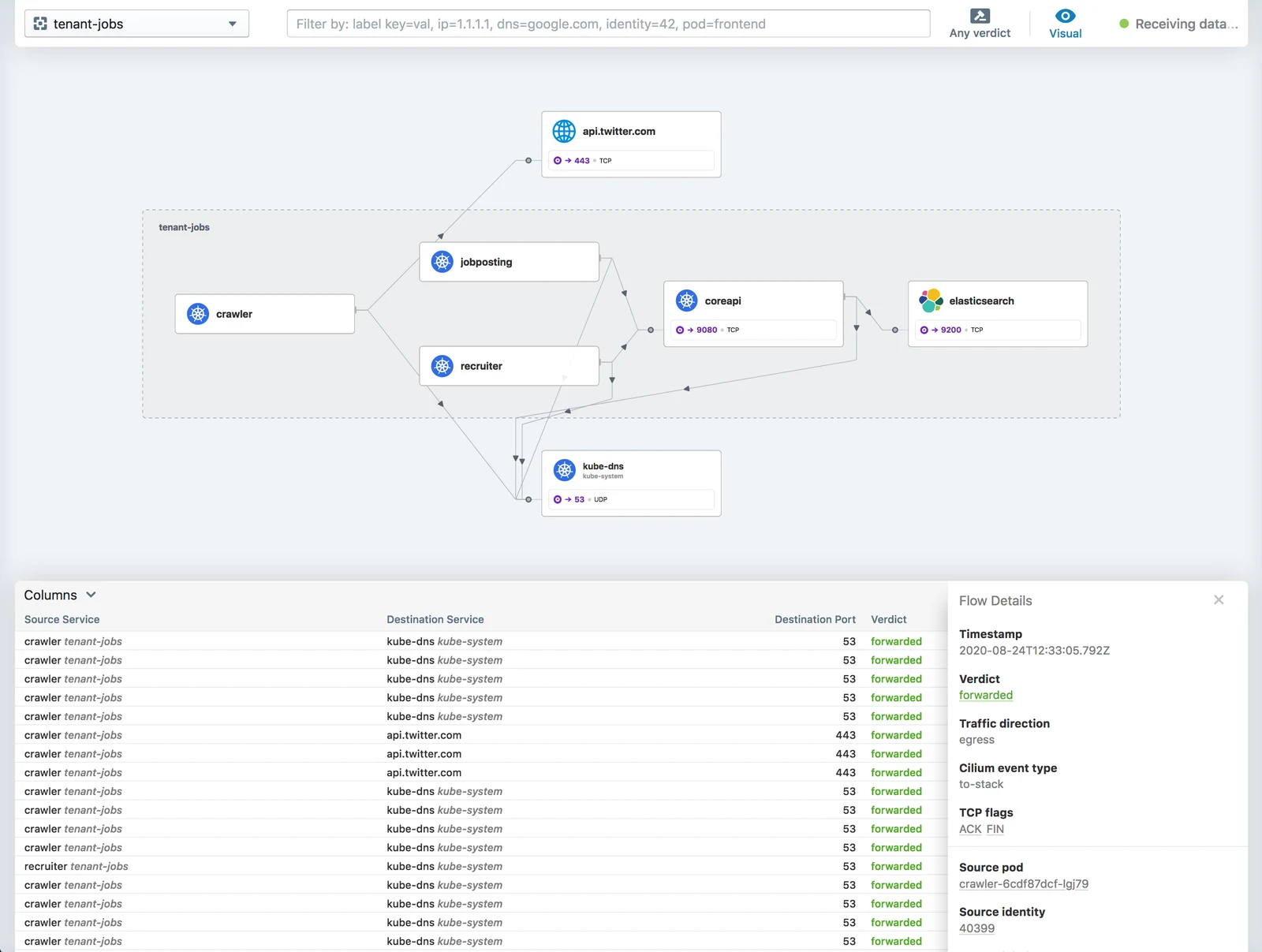

Best for: mTLS and traffic control between microservices
Strengths: Workload identity, ambient mode, and traffic telemetry
Things to consider: Running a mesh adds operational work and proxy resource cost, which ambient mode reduces
Istio extends Kubernetes with a programmable, application-aware network, applying traffic management, telemetry, and security to distributed workloads without code changes. It works with Kubernetes and traditional workloads, and services running on Kubernetes or virtual machines across clouds and on-premises can belong to a single mesh.
Security is based on workload identity, mutual TLS, and policy controls. Teams choose the deployment mode that fits their needs. Ambient mode, generally available since Istio 1.24, provides a zero-trust tunnel for Layer 4 without sidecars and adds Envoy-based waypoint proxies where a service needs Layer 7 features, while traditional sidecars remain available.
Key features include:
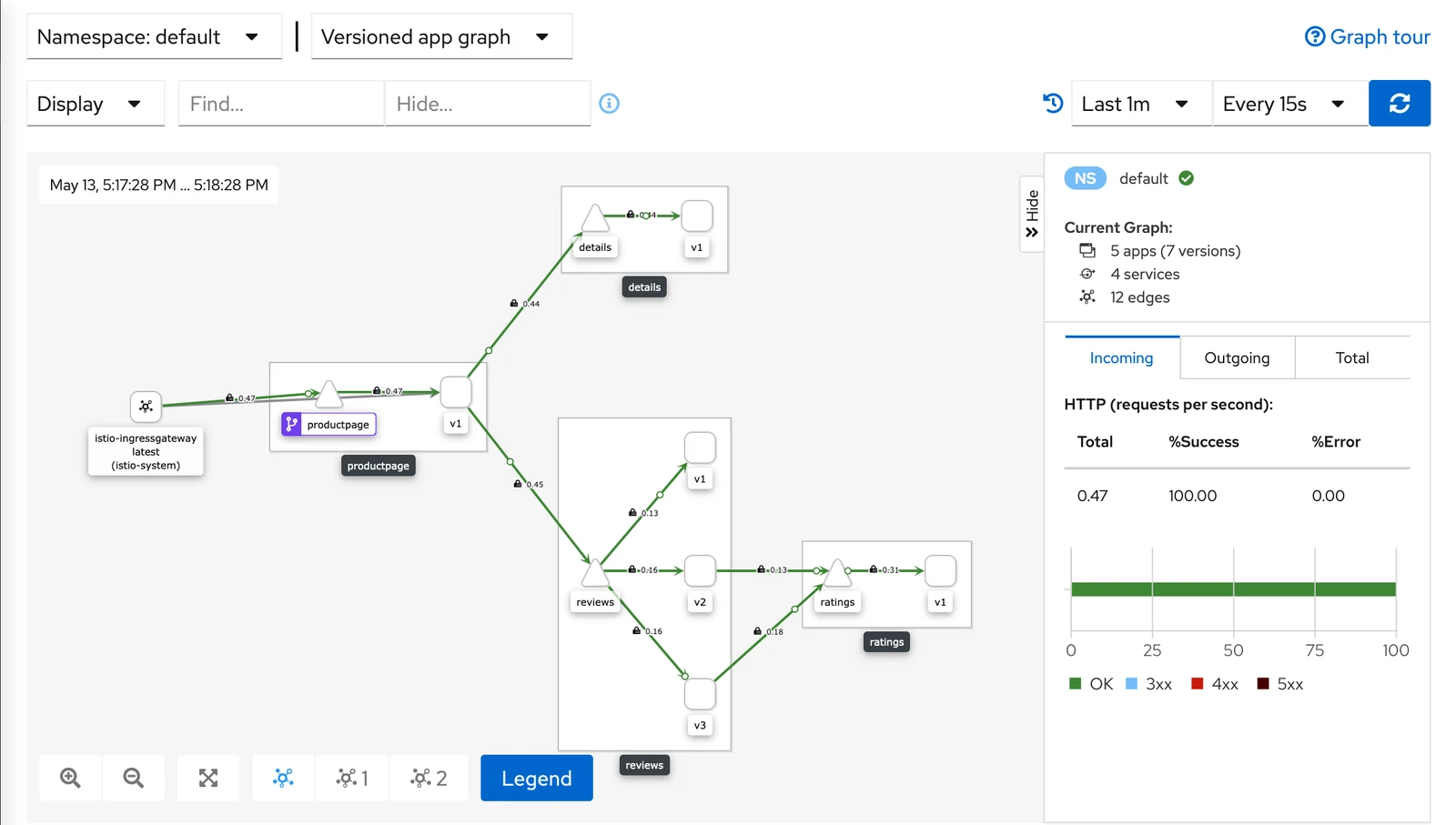

Best for: Open source posture scanning across the delivery pipeline
Strengths: Framework controls, network policy checks, and runtime detection
Things to consider: The node agent needs resource sizing and a supported kernel
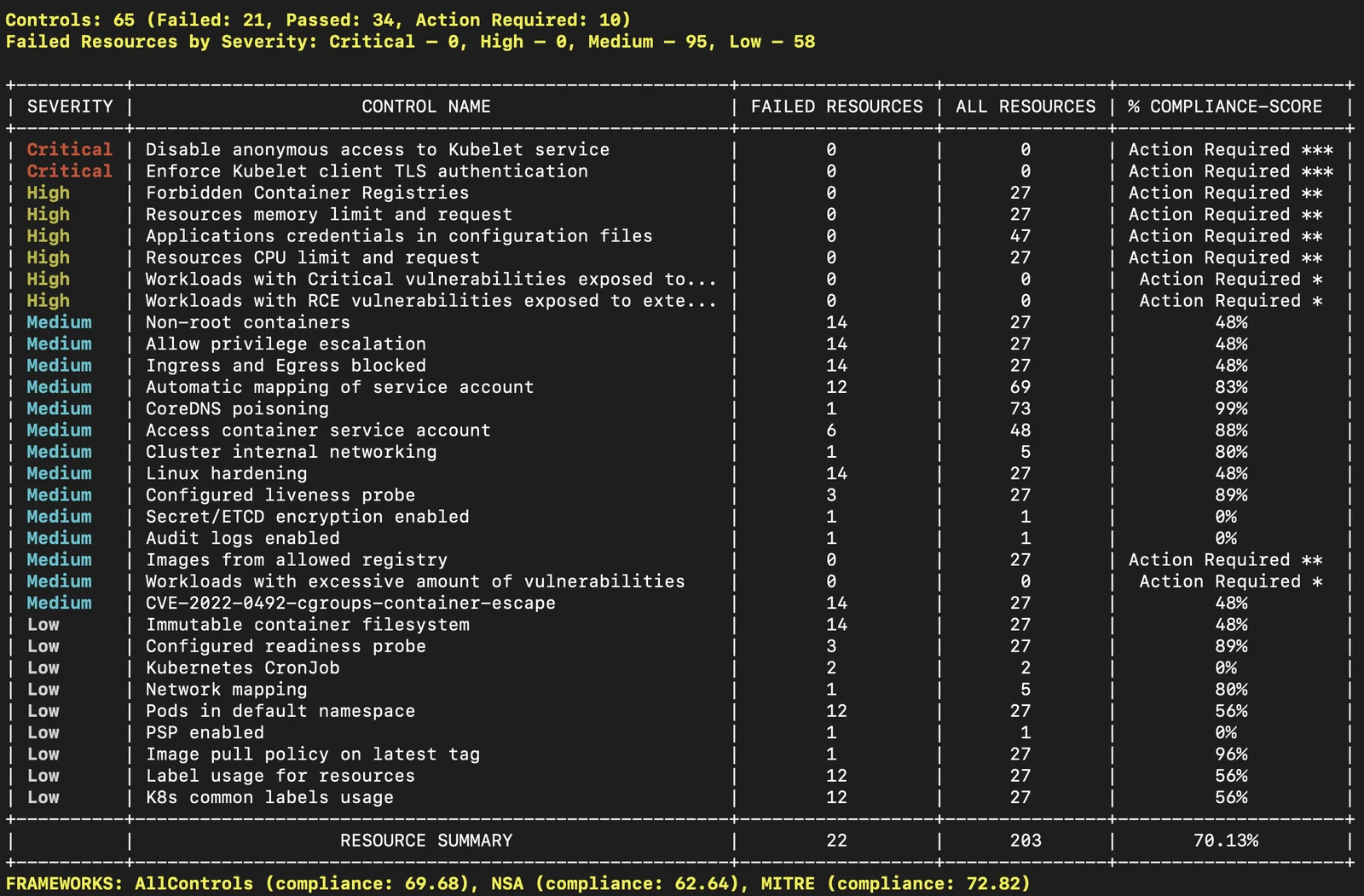
Kubescape is an open source Kubernetes security platform created by ARMO and hosted by the CNCF as an incubating project. It covers configuration scanning, vulnerability assessment, policy enforcement, network policy and seccomp validation, and runtime threat detection from a single project.
It analyzes Kubernetes manifests, Helm charts, and live clusters for misconfigurations and known vulnerabilities, and validates workloads against multiple security frameworks. Under the hood it uses Open Policy Agent for posture controls, Grype for image scanning, Copacetic for image patching, and Inspektor Gadget for eBPF.
Key features include:

Best for: Kubernetes policy as code without a new language
Strengths: YAML and CEL policies, mutation, and image verification
Things to consider: Needs sizing in large clusters to keep admission fast
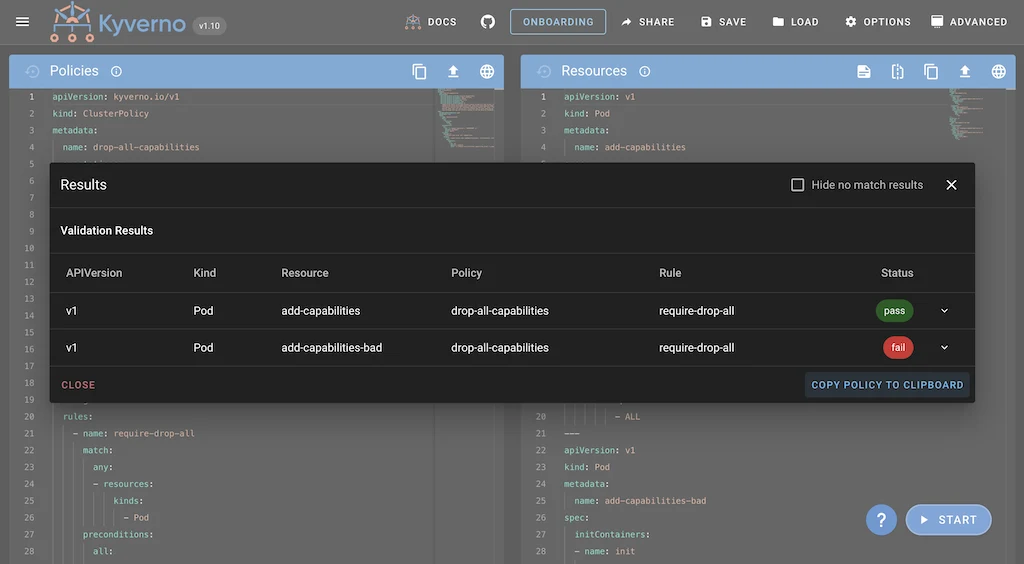
Kyverno is a CNCF graduated policy engine that lets teams secure, automate, and govern infrastructure and applications with YAML and CEL-based policies. Because policies use Kubernetes-native types, teams write and manage them with the same tools and syntax they already use for other cluster resources.
Its scope covers validation as well as mutation, generation, and cleanup of Kubernetes resources, which distinguishes it from engines limited to validation alone. Although it was originally built for Kubernetes, Kyverno now also validates Terraform plans, Dockerfiles, and HTTP and Envoy requests.
Key features include:

Best for: One policy engine across Kubernetes, CI/CD, and apps
Strengths: Rego policies, Gatekeeper admission control, and audit trails
Things to consider: Rego takes time to learn, and Kubernetes needs Gatekeeper
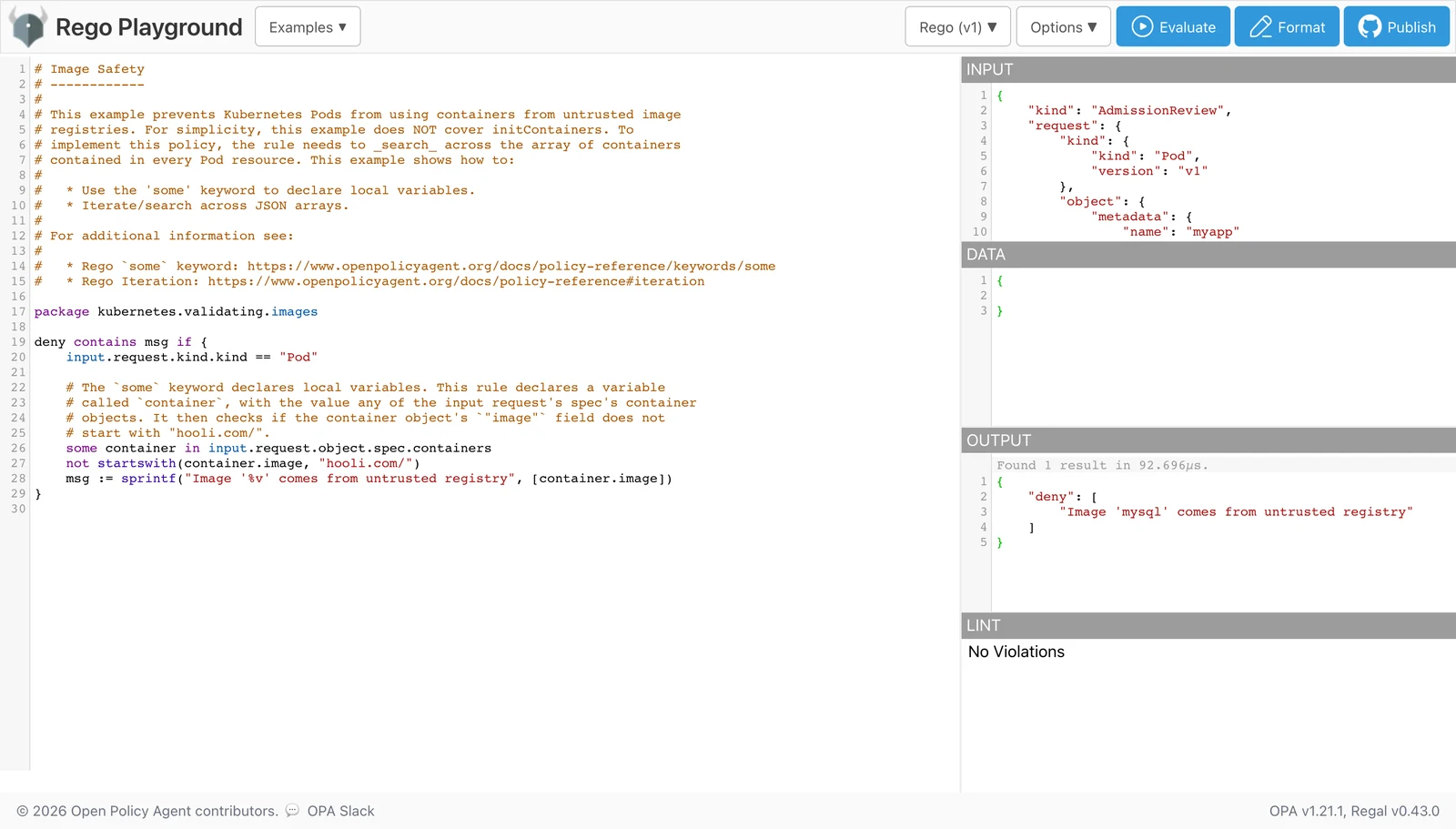
Open Policy Agent is a CNCF graduated policy engine that unifies policy enforcement across the stack. It provides Rego, a declarative language for expressing policy, and returns structured decisions that applications, proxies, Kubernetes, CI/CD pipelines, and API gateways can act on.
Decoupling policy from application logic lets security and platform teams manage shared policies centrally while development teams extend them. OPA operates on pre-loaded, in-memory data to serve as a fast decision point, and it records decisions so they can be audited or replayed for analysis and debugging.
Key features include:

Best for: Scanning Kubernetes manifests and IaC pre-deployment
Strengths: Multi-framework coverage, graph policies, and custom checks
Things to consider: Built for IaC first, and package and image scanning needs a Prisma Cloud API key
Checkov scans cloud infrastructure configurations to find misconfigurations before they are deployed. Built and maintained by Prisma Cloud at Palo Alto Networks, it uses a single command line interface to analyze infrastructure-as-code across Terraform and OpenTofu, CloudFormation, Kubernetes, Helm, Kustomize, Dockerfiles, ARM and Bicep templates, Serverless framework, AWS SAM, AWS CDK, Ansible, and CI/CD configuration files.
For Kubernetes teams, this means manifests and Helm charts are checked in the same run as the cloud infrastructure around them. Policies can be attribute-based in Python or YAML, or graph-based in YAML, which allows checks that account for relationships between resources rather than isolated attributes.
Key features include:
Kubernetes security requires controls across the full application lifecycle because vulnerabilities can originate in images, configurations, permissions, network communication, or runtime activity. Organizations should combine vulnerability prioritization, image scanning, network enforcement, posture management, and runtime monitoring rather than relying on a single security layer. The right approach should integrate with existing development and deployment workflows, provide Kubernetes-aware context, and continuously reassess risks as workloads and clusters change.
[ Container Security ]

[ Container Security ]
[ Container Security ]